




Articles
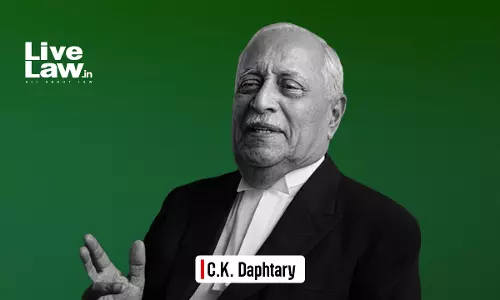
The Inimitable C.K. Daphtary
C.K. Daphtary is a jewel of the legal profession in India. He occupied the high offices of Solicitor General and Attorney General and by his superior powers of advocacy and the warmth of his personality carved for himself a unique niche amongst the immortals in the world of law. It is appropriate to remember him and salute his memory on his birth anniversary.Chander Kishan Daphtary affectionately called C.K or Chandubhai was born on 1st April, 1893. It was Hanuman Jayanti according to the Hindu...

Truth, Procedure And Judicial Discipline: Re-Examining Foundations Of Adjudication In India
Indian courts have uniformly stressed that adjudication is not an exercise of personal intuition, nor a mechanical application of rules. No, it is a disciplined institutional process designed to bring to light the legally relevant truth through structured procedures.The persistent assertion is that there is not a judicial exercise of discretion to decide a case as a private individual under the sway of them that goes along with instincts, pity or their private morality, a point being expressed...

Artificial Intelligence In Courts: Promise, Peril, And Path Ahead
Artificial Intelligence (AI) tools are increasingly relied upon and being used in Indian courts by lawyers. The unbridled growth of AI tools in courtrooms have sparked a fundamental debate: is reliance on AI in legal practice a legitimate evolution, or does it undermine the ethical foundations of advocacy?AI, in essence, draws upon vast repositories of human knowledge recorded digitally across the web. Its initial entry into the legal domain came through search engines that provided case...
Doctrinally Correct But Institutionally Problematic Approach To Kolhapur HC Bench Jurisdiction
Recently, the Bombay High Court has held that despite creation of a circuit bench, the principal seat will continue to retain jurisdiction. Apart from the legal impact, this decision is going to have wider repercussions for the cases which have been transferred or were due to be transferred to the circuit bench Kolhapur.The Order dated March 06, 2026, delivered by the Division Bench of the Bombay High Court in Shekhar Champalal Pagaria & Ors. v. CFM Assets Reconstruction Pvt. Ltd. & Ors....

How IT Act Powers Are Killing Online Dissent
When the internet is policed without safeguards, democracy risks losing a vital space for dissent and debate.
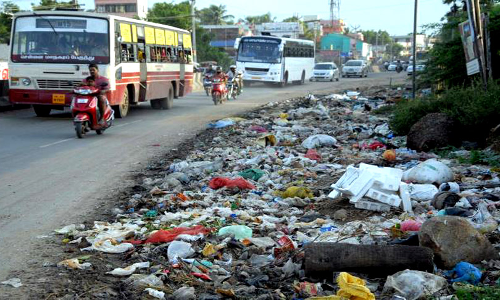
A Hope of Clean Cities: Why India's New Waste Laws maybe More Than Just Paperwork
Poor waste management and lack of basic sanitation has become a curse for cities throughout the Indian subcontinent, to the extent that it significantly affects the quality and expectancy of life of the citizens throughout the economic and social strata. Towering landfills like those in Ghazipur and Deonar are a source of collective shame and concern for each citizen of this nation. India generates over 62 million tonnes of waste annually, a figure projected to nearly triple by 2030. For...
When Data Is The Market: India's Competition Law Blind Spots
Artificial Intelligence tools such as ChatGPT and Gemini are now part of everyday life. A student may use ChatGPT to draft notes, while business owners may rely on Gemini to create marketing content or respond to customers. These tools appear as simple applications but behind them lies a complex ecosystem involving cloud computing, datasets and AI models controlled by a handful of large technology companies. This raises a question that is if a few firms control both the infrastructure and the...

From Pandemic Protectionism To Strategic Liberalisation: Rethinking India's FDI Security Regime After 2026 Amendment To Press Note 3
Among the most important and impactful regulatory decisions in the recent times in terms of the impact on the Indian foreign investment regime is the Press Note 3 (2020 Series) FDI Policy issued by the Government of India in 2020. The policy was issued during the COVID-19 pandemic with the objective of protecting Indian companies from opportunistic acquisitions by investors from countries that share a land border with India.The policy significantly modified the Indian regulatory framework of...

Consent Cannot Be Constructed: A Review Of M Space Master Realtors v Mulund Sandhyaprakash
Redevelopment disputes in Mumbai have long exposed a fault line in arbitration law. On one side lies the collective nature of a cooperative housing society, whose decisions bind even dissenting members; on the other lies arbitration, whose foundation remains consent. The two do not always sit comfortably together. The Bombay High Court's recent decision in M Space Master Realtors v...

Do The New Labour Codes Make Working Hours More Arduous?
India's labour law reforms have generated extensive debate, particularly on the issue of working hours. A recurring concern is whether the new Labour Codes make working conditions more demanding for employees. While public discourse often highlights the flexibility introduced by the Codes, a closer legal examination reveals a more nuanced shift—one that recalibrates both work-hour norms and wage obligations.Under the erstwhile Factories Act, 1948, working hours were governed by a structured...
Shared Liability- Missing Link In New Shanti Bill, 2025
As of India's transition to clean energy ambitions, the Parliament passed the SHANTI Bill- Sustainable Harnessing and Advancement of Nuclear Energy for Transforming India Bill, 2025. The country plans to use nuclear energy, which has low carbon emissions, to reach its target of 100 GW of energy by 2047. Although the development of nuclear energy will be boosted by the private companies' participation as introduced by the bill yet, by eliminating the right of action against the suppliers, it is...

Acceptance Of Olfactory Marks In India: Challenges And Way Forward
The administration of trademarks in India is vested in the Controller General of Patents, Designs and Trade Marks (CGPDTM), functioning under the Department for Promotion of Industry and Internal Trade (DPIIT), Ministry of Commerce and Industry. Jurisprudence on trademark has traditionally centered on visually perceptible marks; recent developments indicate a gradual openness towards the non-conventional trademarks, including olfactory (smell) marks.When markets get more crowded and traditional...