




Articles

Legislative Gaps, Judicial Grafts: The IRC Transition
The transition to the Industrial Relations Code, 2020 (“IRC” or “Code”) was far from straightforward. The Code came into force[1] on 21 November 2025, but the subsumed enactments were not immediately repealed. This created uncertainty about the functioning of existing adjudicatory bodies. When the repeal was later declared retrospectively, further questions arose regarding the validity of actions taken under the subsumed laws during the transitional phase between 21 November 2025 and 2 February...

Can Courts Strike Down Personal Law?
A Constitutional Journey from Narasu to SabarimalaOn 10-03-2026, a familiar constitutional question returned. A recent petition challenging Muslim Inheritance Law has prompted the Supreme Court to ask a deceptively simple yet deeply consequential question: Can courts review personal law at all?The issue arises in the context of claims that certain inheritance rules discriminate against Muslim women. Yet, beneath the immediate controversy lies a much older constitutional dilemma. The Indian...

The 'No Return' Trap: Why Online Sellers Can't Escape The Law
The problem rarely begins with a defective product; it begins with information. A consumer orders an online product based on how it is presented. The description promises a particular quality and on the basis of that representation the consumer proceeds. Only to discover, after delivery, that the product doesn't correspond to the depiction provided. The problem doesn't end there. Consumers...

Post-Retirement Harassment: Illegal Withholding Of Retiral Benefits
A lawyer frequently encounters service matters filed by retired government employees seeking release of their pensionary benefits. These cases reveal a recurring and troubling pattern—retired employees are compelled to approach the court because their pension, gratuity, or other retirement benefits are either withheld or unnecessarily delayed by administrative authorities.Pension and gratuity are not merely financial benefits; they constitute the primary source of livelihood for a retired...

Consent: The Foundation Of Digital Data Protection
Consensus facit legem, which means consent makes the law. Primacy of consent is not only confined to the formation of contracts but also underpins a wide array of legal relationships and highlights a philosophical commitment to individual autonomy. Our Constitution begins with the Preamble, where we promise to each other OUR collective consent, across generations, as “WE, THE PEOPLE OF INDIA, having solemnly resolved …do HEREBY ADOPT, ENACT AND GIVE TO OURSELVES THIS CONSTITUTION.” Elements of...
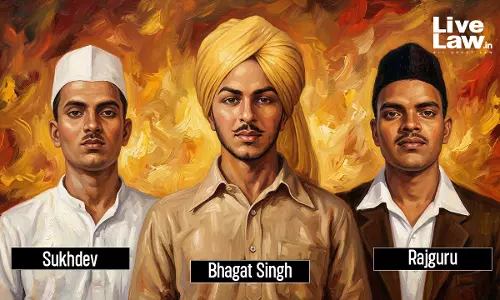
Legal Proceedings Led To Martyrdom Of Bhagat Singh, Sukhdev And Rajguru
Bhagat Singh faced two significant trials during his lifetime. The first arose from the Central Legislative Assembly Bomb incident in Delhi, while the second was the Lahore Conspiracy Case concerning the killing of Mr. Saunders in retaliation for the death of Lala Lajpat Rai. In the former, Bhagat Singh and Batukeshwar Dutt were sentenced to life imprisonment, whereas in the latter Bhagat Singh, along with Sukhdev and Rajguru, was awarded the death penalty. Following a prolonged legal battle,...

The Menstrual Manifesto: A Commentary On Dr. Jaya Thakur V. Government Of India
"A period should end a sentence – not a girl's education." - Melissa BertonOn 30th January 2026, the Indian Supreme Court passed a historic order ensuring menstruating rights of girl students studying in schools in Dr. Jaya Thakur v. Government of India, (2026 INSC 97). Two judges, Justice J.B. Pardiwala & R. Mahadevan, even went on to put on record that “a period should end a sentence, not a girl's education.” This bold line coming from the apex court of India represents a change of mindset...
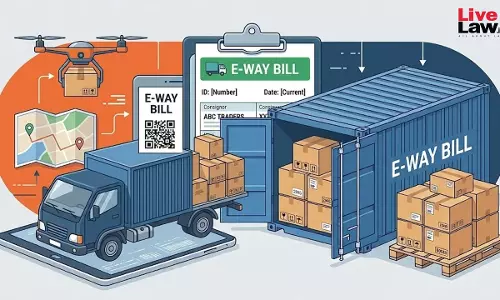
Evidentiary Value Of E-Way Bills In Commercial Disputes
Commercial transactions in India underwent significant changes after the introduction of the Goods and Services Tax (hereinafter referred as 'GST'). One such major change was the introduction of E-Way Bill System. In simple terms, an E-Way Bill records movement of goods exceeding Rs. 50,000/- in a digital form. E-Way Bills are governed by Rule 138 of the Central Goods and Services Tax Rules,...
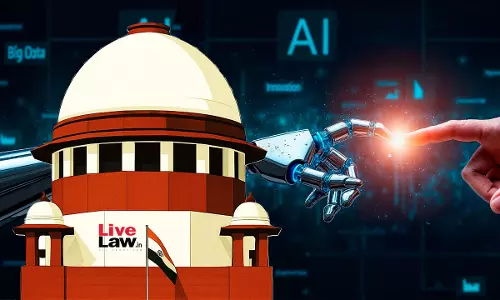
Phantom Precedents: The Rise Of AI-Generated Case Law In Indian Courts
The legitimacy of common law adjudication depends on the authenticity of precedent. If fabricated authorities enter judicial reasoning, the integrity of the doctrine of stare decisis itself is compromised. Recently, however, a disruptive and highly concerning trend has emerged across global jurisdictions, the submission of phantom case law. Judicial officers reviewing written submissions are increasingly discovering perfectly formatted citations for judgments that simply do not exist. The...

From Bulandshahr To Privy Council: A Woman's Legal Battle In 19th Century British India
As the world celebrated International Women's Day on 8th March, it would be relevant to mention Khanzadi Begum's case, a property rights dispute in 19thcentury British India, which originated from District Bulandshahr, and culminated before the Privy Council in England. The dispute pertained to the colonial Government's attempt to revoke a sanction that had previously been granted, raising questions about the limits of executive discretion. During the Revolt of 1857, a large section of nobility...

The Right To Die, With Dignity
Harish Rana, like any other 20-year-old, was once a wide-eyed youth with hopes, dreams, and a determination to make it big. He embarked on this journey by pursuing an engineering degree. Unfortunately, fate – the inexplicable wind that charters one's life, had different plans. One evening in 2013, Harish fell from the fourth floor of his PG accommodation and sustained critical injuries. His condition confined him to a bed while tubes, unbeknownst to Harish, pumped him with life support. Owing to...
The Mirage Of Uniformity: Why Internal Reform Must Precede A Common Code
The recent proceedings before the Supreme Court, while hearing a plea for the abolition of the Shariat Application Act of 1937 on the grounds of gender inequality, have once again thrust the Uniform Civil Code (UCC) into the centre of national discourse. During the hearing, the oral observations made by the Bench, including the Chief Justice Surya Kant and Justice Joymalya Bagchi, emphasized that a UCC is the "most effective answer" to usher in equality in inheritance laws. The Court expressed a...