




Articles

'Account Of Life Lived To Fullest' : KK Venugopal's “An Accidental Lawyer”
From living a slow, idyllic life in the stormy monsoon of Mangalore to accidentally becoming a lawyer after failing the BSc exam and eventually rising to take up the highest law office of the country, the life of Senior Advocate and former Attorney General for India, KK Venugopal, has certainly come full circle.Growing up in the backdrop of World War II, Venugopal or Venu, as he was...

The Jurisprudence Of Dignity: Evolution Of Passive Euthanasia In India
In the landmark judgment of Harish Rana v. Union of India & Ors. (2026), the Supreme Court of India fundamentally reshaped the legal and ethical landscape of end-of-life care. By authorizing the withdrawal of life-sustaining treatment for a 32-year-old man in a permanent vegetative state (PVS) for over 12 years, the Court transitioned passive euthanasia from a theoretical constitutional right into a practical reality.The word “euthanasia” is derived from the Greek words “eu” and “thanatos”,...
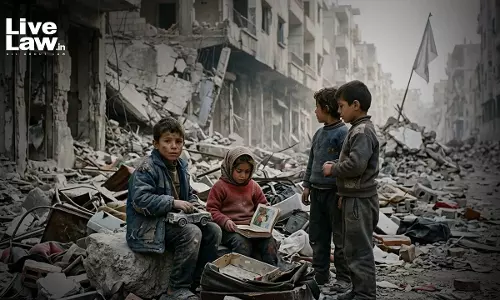
Children In The Crossfire: International Law And Child Rights Amid Armed Conflict
On 28 February 2026, as the initial salvo of US-Israeli strikes struck southern Iran, the Shajareh Tayyebeh girls' elementary school in Minab, became a graveyard of innocence. A precision-guided munition, whose forensic evidence overwhelmingly indicates a US Tomahawk cruise missile, destroyed the pink-flowered concrete edifice while classes were in session, a place meant to impart knowledge to innocent girls turned out to be a scene of utter devastation in a matter of seconds. Fearful cries were...

From Aruna Shanbaug To Harish Rana: How India's Passive Euthanasia Law Evolved
India's conversation on the right to die with dignity has evolved slowly, cautiously, and often through deeply tragic human stories. Two such stories, separated by more than a decade, mark the arch of this evolution: the case of Aruna Shanbaug, and the decision in Harish Rana allowing passive euthanasia for the first time.While the former set up the legal framework, the latter demonstrates...
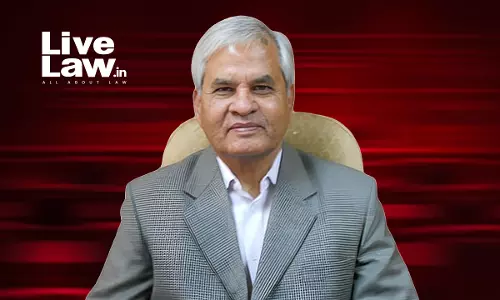
Remembering Prof (Dr.) Mahendra Pal Singh
It is with deep sorrow that I share that Prof. M. P. Singh, passed away on 07.03.2026, after serving the country and the world of academia for more than five decades. On 8 March 2026, he was laid to rest in his native village, Jitholi, a place he often spoke of with quiet affection. It comforts me that he took his last breath among the fields and the soil he always longed to return to.So much has already been written by his students and associates about how kind he was, how generous he was, and...
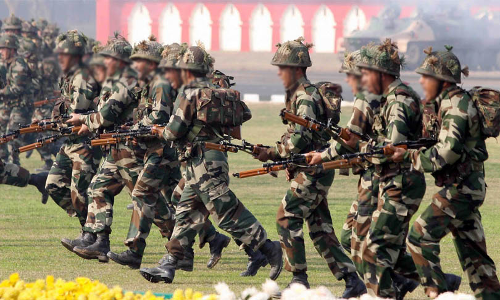
Jurisdiction In Service Matters Related To “Armed Forces Of Union”- Which Forum To Approach?
The evolving concept of justice has led to the development of diverse mechanisms through which individuals and entities may seek redress. Historically, dispute resolution in India began with informal and community-based systems such as the Panchayat justice mechanism. Over time, these traditional forms gradually gave way to more formal judicial institutions. However, the conventional judicial system proved increasingly inadequate to address the rapidly growing volume of disputes brought before...

Financial Abuse As Invisible Violence Inside Indian Homes
The Protection of Women from Domestic Violence Act, 2005 (“PWDVA”) explicitly recognizes “economic abuse” as a core component of domestic violence, placing financial control and deprivation on the same plane as physical and sexual violence.Explanation I(iv) to Section 3 provides a detailed statutory definition of “economic abuse”, broken into three broad heads: (a) deprivation of economic/financial resources and necessities; (b) alienation or disposal of assets and property, including stridhan;...

The Regulatory Blind Spot In India's Digital Personal Data Protection Framework
The Genesis of the Digital DivideThe evolution of India's data privacy regime reached a pivotal milestone with the Digital Personal Data Protection (DPDP) Act, 2023, and the subsequent rollout of the DPDP Rules in 2025. While these instruments successfully modernize the protections first established by the SPDI Rules of 2011, they are built upon a fundamental exclusion of non-digital data. By aligning itself with the spirit of the landmark K.S. Puttaswamy v. Union of India judgment, the...
Sentencing Justice: A Clarion Call Beyond Karma's Veil
In a recent judicial conclave, a fundamental question demanded unflinching attention: Following conviction, what noble purpose should sentencing truly fulfill? Victims yearn for retribution, a solemn affirmation that the offender has tasted his just deserts after unspeakable harm. Society craves deterrence, a bulwark against future crimes that threaten communal peace. The judiciary and state, through measured penalties, proclaim effective governance and rule of law. Yet for the convicted...

Sinking A Warship, Testing A Charter: Lessons From The Iris Dena Incident
The sinking of the Iranian warship Iris Dena by an American submarine in the Indian Ocean is not merely a dramatic naval episode, rather it represents a classic case of contemporary use of force. A sovereign immune warship of Iran, returning from a multilateral naval exercise hosted by India, was destroyed in international waters off the coast of Sri Lanka by forces of the United States. That combination of facts — interstate violence outside a declared theatre of war, directed against a naval...

Dear Gujarat, My Marriage Is Not Meant To Be Notified
Picture this: you are eligible to vote the moment you turn eighteen. You can choose your government, influence public policy, and shape the destiny of the nation. Yet, when it comes to choosing your life partner, the State now proposes that you must first submit proof that you have informed your parents and thereafter, the authorities will independently notify them about your marriage.This is what has been proposed in Gujarat. The Deputy Chief Minister, Harsh Sanghavi, stated that the State...
Injunctions Vs Infrastructure: A Constitutional Critique
The Specific Relief (Amendment) Act, 2018 is widely described as a reform aimed at strengthening contractual enforcement and improving India's investment climate. By recalibrating specific performance from a discretionary remedy to a general rule, the amendment sought to enhance commercial certainty. Yet embedded within this reform lies a provision that deserves far greater constitutional scrutiny than it has thus far received — Section 41(ha) of the Specific Relief Act, 1963.Section 41(ha)...