




Articles
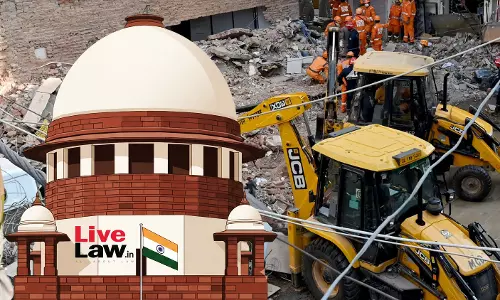
Ignored Warning Sign: Satya Niketan And Delhi's Regulatory Failure On PG Accommodations
We tend to ignore the warning sign until the tragedy strikes, an industry which has lived in the suburbs of grey areas, finding its way into the downtrodden trenches of regulatory provisions and later picked up like a forest fire.Satya Niketan, which literally translates to the 'Abode of Truth', has now shattered to smithereens, and it is horrifying, even in today's time, to ponder that even the places which we treat as homes, as a safe space where we live to fulfil and pursue our dreams, are...
Decoding Section 356 BNSS: Constitutional Perils Of 'Deemed Waiver' And Trial In Absentia
The axiom audi alteram partem (hear the other side) is not a mere procedural courtesy; it is the constitutional conscience of criminal law. For centuries, the physical presence of an accused in court was treated as an indispensable jurisdictional prerequisite. In Indian criminal procedure, this mandate was codified under Section 273 of the Code of Criminal Procedure, 1973 (CrPC). While Section 299 of the CrPC permitted the recording and preservation of prosecution depositions against absconding...
Judiciary, Rent Laws And Status Quoism
The Allahabad High Court's ruling in Inder Bhushan Sawhney v. Kanchan Kumari Jain (Dead) and 2 Other, 2026:AHC:177234‑DB, raises two distinct constitutional questions: (i) whether State rent‑control laws are repugnant to the Transfer of Property Act, 1882; and (ii) whether provisions of a statute expressly repealed by the legislature can revive once parts of the successor legislation are declared unconstitutional. The decision also partly undoes the reform of urban tenancy law in Uttar...

Why Should Divorce On Ground Of Irretrievable Breakdown Of Marriage Now Become Statue In India?
Matrimonial proceedings in India are often prolonged and complicated by procedural delays. Marriage is a personal relationship between two parties, and when it has completely broken down, the law should provide a peaceful and practical way out. Under the Hindu Marriage Act, 1955, divorce is generally available either on fault-based grounds—such as cruelty, desertion, or adultery- which must be proved, or by mutual consent. But if one spouse refuses to consent, the other is left with no option...

Third-Party Data Processors And Privacy Compliance: Emerging Risks Under Digital Personal Data Protection Act, 2023
In contemporary times, businesses rarely process personal data entirely within the systems that they own and operate. Customer, employee, and vendor data now routinely passes through cloud infrastructure, Software-as-a-Service (“SaaS”) platforms, payroll administrators, customer-relationship-management systems, payment gateways, marketing and analytics tools, and background-verification agencies. Each additional vendor in this chain widens the perimeter across which an organisation's data...

Well-Intentioned Reform With Potential To Delay Appointment Of Judges
The Supreme Court's recent judgment in Bhumika Trust v. Union of India (2026 LiveLaw (SC) 841) has brought considerable relief to fresh law graduates across the country by modifying its earlier direction requiring three years of practice at the Bar as an eligibility condition for direct recruitment to the post of Civil Judge (Junior Division) to just one year. However, the judgment goes beyond merely modifying the eligibility requirement. It introduces a new post-selection training model...
Same Coin, Many Regulators: India's Unfinished Answer On Who Governs Crypto
Let's start with a scenario. Meera runs a crypto exchange that is compliant almost everywhere except, awkwardly, in the country where it operates. Her platform is registered with the Financial Intelligence Unit (FIU) under the Prevention of Money Laundering Act, 2002 (PMLA); it deducts 1 per cent TDS on every trade, charges 18 per cent GST on its fees, and files suspicious transaction reports on time. Yet when her compliance head asks the simplest question in the business, "Which regulator...
Day An RTI Reply Becomes Criminal Act
The Right to Information Act, 2005 rests on a simple democratic principle: a citizen has the right to know what the State is doing, how it is doing it and what records it holds. The Public Information Officer is not merely an administrative intermediary in this process. He is the statutory officer through whom that right is implemented. His obligation to respond is created by law. This becomes particularly significant when a PIO does not merely delay information or commit an inadvertent mistake,...
Why Indian Government Losing Faith In Arbitration?
On 03.06.2024, Government of India, Ministry of Finance, issued an Office Memorandum[1] which send “shock waves” to certain portion of legal community engaged in arbitration. The OM, in a nutshell, mentioned that:1. None of the advantages that arbitration was expected to provide-Speed, Convenience, Technical Expertise, and Finality, were being achieved. Arbitration had simply become an additional layer and source of more litigation. 2. Government as a disputant is subject to large number of...

“Compensation, Not Charity”: Can International Law Make Major Emitters Pay for Nepal's Climate Losses?
On 26 August 2026, a massive ice-and-rock avalanche in the high Himalaya fell into the Lhende valley, temporarily blocked the river and released a destructive surge of water, rock, ice and sediment into Nepal's Bhotekoshi–Trishuli–Narayani river system. Preliminary reports suggest that a roughly 600-metre-wide mass fell about 1,200 metres from an altitude of approximately 5,200 metres. As of 5 September, Nepal reported 1,344 bodies recovered, around 5,000 people missing and 13,098 rescued. The...
ED Compliance Checklist Under Sections 17, 20 And 8 Of PMLA
Enforcement Directorate action under Sections 17, 20 and 8 of the Prevention of Money Laundering Act, 2002 sits at the sharpest edge of the statute. A search or freezing order under Section 17 can immobilise bank accounts and remove property from a person's control long before the merits are examined. The Act responds to that power with a staged discipline: search or freezing, retention, and adjudicatory confirmation are three separate steps, not interchangeable routes to the same result. A...
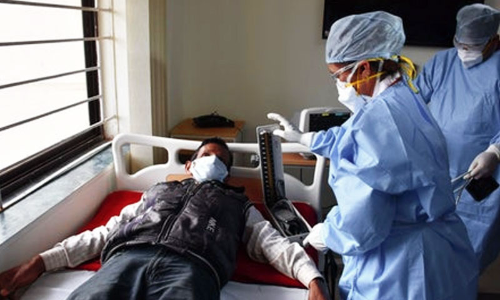
Cost Of State Neglect: How India's Writs Are Reinventing Accountability In Public Healthcare
How about a case where one visits a government hospital and leaves in a condition that is disabling, not because of the inadequacy of the surgeon doing the operation but because of the lack of basic sterilisation equipment in the operation theatre? In whose court will that issue of responsibility arise, and what is its final forum for resolution?The time is finally ripe for this long-overdue constitutional answer to that question, which for years has been clouded by the lack of clear...