



Rarest Of Rare : Nine Policemen Sentenced To Death In Sathankulam Custodial Killings
Karthik .V
15 April 2026 10:00 AM IST
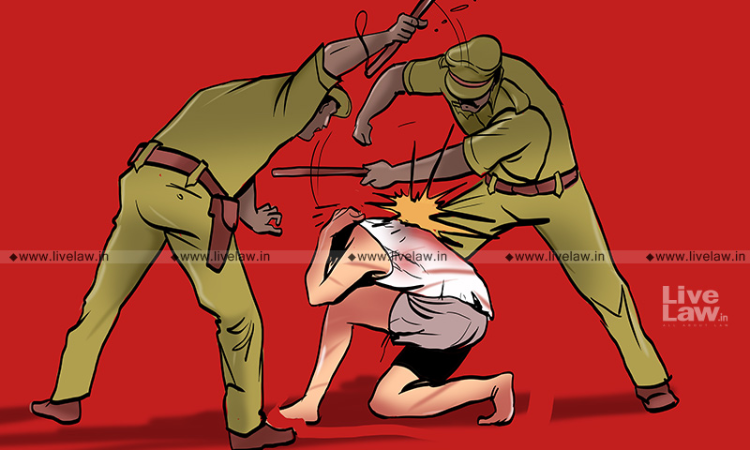
In a ruling that'll probably get dissected in law classrooms for a long time, a Madurai court delivered one of India's harshest punishments yet for custodial violence yesterday. Nine police personnel were sentenced to death for the brutal torture and killing of P. Jayaraj (58) and his son J. Bennix (31), a father and son whose only “crime” was keeping their mobile phone shop open a few minutes past closing time during the 2020 COVID-19 lockdown.
What Happened in Sathankulam?
Most people across the country first heard the names Jayaraj and Bennix in June 2020. In the thick of the pandemic, the Sathankulam police in Thoothukudi district, Tamil Nadu, picked them up. The alleged offence? Their shop stayed open beyond the 8 PM curfew. What followed wasn't policing, it was plain state violence. The CBI investigation found that the father and son were beaten again and again through the night of June 19-20, 2020. They were forced to wipe their own blood off the police station floor with their vests, a grim detail that, as the probe suggested, was meant to scrub away signs of what had happened. The post-mortem findings were horrifying. Bennix, 31, had 13 external injuries, including serious contusions and lacerations, and he died on June 22. Jayaraj, 58, had 17 injuries, his body showing marks of repeated assault, and he died the next day. A mobile phone video that circulated widely showed Jayaraj pleading for water in a weak, cracked voice, and that one clip helped set off outrage nationwide.


The Judgment: “Rarest of Rare”:
On 06th April 2026, First Additional District and Sessions Judge G. Muthukumaran delivered the quantum of punishment. Calling it a “betrayal by those meant to uphold the law,” he sentenced all nine convicted officers to death. The court said the case falls within the “rarest of rare” category, the tough threshold Indian law demands before capital punishment is awarded. Judge Muthukumaran said that by killing both father and son, the police had “uprooted the very foundation of a family” and committed a crime that “shook the collective conscience of society.” In the 450-page judgment, the judge wrote: “When the protectors become predators, the state has no higher duty than to punish them with the fullest force of law.”
The nine convicted officers are:
- Inspector S. Sridhar (prime accused)
- Sub-Inspectors P. Raghu Ganesh and K. Balakrishnan
- Head Constables S. Murugan and A. Saamidurai
- Constables M. Muthuraj, S. Chelladurai, X. Thomas Francis, and S. Veilumuthu
A tenth accused, Special Sub-Inspector Pauldurai, died during the trial due to COVID-19 complications. Along with the death sentence, the court also directed the convicts to pay ₹1.40 crore as compensation to the victims' family.
Reaching this point took time, nearly six years. Immediately after the deaths, local police first registered an unnatural death case and, going by the record, tried to engineer a cover-up. But public fury, amplified by social media and the disturbing video of Jayaraj asking for water, made it impossible to simply move on. The Madras High Court took suo motu (on its own) cognisance, and the Tamil Nadu government handed the case to the CBI for what it described as a “fair and impartial investigation. The CBI filed its charge sheet within 90 days and, during the trial, examined 105 witnesses.
The key evidence included:
- Testimony from a woman head constable who witnessed the night-long torture but was initially pressured to stay silent
- CCTV footage from nearby establishments that didn't line up with police logs claiming the two died of “natural causes”
- Forensic DNA evidence linking bloodstains inside the police station to the victims
- Medical findings that both men died of shock from multiple injuries, not COVID-19 or other “natural” causes as first suggested
On March 23, 2026, the court convicted all nine officers on charges including murder (Section 302 IPC), criminal conspiracy, and destruction of evidence. Yesterday, after hearing sentencing arguments, the judge imposed the death penalty. Outside the court, the family reacted with tears, but also with a hard, steady resolve. J. Persis, Bennix's elder sister, told reporters that “Those who carry out such barbaric acts should be scared. We believe that this verdict will serve as a safeguard, ensuring that such an atrocity never occurs again. If they go to appeal, we will go too. We will fight till the very end. Persis, who's become the public face of the family's six-year legal struggle, broke down briefly and then composed herself. “My father and brother died for nothing. No judgment can bring them back. But this gives us some peace knowing that justice has been served,” she said.
Political Reactions:
With Tamil Nadu heading to the polls next month, the verdict has already turned political. The ruling DMK welcomed the judgment, while the Congress urged former Chief Minister Edappadi K. Palaniswami (who was in power during the 2020 incident) to apologise for what it called “police high-handedness” under his government. Tamil Nadu Congress President K. Selvaperunthagai laid out his party's more complicated position: “I do not believe in the death penalty as a matter of principle, but the fact that punishment has been delivered upholds justice. The system worked this time. AIADMK leaders have mostly stayed cautious so far. Human rights groups, meanwhile, supported the accountability but reiterated their unease with capital punishment. Amnesty India said in a statement: “While we celebrate accountability for custodial violence, we remain opposed to capital punishment in all cases.”
What Happens Next:
Lawyers expect the convicts to challenge the sentence in the Madras High Court within the statutory window. Under criminal procedure, the trial court must also send the judgment to the High Court for confirmation of the death sentence on its own, whether or not the convicts appeal. That built-in, two-step review is meant to ensure a death sentence isn't carried out without higher judicial scrutiny. The appeals route, including the possibility of a Special Leave Petition before the Supreme Court, could run another two to three years. If the death penalty is upheld by the apex court, the convicts can still file mercy petitions before the Governor and the President of India.
Why This Verdict Matters:
Custodial violence has a long, ugly track record in India. National Human Rights Commission data shows thousands of custodial deaths over recent decades, yet convictions remain shockingly rare, often in the single digits. Torture in lock-ups often slips through the gaps, and families can spend years just trying to get FIRs registered. The Sathankulam verdict changes that math. The judge's remarks read like a straight warning to any officer who believes the uniform offers cover from consequences: “The police are meant to protect the common man, and when they become the perpetrators of such brutality, the law must act as a deterrent. Six years ago, two men died over a trivial curfew issue. Yesterday, the law replied. Whether the death penalty is ultimately carried out or reduced on appeal, the message is hard to miss: custodial violence won't be casually shrugged off. For Persis and her family, the fight isn't over. Still, for the first time in six years, there's at least a sense that the system that failed Jayaraj and Bennix has finally answered with justice. The convicts have the right to appeal the verdict in the Madras High Court within 90 days. The court will also suo motu seek confirmation of the death sentence as per legal procedure.
Author is an Advocate practicing at Madras High Court. Views are personal.


