



Recognising Public Trust, Recognising Legitimate Use, Compensation As Last Resort
Subrata Singh & Killi Bhaskara Rao
25 Sept 2026 3:00 PM IST
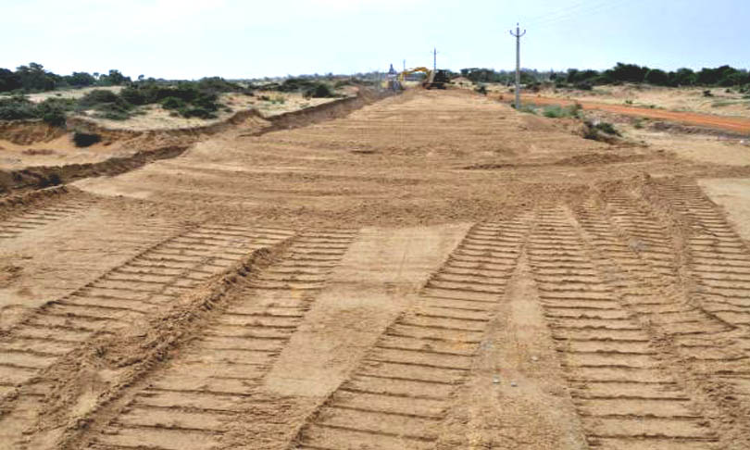
India's legal framework facilitates compensation when individual or private land is acquired for public purposes, yet offers little protection to millions of people whose livelihoods depend upon commons. Commons support around 350 million rural people in India dependent on the commons.
The Economic Survey of India 2025-26 highlighted the importance of village commons in rural India. Commons are central to livelihoods and income generation, yet they continue to face challenges such as encroachments and weak recognition. Commons are therefore not only ecological spaces but also social and economic lifelines. Yet, despite their importance, one major question continues to remain unresolved: what happens to the rights and livelihoods of communities dependent on commons are diverted for development projects.
Commons as Livelihood and Ecological Infrastructure
Commons are essential for the survival of economically and socially marginalised communities. Many landless households, pastoralists, small and marginal farmers, rural artisans, and forest dependent communities rely on these landscapes for grazing, collection of Non-Timber Forest Produce (NTFP), fruits, fodder, fuelwood, and other living needs.
By providing a range of ecosystem services and supporting flora, fauna, and other environmental benefits. Therefore, when commons are diverted without adequate safeguards, alternative land, compensation, the impact falls disproportionately on the poorest and most vulnerable communities. Despite their social, economic, and ecological significance, the recognition of commons in policy and governance remains inadequate.


Historical and Legal Recognition of Commons
Over time, the governance of commons in India has evolved through multiple institutional and legal systems. Historically, “commons were collectively used and managed by communities and were neither treated as the private property of individuals nor as the exclusive property of the king or the state”. Several customary and legal systems historically recognised community rights over commons, such as like Nistar rights in central India acknowledge the traditional rights of communities over forests, grazing lands, and other shared resources, particularly in regions such as present-day central India states like Madhya Pradesh and Chhattisgarh. Similarly, the Forest Rights Act (FRA), 2006 recognised the historical injustices faced by forest-dependent communities and acknowledged their socio-economic, cultural, and ecological relationship with forests.
Although, in many states these commons have also recognised and protected through legal and administrative measures. Various state laws and revenue regulations classify grazing lands, community lands, as protected categories that should not ordinarily be diverted for non-community purposes
Compensation Gap in Commons Governance
The governance of commons is often guided by the Public Trust Doctrine, which views the state as a trustee responsible for protection natural resources for public use. However, when it comes to private land, protection is ensured under Article 300A of the Constitution of India, which guarantees compensation upon acquisition. This creates a disparity between private property and commons, where the latter lack equivalent legal safeguards for compensation.
Private Property Framework | Commons Framework |
Ownership recognised | Dependence weakly recognised |
Compensation mandatory | Compensation mechanisms uncertain |
Rehabilitation provisions available | Rehabilitation inconsistent even if considers it is arbitrary and no clear formula |
Social Impact Assessment required | Social Impact Assessment rarely happens |
India's compensation framework largely remains and reflects on ownership centric approach, whereas commons are considered wastelands and government property and therefore rarely considered for compensation. This creates structural inequity in which communities dependent on commons bear the costs of development without receiving protections available to individual or private landowners.
Legal and Judicial Responses
Indian Judicial decisions ranging from T.N Godavaraman Thirumulpad v. Union of India to Jagpal Singh have strengthened environmental jurisprudence and Further, Section 42(3) of the LARR Act states that community forest rights recognised under the Forest Rights Act, 2006 should be converted into monetary compensation and distributed proportionately among displaced individuals. Despite these safeguards, implementation often remains weak and inconsistent.
The Courts in Manoj Kumar Singh vs State of Uttar Pradesh and Jitendra Singh vs MoEFC emphasized their responsibility to safeguard, manage, and protect these resources from encroachment and unauthorized occupation in the larger interest of the village community under custodianship and as well Constitutional Principles such as Article 21 and Article 51(A)(g). These judgements reflect the constitutional recognition of commons In India and reaffirm that commons belong to Gram Sabhas and cannot be regularised for private use.
Ground Realities: Diversion Without Compensation
The challenges of commons diversion without compensation are evident in several cases. The Amrit Mahal Kaval lands in Karnataka, historically designated for a special breed of cattle, have reduced significantly from around 4,00,000 acres to about 40,000 acres. In Chitradurga's Challakere taluk, nearly 10,000 acres were allocated for defence and industrial projects between 2009 and 2010, without compensation or alternative land for local herders and farmers. As a result, around 70 villages lost access to grazing lands, directly affecting livestock and livelihoods. A petition was later filed before the National Green Tribunal, which allowed the projects subject to environmental clearances.
In another instance, during rehabilitation processes around Rajaji National Park and Sona Nadi Wildlife Sanctuary, relocation began in 1995 and continues. In a related writ petition, the court recognised the dependence of communities on grazing and directed the government to provide fodder and veterinary services until rehabilitation was completed. A similar situation is observed in the Achanak Tiger Reserve, where resettlement efforts have not supported displaced tribal communities. In several regions, hillocks that communities have nurtured for decades and depend upon for grazing and collection of forest produce have been allocated for mining. These conversions have taken place and community dependence or providing compensation, leaving communities excluded from access to resources they have traditionally relied upon.
These examples highlight a broader pattern where commons are converted without recognising dependent communities or providing them an opportunity to be heard, thereby excluding them from legal entitlements.
Beyond Protection: Recognition, Rehabilitation and Compensation
While commons face multiple threats such as encroachments and other land use changes, one of the most persistent challenges is the absence of adequate and legal compensation when commons are diverted. Public purposes such as highways, dams, roads, defence areas, and industrial projects contribute to economic growth, employment, and local development. For such purposes, land is acquired, and compensation is typically provided to affected individuals depending on the impact. The Land Acquisition Act 1894, introduced during the colonial period, did not require consent from landowners, offered compensation based on limited market value, and did not consider social or ecological impacts or resettlement. The Right to Fair Compensation and Transparency in Land Acquisition, Rehabilitation and Resettlement Act, 2013 addressed many of these issues by defining public purpose more clear consent and introducing Social Impact Assessments and rehabilitation measures.
However, even under the 2013 law, Section 3(c) defines affected families to include landowners, tenants, agricultural labourers, Scheduled Tribes, and other forest dwellers, but it does not explicitly recognise communities dependent on non-forest commons such as grazing lands, pastures, hillocks, and village revenue wastelands. While the Forest Rights Act, 2006 provides some recognition for forest-dependent communities, it does not adequately cover non-forest commons. In case of forest diversion, compensatory funds are often directed to Compensatory Afforestation Fund Act, 2016 (CAMPA), and under laws like PESA, Gram Sabha consent is required in certain situations. However, for non-forest commons, these safeguards are largely bypassed, as such lands are often classified as government or revenue wastelands. This allows authorities to reclassify or transfer them without conducting Social Impact Assessments or providing compensation, effectively excluding dependent communities from legal protection.
Reimagining Compensation for Commons
India's compensation framework continues to remain ownership-centric, whereas dependence on commons is largely customary, collective, and use-based. The scope of Right to Fair Compensation and Transparency in Land Acquisition, Rehabilitation and Resettlement Act, 2013 should be expanded to explicitly include commons and commons-dependent communities within compensation and rehabilitation frameworks. Social Impact Assessments should also assess livelihood dependence on commons, including grazing dependency, livestock economy, women's dependence on commons, non-timber forest produce (NTFP) collection, seasonal use, and other customary livelihood practices.
The primary compensation principle should be Land for Land. Where commons are diverted, equivalent alternative land with similar ecological characteristics, productivity, grazing potential, and community utility should be provided. Where alternative land cannot be provided, financial compensation should be awarded based on the ecological, social, and livelihood value of the commons, and not merely its market value. Compensation should be accompanied by livelihood restoration measures, including alternative commons, fodder and livestock support, water access, and support for women's livelihoods. Diversion of commons should be permitted only after informed consent and meaningful participation of Gram Sabhas and Gram Panchayats, with transparent processes for determining compensation and rehabilitation measures.
Compensation as a Last Resort
The issue of compensation in commons governance required urgent legal and policy attention. Protection alone is not enough if dependent communities continue to lose access to livelihoods and resources without compensation and rehabilitation.
In this context we are suggesting some of the recommendations to the governments and its state institutions and this can be a formula for R& R on commons.
Proposed Compensation Framework for Commons:
1. Recognition of Commons and Commons-Dependent Communities - Communities have historically managed, conserved, and sustained commons through collective action. Therefore, commons should be recognised as a distinct category, consistent with the recognition accorded to commons in the Economic Survey. The Census 2027 may also consider capturing information on commons and commons-dependent households.
2. Community Compensation Fund (40%) and Livelihood Loss Fund (60%) – Financial Compensation for the loss of commons should be distributed through a two-tier framework:
3. Community Compensation Fund (40%): Forty percent of the compensation amount should be allocated to a community compensation fund and distributed equally among all households within the affected community. This component recognizes the collective loss of ecological services, biodiversity, community assets, cultural values, and social relationships associated with commons.
Livelihood Loss Fund (60%): Sixty percent of the compensation amount should be allocated based on the degree of livelihood dependence on commons. Households may be categorized as follows:
Category A – High Dependence: Pastoralists, landless livestock keepers, NTFP collectors, forest gatherers, and other households whose primary livelihoods depend on commons. These households should receive the highest share of compensation
Category B- Moderate Dependence: Small and marginal farmers and other households that deprive a substantial but partial livelihood from commons. These households should receive a proportionately lower share.
Category C- Low Dependence: Households with limited dependence on commons. These households should receive the smallest share.
1. Integration into Rehabilitation and Resettlement Frameworks- Rehabilitation and Resettlement (R&R) mechanisms should explicitly recognize commons-dependent livelihoods and incorporate a compensation framework based on livelihood dependence. The proposed 40:60 formula can serve as a guiding principle to ensure both community – wide and livelihood-specific losses are adequately addressed.
As protection is more important for the commons, It is also about to recognising the livelihoods, rights, and social relationships embedded within these landscapes. Without a clear framework for compensation and rehabilitation, commons governance will continue to remain incomplete.
Author Subrata Singh is the current Executive Director of Foundation for Ecological Security, Gujarat, and Killi Bhaskara Rao is a Lawyer and Legal Researcher at the Foundation for Ecological Security, Gujarat. Views are personal.


