




Civil Law
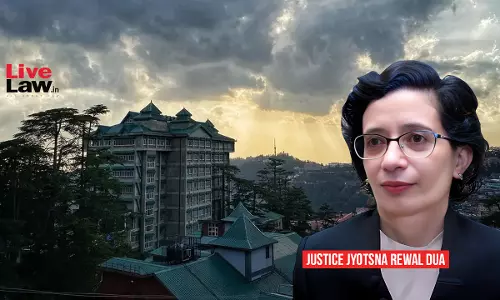
SDM Cannot Halt Panchayat Samiti Chairman Election Over Horse-Trading Allegations: Himachal Pradesh High Court
The Himachal Pradesh High Court has held that a Sub-Divisional Magistrate cannot halt the election of Chairman and Vice-Chairman of a Panchayat Samiti on the ground that allegations of electoral irregularities or malpractices are pending police inquiry. The Court termed the SDM's action in deferring the election as “wholly untenable, manifestly illegal and contrary to rule of law”,...
Rajasthan High Court Warns UGC Of Contempt For Failure To Implement Fresh Exam Directions For Students With Suspended Degrees
The Rajasthan High Court has issued contempt warning to UGC officials in case of their failure to comply with the directions to conduct fresh examination for students whose diplomas/ degrees/ qualifications, obtained from various distance education centres of deemed universities were nullified by an order of the Court dated January 1, 2024.The division bench of Dr. Justice Pushpendra Singh...
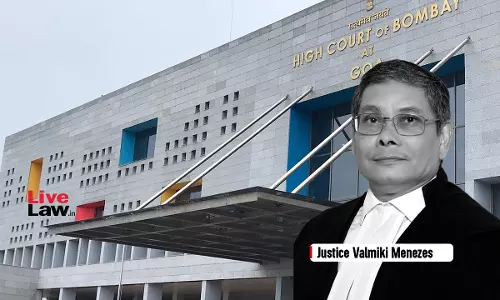
Delayed Birth Registration Beyond One Year Can Only Be Ordered By Judicial Magistrate First Class: Bombay High Court
The Bombay High Court has held that a birth which has not been registered within one year of its occurrence can be registered only on an order of a Judicial Magistrate of the First Class under Section 13(3) of the Registration of Births and Deaths Act, 1969. The Court observed that an Executive Magistrate or Mamlatdar cannot exercise jurisdiction for delayed registration beyond one year,...
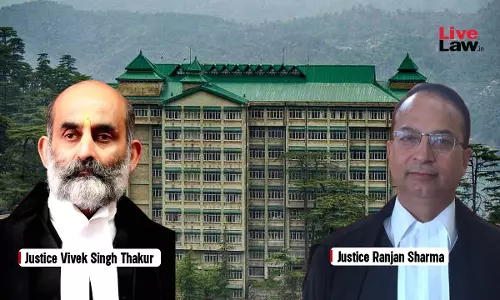
Himachal Pradesh High Court Strikes Down State Rules On VC Appointments In Agricultural Universities, Says UGC Regulations Prevail
The Himachal Pradesh High Court has struck down provisions of the State's amended Universities Act governing the appointment of Vice-Chancellors, holding that subordinating the appointment to the aid and advice of the State Government was in violation of the UGC Regulations, 2018 and beyond the legislative competence of the State. The Court declared the impugned provisions ultra vires...

'Elephants Can't Be Displaced': Karnataka High Court Quashes Land Acquisition For Housing Project In Bannerghatta National Park
The Karnataka High Court has quashed acquisition of land near Bannerghatta National Park for a housing project, observing that the area forms part of a corridor used by elephants who cannot be displaced from their homes or treated as occupants without any rights. It further underscored that while land acquisition should be for the greater purpose of public good, however no public purpose...

Delhi High Court Upholds Sole Agency For Nationwide Emergency Alert System, Says Govt Can Depart From Open Tender In Public Interest
The Delhi High Court has upheld the Centre's decision to appoint the Centre for Development of Telematics (C-DOT) as the sole agency for implementing a nationwide Cell Broadcasting system, which is designed to send emergency alerts directly to people's mobile phones during disasters and other public emergencies. [2026 LiveLaw (Del) 801]Justice Sachin Datta dismissed a petition filed by...
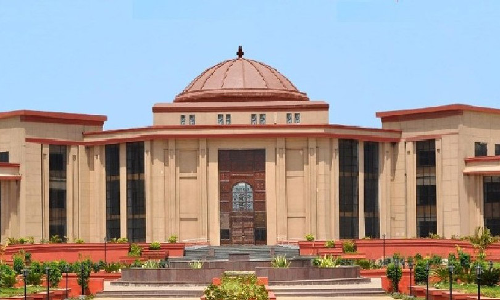
Executing Court Cannot Award Back Wages Omitted From Final Decree: Chhattisgarh High Court
The Chhattisgarh High Court has held that an Executing Court cannot go beyond the decree and award back wages when no such relief was granted by the Court in the judgment and decree being executed. The Court observed that the Executing Court had neither the authority to explain the decree nor the jurisdiction to travel beyond it.[2026 LiveLaw (Chh) 121]Justice Naresh Kumar Chandravanshi...

Delhi High Court Directs MP Govt To Pay Over ₹78 Lakhs Fee To Senior Advocate, Says State Can't Deny Payment After Taking Legal Services
The Delhi High Court has directed the State of Madhya Pradesh to pay Rs. 78,65,000 along with interest of 9% per annum to senior advocate Anoop George Chaudhari for appearing before the Supreme Court in a matter, rejecting the State's claim that the senior counsel had effectively appeared only twice. [2026 LiveLaw (Del) 799]Justice Sachin Datta referred to the order sheets of the Supreme Court...
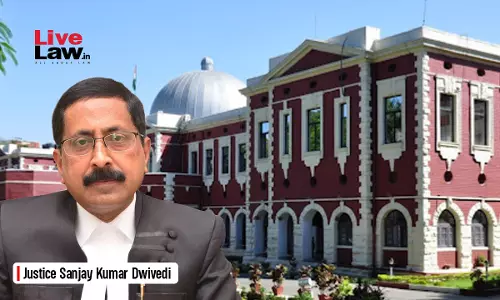
Registered Sale Deed Cannot Validate Transfer Of Adivasi Land In Violation Of Chhotanagpur Tenancy Act: Jharkhand High Court
The Jharkhand High Court has held that a registered deed executed in violation of Section 46(1) of the Chhotanagpur Tenancy Act, 1908 cannot be recognised as a valid transaction, observing that even a registered deed cannot validate a transaction prohibited by the statute.A Single Judge Bench of Justice Sanjay Kumar Dwivedi was hearing a writ petition challenging the order dated May 10,...

'Mechanism For Inclusion Already Exists': Delhi High Court Rejects PIL Apprehending Exclusion Of Homeless, Displaced Persons In SIR
The Delhi High Court has dismissed PIL seeking directions to ensure the inclusion of homeless persons and those rendered homeless or displaced due to demolition drives in the Special Intensive Revision (SIR) of electoral rolls in the national capital. [2026 LiveLaw (Del) 797]In doing so the court noted that the Election Commission of India's Manual already provides for mechanism for...

Journalists Are 'Eyes & Ears Of Public', Can Inform Collector About Encroachments: Rajasthan High Court
In furtherance of hearing the batch of petitions concerning the protection of rivers, lakes and water bodies, Rajasthan High Court observed that media and journalists are also eyes and ears of public, and had a role to play to ensure that there were no encroachments. Hence, whenever they found such encroachments, they can inform the Collector, Jaipur.The division bench of Acting Chief...
Revenue Entries Describing Plot As 'Tank' Not Conclusive To Eject Hereditary Tenant Under UP Land Reforms Act: Allahabad High Court
The Allahabad High Court has held that a tenant whose hereditary tenancy was judicially declared before the date of vesting cannot be ejected under Section 212 of the U.P. Zamindari Abolition and Land Reforms Act, 1950 merely because the revenue records later describe the plot as a tank. It held that the authority invoking the provision must establish that the tenant was admitted upon land...