




Constitutional Law
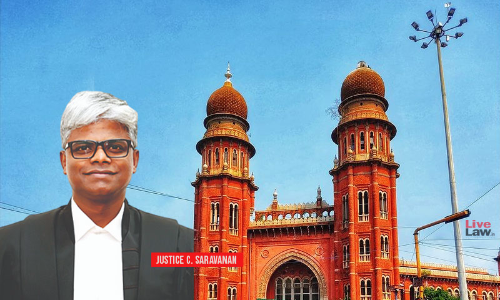
Can't Direct Equal Recitation Of Tamil Hymns Alongside Sanskrit At Meenakshi Temple Consecration In Absence Of Law: Madras High Court
The Madurai Bench of the Madras High Court dismissed pleas seeking permission to perform Velvi Kunda Nigalvugal (sacred fire ritual) and permit recitation of Tamil spiritual hymns on an “equal footing” with Sanskrit during the upcoming Kumbabishegam (consecreation ceremony) at Arulmigu Meenakshi Sundareswarar Temple. [2026 LiveLaw (Mad) 430]Justice C. Saravanan held that a writ court...

'Violation Of Fundamental Rights': Bombay High Court Directs ₹2 Lakh Compensation To Man Detained Without Notice, Grounds Of Arrest
The Nagpur Bench of the Bombay High Court has directed the Maharashtra government to pay Rs. 2 Lakh as compensation to a 26-year-old man who was arrested without being informed of the grounds of arrest or being issued a proper notice. A Division Bench of Justice Urmila Joshi-Phalke and Justice Raj D. Wakode reiterated the well-settled principle that High Courts under Article 226 of...
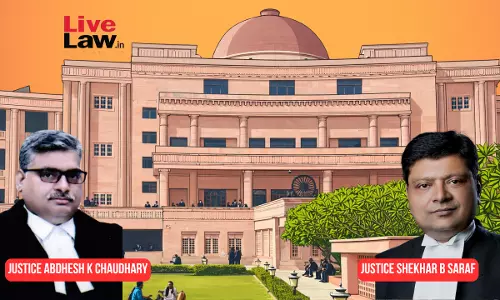
Allahabad High Court Says State's “NIL” Dues Claim Must Be Tested Against Department's Own Earlier Admission
The Allahabad High Court has held that where the State asserts, on the strength of a fresh verification exercise, that nothing remains outstanding to a contractor, the writ court is not bound to act on that assertion and must itself check the amounts released against the figure the department had earlier admitted to be payable. The bench of Justice Shekhar B. Saraf and Justice Abdhesh...
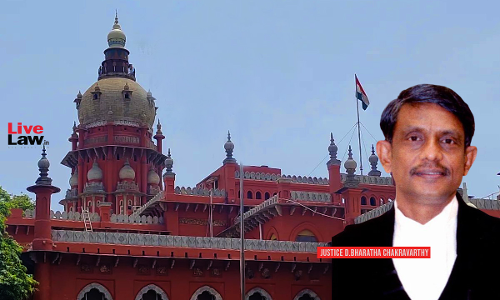
Preventing SC Person's Temple Entry On Caste Grounds Constitutes 'Untouchability', Perpetrators Can Be Prosecuted: Madras High Court
The Madras High Court recently held that preventing a person from the Scheduled Caste community from entering temples would amount to practicing untouchability and would be violative of fundamental rights guaranteed under Article 17 of the Constitution. [2026 LiveLaw (Mad) 421] Justice Bharatha Chakravarthy held that any person perpetrating such a practice would be liable to be...
Slum Dwellers Have No Fundamental Right To In-Situ Rehabilitation When Alternate Accommodation Is Provided: Bombay High Court
The Bombay High Court has held that slum dwellers cannot insist on in-situ rehabilitation on the land of a developer when permanent alternate accommodation is being offered to them. The Court observed that mere right of rehabilitation cannot be recognized to be equivalent to a right of ownership. A Division Bench of Justice Suman Shyam and Justice Advait M. Sethna was hearing a writ...

Kerala High Court Upholds Constitutionality Of Railways' Power To Remove & Prosecute Intoxicated Persons In Trains, Railway Premises
The Kerala High Court has upheld the constitutional validity of Section 145(a) of the Railways Act, 1989 which empowers the railways to remove intoxicated persons from trains or railway premises as well as to prosecute them. [2026 LiveLaw (Ker) 481]Justice Bechu Kurian Thomas noted that sufficient procedure has been laid down by the Ministry of Railways in its circular dated 14.09.2023 to...

Absence Of Medical Certificate Can't Defeat Plea For Virtual Evidence Recording Due To Physical Infirmity: P&H High Court
The Punjab and Haryana High Court has held that trial court cannot reject a person's application for recording evidence through video conferencing solely on the ground that no medical certificate was furnished for citing physical infirmity. Justice Deepinder Singh Nalwa observed that Video Conferencing Rules, framed by the High Court under Articles 225 and 227, provide for recording of...
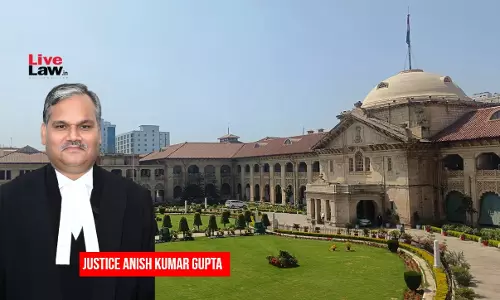
Petitioner's Residence Can't Confer Article 226 Jurisdiction When Impugned Order Passed Outside HC Territory: Allahabad High Court
The Allahabad High Court has reiterated that it cannot entertain a writ petition against an order passed by an authority situated outside its territory merely because the petitioner resides within its territory. Justice Anish Kumar Gupta relied on Lt. Col. Khajoor Singh v. Union of India, wherein the Apex Court held that jurisdiction under Article 226 of the Constitution turns on where...

Delhi High Court Asks Centre To Decide Plea For Guidelines Curbing Social Media Access For Children Below 13 Yrs
The Delhi High Court has asked the Central Government to consider a plea seeking guidelines for protecting children under 13 years by imposing curbs on access to social media and regulation of content for children between 13-16 years of age. [2026 LiveLaw (Del) 769]This comes after the Centre told the division bench of Justice V Kameswar Rao and Justice Manmeet Pritam Singh Arora that the...
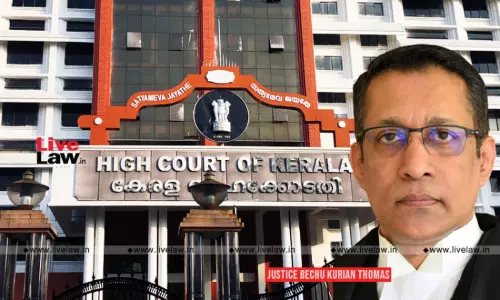
Former Wife Protected By DV Act Residence Order Can Seek Police Protection, But Can't Oust Husband From His Own House: Kerala High Court
The Kerala High Court recently granted police protection to a woman, who was sharing a household with her former husband, after obtaining a residence order under the Protection of Women from Domestic Violence Act, 2005. [2026 LiveLaw (Ker) 479]Justice Bechu Kurian Thomas directed that police protection can be given upon written request since the peculiar living situation might create...
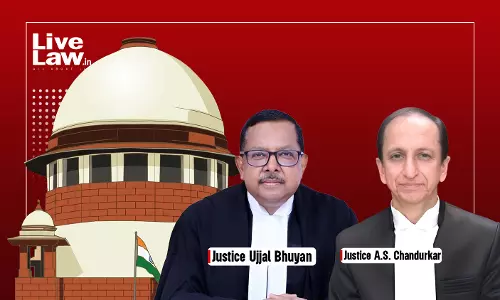
Art. 226 | Certiorari Can Be Used To Quash Tribunal Decision Which Is Grossly Perverse : Supreme Court
The Supreme Court on Monday (August 31) held that High Courts, while exercising their certiorari writ jurisdiction under Article 226 of the Constitution, can interfere with a Tribunal's order where the findings are unsupported by any material or documentary evidence. “If a finding is recorded without there being any evidence on record or a finding is recorded without any supporting...
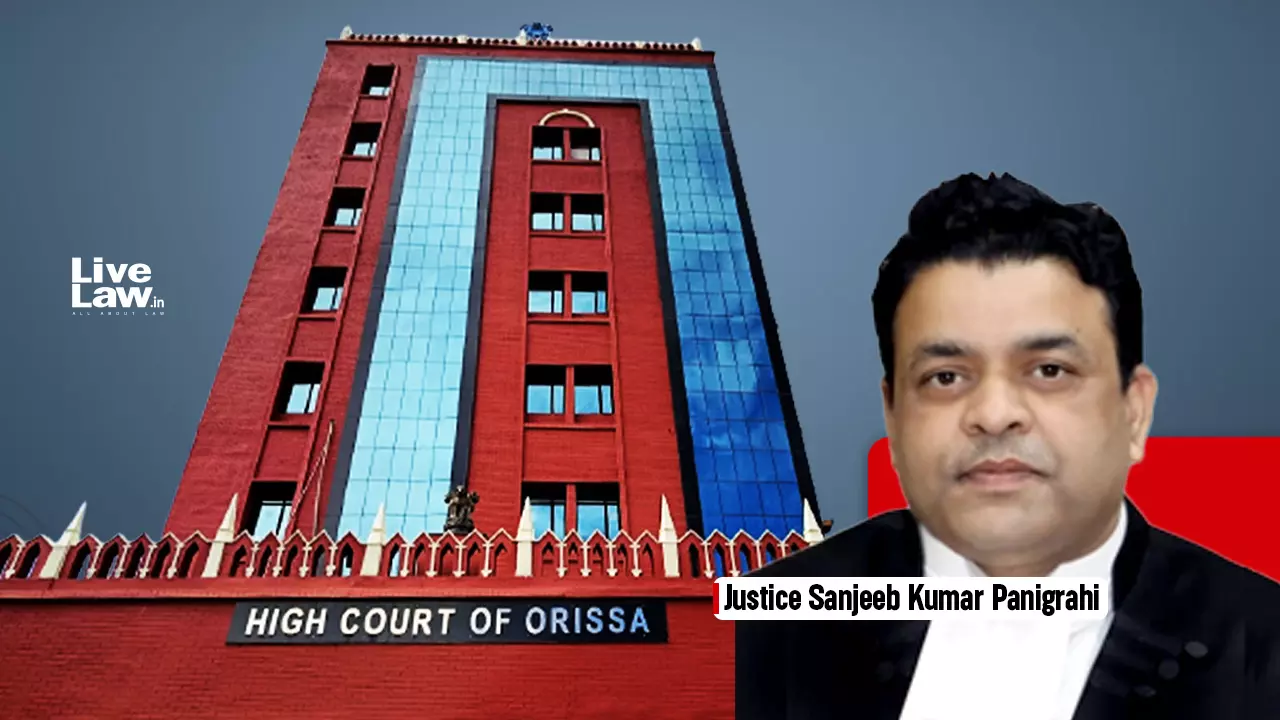
'Right To Livelihood Not Absolute': Orissa High Court Upholds Govt Notification Prohibiting Tobacco-Laced Food Products
The Orissa High Court has held that 'chewing tobacco' is a 'food' under the meaning of Section 3(1)(j) of the Food Safety and Standards Act, 2006 (the 'FSS Act') and as a consequence, it has also upheld a notification of the State Government prohibiting the manufacture, processing, packaging, storage, transportation, distribution or sale of all food products containing tobacco or nicotine....