




Constitutional Law
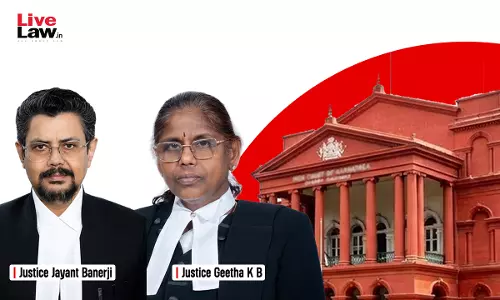
Karnataka High Court Issues Contempt Notice To Top Officials Over Failure To Compensate Kodagu Homestay Owner For Illegal Arrest
The Karnataka High Court on Wednesday [September 16] issued notice to the Chief Secretary and the Additional Chief Secretary, Home Department in a contempt petition alleging wilful disobedience of a direction to pay Rs 5 lakhs as compensation for the illegal arrest of a Kodagu homestay owner over a US woman's rape.The Division Bench of Justices Jayant Banerji and Geetha K.B was hearing a...
SARFAESI Proceedings Can Be Invoked Despite Earlier Decree Passed In DRT OA For Same Debt : Supreme Court
The Supreme Court has recently dismissed a writ petition filed under Article 32 of the Indian Constitution challenging the invocation of the Securitisation and Reconstruction of Financial Assets and Enforcement of Security Interest Act, 2002 (SARFAESI Act) by an Asset Reconstruction Company (respondent), holding that the overriding effect of Section 35 of the SARFAESI Act permits such...

Rajasthan High Court Rejects Plea Against Deletion From Voter List, Cites Bar Under Article 243ZG
The Rajasthan High Court has rejected a man's plea challenging the deletion of his name from the voter list for the Nagar Palika General Election 2026, in light of the prohibition imposed by Article 243-ZG of the Constitution of India. Article 243 ZG bars courts from interfering in the matters relating to municipal elections. The bench of Justice Anoop Kumar Dhand observed that the...
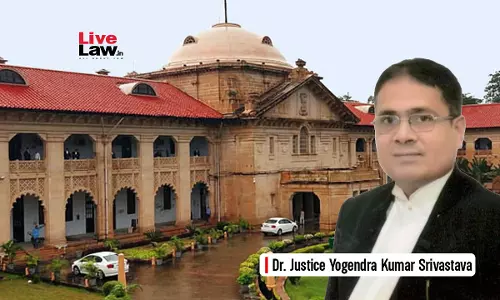
Article 227 Petition Maintainable Against Small Causes Court's Refusal To Stay Suit Under Section 10 CPC: Allahabad High Court
The Allahabad High Court has held that an order rejecting an application under Section 10 read with Section 151 CPC, seeking stay of a suit pending before a Court of Small Causes, does not constitute a “case decided” within the meaning of Section 25 of the Provincial Small Cause Courts Act, 1887. It held that since the revisional remedy under Section 25 was therefore not available, a...
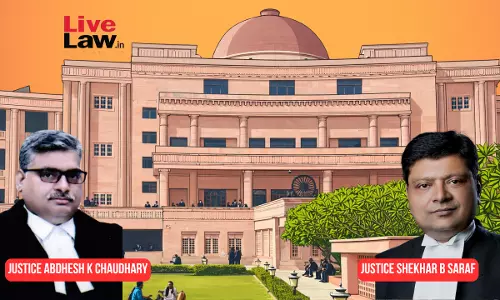
Bar Association Membership Disputes Private In Nature, Not Amenable To Writ Jurisdiction: Allahabad High Court
The Allahabad High Court has held that Bar Association membership disputes are private in nature and are not amenable to writ jurisdiction under Article 226 of the Constitution. The Court sadi that disputes concerning membership, suspension or debarment of members do not involve any public law element.A Bench of Justice Shekhar B Saraf and Justice Abdhesh Kumar Chaudhary made the...
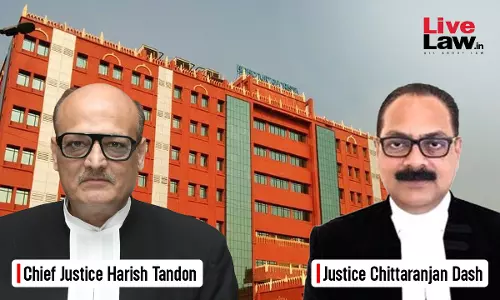
Orissa High Court Rejects Challenge To Appointment Of Deputy Chief Ministers, Calls It 'Mere Descriptive' Post With No Superior Privilege
The Orissa High Court has dismissed a PIL challenging the constitutional validity of the appointment of Deputy Chief Ministers in the State, by observing that the post is “merely descriptive” and its incumbent does not enjoy superior constitutional power over other members of the Council of Ministers. [2026 LiveLaw (Ori) 107]While clarifying the ceremonial purpose of the designation,...

Surrogacy | Kerala High Court Rejects Couple's Plea To Use Frozen Embryos After Husband Crossed 55-Year Age Limit
The Kerala High Court, in a recent decision, has upheld the constitutional validity of the age limits imposed by the Surrogacy (Regulation) Act, 2021 on intending couples seeking surrogacy services. [2026 LiveLaw (Ker) 494]The Division Bench of Justice K. Natarajan and Justice Johnson John dismissed an appeal filed by an intending couple challenging the Single Bench's dismissal of their...
Bombay High Court Quashes Govt Resolution Reducing Age Limit For Anganwadi Sevikas' Promotion To Supervisor; Restores 55-Yr Limit
The Bombay High Court has quashed a Government Resolution reducing the maximum permissible age for promotion of Anganwadi Sevikas to Supervisor from 55 years to 50 years. The Court held that legitimate expectation arose from the Government Resolution dated 17 November 2001 and corrigendum dated 7 December 2001, under which Anganwadi Sevikas up to 55 years were eligible for promotion.A...
Supreme Court Upholds Asst Professor's Appointment Despite Doubts Over PhD, Orders University Probe
The Court refused to interfere with the appointment on the ground that PhD was not a mandatory qualification for the post.
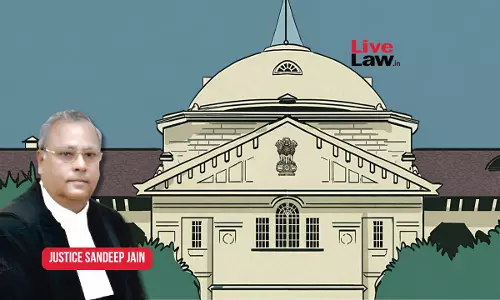
Even Genuine Parental Concern Cannot Override Major Individual's Right To Choose Life Partner: Allahabad High Court
The Allahabad High Court has held that even genuine parental concern cannot override the constitutionally protected autonomy of a major individual to choose a life partner.The Court added that the right to choose one's partner is a facet of personal liberty and dignity guaranteed under Article 21 of the Constitution.A bench of Justice Sandeep Jain made the observation while allowing a...

Madras High Court Directs Nurses Council To Record Transgender Man As 'Male' In All Records
Right to construct one's own identity is part of right to privacy, Court held.
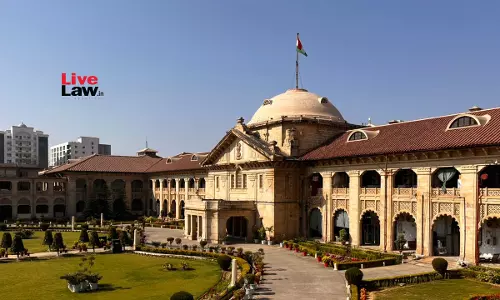
Excluding Legally Unavailable Posts From Ongoing Recruitment Doesn't Amount To Changing “Rules Of Game” Midway: Allahabad High Court
The Allahabad High Court has held that withdrawing vacancies from a running recruitment, because those posts could not lawfully be filled under the rules named in the advertisement, does not amount to altering the “rules of the game” midway. It held that correcting the vacancy position is different in kind from changing eligibility or selection criteria. It held that only the latter is...