




Criminal Law
"We Be Not Destroyed By Past Errors': Delhi High Court Invokes Rig Ved; Orders Premature Release Of Murder Convict 'Casually' Denied Relief
The Delhi High Court has ordered release of a murder convict serving life sentence, having spent 20 years behind bars, observing that the Sentence Review Board (SRB) had repeatedly rejected his applications for premature release without application of mind. [2026 LiveLaw (Del) 792]The petitioner, having undergone imprisonment of more than 25 years including remission, had challenged SRB...
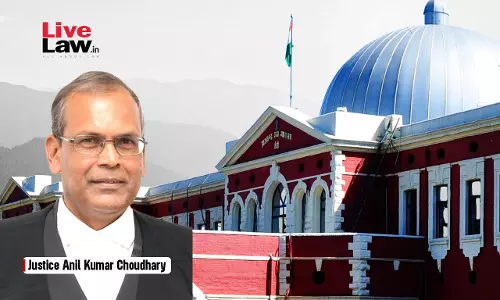
Fees Paid To Medical College Cannot Be Treated As 'Entrustment' Under Section 406 IPC: Jharkhand High Court
The Jharkhand High Court has held that payment of fees by a student or his parents to a medical college is a standard financial or contractual transaction and cannot be treated as “entrustment” of property for attracting the offence of criminal breach of trust under Section 406 of the Indian Penal Code.A Single Judge Bench of Justice Anil Kumar Choudhary made the observation while...
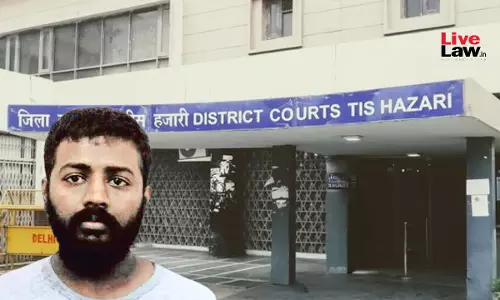
Delhi Court Imposes 8-Year Sentence On Sukesh Chandrashekhar For Impersonating Supreme Court Judge To Secure Bail
Court must convey to the convict and men of his ilk that cost of attacking the institution of justice isn't unconsequential, the Court said.

Jharkhand High Court Quashes Cheating Case Against Flipkart, E-Kart Employees Over Missing Shipments
The Jharkhand High Court has quashed criminal proceedings against an E-Kart Logistics official and a member of the Flipkart security team, observing that allegations of non-return of shipments could not constitute offences of criminal breach of trust or cheating against the individual employees when the alleged entrustment of property was to Flipkart, a company.A Single Judge Bench of...

Muslim Man Having Sexual Intercourse With Minor Wife Liable Under POCSO Act: Kerala High Court
The Kerala High Court recently clarified that a Muslim man having sexual intercourse with his wife, who is aged below 18 years, is liable under the Protection of Children from Sexual Offences Act (POCSO Act). [2026 LiveLaw (Ker) 470]Justice Jobin Sebastian held:“sexual intercourse with a girl below eighteen years of age attracts the offences under the POCSO Act, and in such a situation,...

S. 304-B IPC | No Proof Of Harassment For Dowry 'Soon Before' Death: Allahabad High Court Acquits Three In 35-Year-Old Case
The Allahabad High Court has held that to sustain a conviction under Section 304-B IPC, the prosecution must prove that the woman was subjected to cruelty or harassment for, or in connection with, a demand for dowry "soon before" her death.A bench of Justice Manoj Bajaj made the observation while allowing 3 criminal appeals arising from the death of a woman in September 1991. The...

S. 396 IPC | Prosecution Must Establish Dacoity Was First Intention, Murder Committed In Its Course: Allahabad High Court
The Allahabad High Court has held that to sustain a conviction under Section 396 IPC (dacoity with murder), the prosecution must establish that dacoity was the first intention and that the murder was committed in the course of committing the dacoity.A bench of Justice Samit Gopal made the observation while allowing a criminal appeal and acquitting the surviving accused in a 1981 case. The...

S. 313 CrPC | No Adverse Inference Against Accused For Failing To Explain Circumstance Not Put To Him: Allahabad High Court
The Allahabad High Court has observed that no adverse inference could be drawn against an accused for failing to explain a circumstance or piece of evidence on which he was not questioned by the trial Court under Section 313 CrPC.A bench of Justice Subhash Vidyarthi made the observation while allowing 2 connected criminal appeals and acquitting 3 accused who had been convicted under Section...
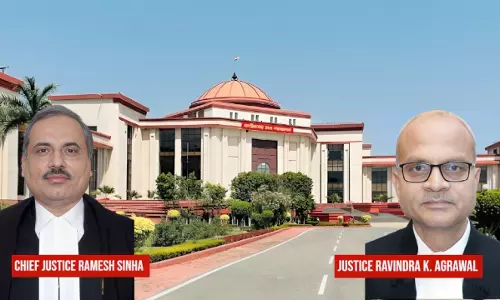
Chhattisgarh High Court Upholds ED's ₹110 Crore Provisional Attachment Of Goa's Westin Hotel In Alleged Liquor Scam Cash Trail
The Chhattisgarh High Court has refused to interfere with the Enforcement Directorate's (ED) provisional attachment of Hotel Westin, Goa, to the extent of ₹110 crore. While dismissing the petition, the Court clarified that it has not taken a final adjudication on the allegations concerned, and such question were required to be examined through the statutory adjudicatory mechanism in...

Karnataka High Court Issues Guidelines For Trial Courts & Police On Section164 CrPC Statement, Says Copies Must Be Furnished To Accused
Upholding the right to a fair trial, the Karnataka High Court has recently acquitted a POCSO accused, while simultaneously issuing suo motu guidelines for Investigating Officers and trial Courts on recordview of Section 164 CrPC [Section 183 BNSS] statements, as well as the mandatory furnishing of statements recorded to the accused. [2026 LiveLaw (Kar) 320]The Division Bench of Justice...
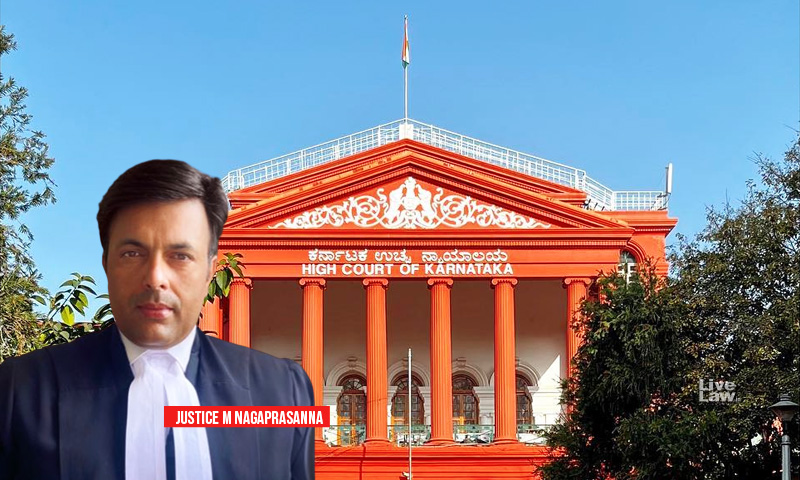
Suicide Of Child Requires Different Investigative Approach Than Adult: Karnataka High Court Rejects Closure Report
The Karnataka High Court has recently quashed a trial court order accepting police's second 'B' report in a case involving the alleged suicide of a student who is claimed to have left behind a death note stating 'marks is not everything' while naming her principal, teachers, and classmates. [2026 LiveLaw (Kar) 320]The single judge bench of Justice M. Nagaprasanna, while allowing the...

'Romantic Relationship, Proposal To Marry Cannot Dilute POCSO Act': Uttarakhand High Court Denies Bail Over Minor's Sexual Assault
The Uttarakhand High Court has held that “the plea of romantic relationship and subsequent proposal to marry cannot dilute the statutory protection granted to minor child under the POCSO Act,” thus reiterating that a minor's consent is “completely irrelevant in the eyes of law.”Applying this to the present case, the Court also took note of the allegation that the accused had concealed...