Chhattisgarh High Court Upholds Cancellation Of Departmental Exam For State Tax Inspectors, Says Curable Irregularities Cannot Set Aside Decision
Saksham Vaishya
28 Nov 2026 3:40 PM IST
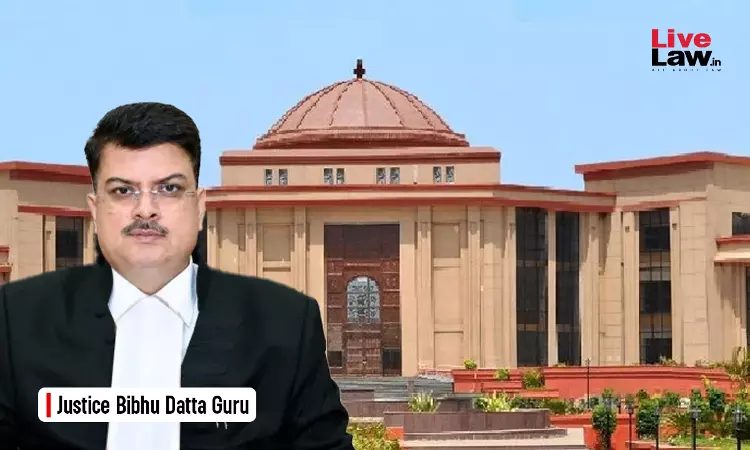
The Chhattisgarh High Court has upheld the State Government's decision to cancel the 2021 and 2022 Limited Departmental Competitive Examinations for promotion to the post of State Tax Inspector, holding that serious irregularities which tainted the recruitment process could justify cancellation of the entire examination. The Court observed that the decision could not be invalidated merely because the irregularities might have been capable of rectification.
Justice Bibhu Datta Guru was hearing a batch of writ petitions filed by employees of the Commercial Tax Department challenging the State's order dated September 11, 2026, which cancelled the examinations, the consequential appointments and directed the selected candidates to revert to their substantive posts of Assistant Grade-III.
The petitioners had originally been appointed as Assistant Grade-III employees and were subsequently promoted as State Tax Inspectors after clearing the departmental examinations conducted in 2021 and 2022. Some had also completed their probation and been confirmed in the promoted posts. They argued that the cancellation, undertaken without issuing show-cause notices or supplying the enquiry report, violated the principles of natural justice.


Examining the findings concerning the 2021 examination, the Court noted various irregularities in the entire process; answer booklets had been transported from the examination centre in sealed but uncoded condition, with the seals subsequently opened for coding before evaluation. The coding also failed to conceal candidates' names and roll numbers, creating the possibility of answer-booklet substitution.
The enquiry further revealed that 22 answer sheets had been subjected to unauthorised re-evaluation by members of the Selection Committee immediately before declaration of the results. Further, certain candidates' answers were found to correspond word-for-word with model answers.
The Court held that the Government was well within its right to cancel the process, and the same cannot be questioned merely because the irregularities were curable. It observed:
“… the Government was well within its right to cancel the process, for, serious irregularities had crept in, tainting the process and in such circumstances, the cancellation of the process cannot be faulted merely on the ground that the irregularities were curable.”
The Court observed that the Government had three possible options: allow the process to continue despite the irregularities, cancel the entire process and conduct it afresh, or separate the tainted portion from the untainted portion and proceed with the latter.
Although the third option could have been considered, more than 500 candidates had appeared in the examinations conducted in 2021 and 2022. In such circumstances, the Court held that it is not possible to segregate the wrongdoers and even in that process, the innocent candidates may suffer adversely.
Applying the test of proportionality, the Court held that the decision to cancel the process and start afresh could not be considered disproportionate.
“… no person of reasonable prudence would be left in doubt that the process had a coat of discernible taint suggesting impropriety and bias, if not corruption; and applying the test of proportionality, the decision… cannot be said to be so disproportionate and incommensurate with the illegalities/ irregularities detected that interference could have been said to be legitimately warranted,” the Court remarked.
The Court further observed that the decision cannot be set aside merely on the ground that the irregularities might have been capable of rectification, particularly when the competent authorities considered the irregularities serious enough to warrant cancellation of the entire process.
Finding no sufficient ground to interfere with the Government's decision, the Court dismissed all the writ petitions.
Case Title: Amit Humane v. State of Chhattisgarh and Connected Matters [WPS No. 7065 of 2026 and Connected Matters]