



- Home
- /
- High Courts
- /
- Kerala High Court
- /
- Strong Suspicion Of Conspiracy...
Strong Suspicion Of Conspiracy Sufficient To Deny Discharge Even In Absence Of Direct Evidence: Kerala High Court
LIVELAW NEWS NETWORK
27 Nov 2026 5:51 PM IST
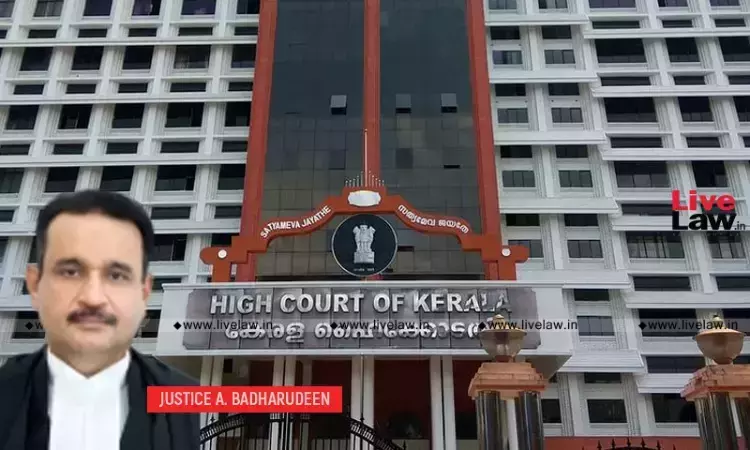
The Kerala High Court has held that strong suspicion regarding an accused's involvement in a conspiracy is sufficient to warrant a trial, even in the absence of direct evidence of the conspiracy. [2026 LiveLaw (Ker) 656]Justice A. Badharudeen was considering a revision petition, challenging the rejection of a discharge plea filed by the second accused in a corruption case involving...
This is a premium content
Available exclusively to
Our subscribers
Subscribe Premium 
INR 1099+GST
Your support helps us to bring you more content at
an affordable subscription scheme !!!
All payment options available
The Kerala High Court has held that strong suspicion regarding an accused's involvement in a conspiracy is sufficient to warrant a trial, even in the absence of direct evidence of the conspiracy. [2026 LiveLaw (Ker) 656]
Justice A. Badharudeen was considering a revision petition, challenging the rejection of a discharge plea filed by the second accused in a corruption case involving alleged manipulation of land purchases under the State Government's tribal welfare scheme by name “Ashikkum Bhoomi Adivasikku Swantham'.
The prosecution alleged that the accused had manipulated the purchase and distribution of land under the Government scheme 'Ashikkum Bhoomi Adivasikku Swantham', implemented in 2015 for providing land to Scheduled Tribe beneficiaries.
According to the prosecution, the first accused, who was the Tribal Development Officer, Pathanamthitta, sanctioned and disbursed ₹77 lakh to the second accused towards the purchase of 200 cents of land at ₹38,500 per cent, intended for distribution among eight beneficiaries, each of whom was entitled to not less than 25 cents.
However, the second accused allegedly possessed only 183.50 cents of land. Out of this, 13.33 cents was set apart for a pathway and was also included in the consideration paid by the Government. Consequently, only 170.17 cents remained available for distribution among the eight beneficiaries. The prosecution alleged that the beneficiaries were allotted unequal and substantially lesser extents of land, resulting in an excess payment of ₹11,48,555 to the second accused.
The accused were charged with offences under Section 13(1)(d) read with Section 13(2) of the Prevention of Corruption Act, 1988, and Sections 420, 120B and 34 of the Indian Penal Code.
The second accused, who is the revision petitioner, had approached the Special Judge (Vigilance), Kollam, seeking discharge of the offence.
The Special Judge found that there was ample prima facie materials, for a trial against the petitioner and the veracity of the prosecution case regarding 'criminal conspiracy' alleged against the petitioner could only be considered, after a full-fledged trial. Hence the petitioner's application for discharge was rejected.
In the revision petition, the petitioner contended that, apart from the statement of Witness No.14, there were no materials establishing his involvement in the alleged conspiracy. It was argued that even the statement of the said witness did not prima facie establish his participation in the commission of the offences.
The High Court noted that the statements of Witness Nos.14 to 17 indicated that the petitioner had actively participated in the measurement of the property and had conveyed only 170.17 cents for distribution among the beneficiaries, despite having received consideration for 200 cents.
The Court also took note of the allegation that the petitioner did not possess even the entire extent of 200 cents for which payment had been made.
The Court observed that the statements of the witnesses, particularly regarding the measurement of the property and the setting apart of 13.33 cents for a pathway, prima facie indicated the petitioner's involvement in the alleged manipulation of the land purchase process.
"When the prosecution alleges conspiracy between the accused persons, direct evidence to establish the conspiracy cannot be insisted upon, and proof of conspiracy, mainly based on circumstantial evidence, though direct evidence in all cases could not be ruled out." the Court observed.
The Court further observed that the plea of innocence raised by the petitioner was a matter to be examined on the basis of evidence during trial and could not be accepted at the stage of considering discharge when the prosecution materials disclosed circumstances indicating his involvement.
“It is well settled law that, even a strong suspicion regarding the involvement of an accused in a case would be sufficient to negate the plea of discharge even in the absence of prima facie materials as such, though a mere suspicion would not suffice the requirement of strong suspicion.” Court observed.
Accordingly, the Court upheld the order of the Special Judge rejecting the discharge application and dismissed the criminal revision petition.
Counsel for Revision Petitioner: R. Nikhil, K.K. Nesna, Haseena A.A, Abdul Rasheed P
Counsel for Respondent: Thomas Muvattupuzha
Tags


