



- Home
- /
- High Courts
- /
- Orissa High Court
- /
- Orissa High Court Rejects Challenge...
Orissa High Court Rejects Challenge To Appointment Of Deputy Chief Ministers, Calls It 'Mere Descriptive' Post With No Superior Privilege
LIVELAW NEWS NETWORK
11 Sept 2026 3:49 PM IST
The Orissa High Court has dismissed a PIL challenging the constitutional validity of the appointment of Deputy Chief Ministers in the State, by observing that the post is “merely descriptive” and its incumbent does not enjoy superior constitutional power over other members of the Council of Ministers. [2026 LiveLaw (Ori) 107]While clarifying the ceremonial purpose of the designation,...
This is a premium content
Available exclusively to
Our subscribers
Subscribe Premium 
INR 1099+GST
Your support helps us to bring you more content at
an affordable subscription scheme !!!
All payment options available
The Orissa High Court has dismissed a PIL challenging the constitutional validity of the appointment of Deputy Chief Ministers in the State, by observing that the post is “merely descriptive” and its incumbent does not enjoy superior constitutional power over other members of the Council of Ministers. [2026 LiveLaw (Ori) 107]
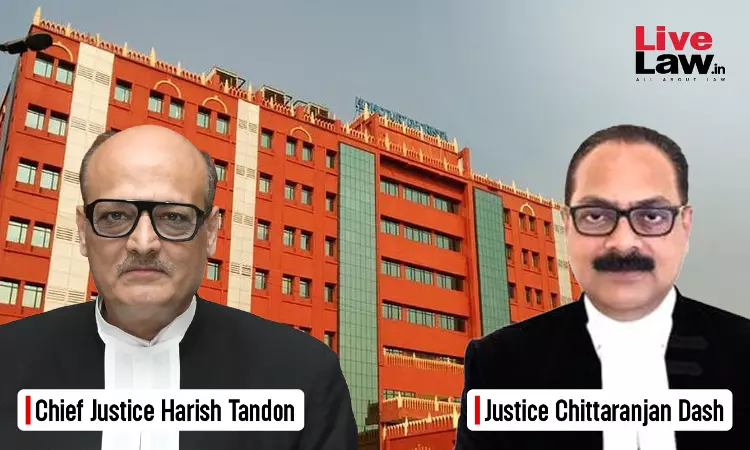
While clarifying the ceremonial purpose of the designation, the Division Bench of Chief Justice Harish Tandon and Justice Chittaranjan Dash held–
“There is no scintilla of doubt in our mind on a well-nigh principle enunciated in the above report that the nomenclature as Deputy Chief Minister is mere descriptive and an integral part of the Council of Ministers. The Table of Precedence or the Warrant of Precedence issued by the President's Secretariat and the State is restricted to ceremonial purposes not touching upon or invading the right, privileges and the powers exercised by the Council of Ministers under Article 163 of the Constitution of India. It has nothing to do with the governance by exercising powers superior to the Council of Ministers, but only in order to ensure the smooth running of the ceremonial functions organised by the Centre and the State.”
The Court was hearing a PIL filed by Advocate Eleena Dash. Primary challenge was laid to the legality of such office bereft of any constitutional prescription. During the course of hearing in the last month, Advocate Srinivas Mohanty appearing for the petitioner had argued that by appointing Deputy CMs, the State Government has attempted to bring in an extra-constitutional “three-tier hierarchy” within the Council of Ministers, i.e. Chief Minister, Deputy CMs and other Ministers.
Referring to Articles 163 and 164 of the Constitution, which prescribe for Council of Ministers to aid and advise Governor and provisions as to Ministers respectively, it was submitted on behalf of the petitioner that the Constitution merely provides for a Council of Ministers with the Chief Minister at the head to aid and advise the Governor. However, no provision stipulates or empowers any authority to appoint Deputy CMs.
The State, represented by Advocate General Pitambar Acharya, had defended such impugned appointments, by submitting that Deputy CMs are merely part of the Council of Ministers and absence of express stipulation for the post does not necessarily make such appointment unconstitutional or illegal.
Advocate Mohanty had then specifically questioned the legality of grant of extra remunerations, privileges, protocols and higher status to the Deputy CMs in the 'Warrant of Precedence' issued by both the President's Secretariat and the State Government..
Referring to K.M. Sharma v. Devi Lal & Ors. (1990), the Court made it clear that the post of a Deputy CM is akin to a member of the Council of Ministers and the mere designation as such does not per se confer any power of the Chief Minister in the Deputy CMs.
“Even the oath given to a person as a Deputy Chief Minister which is mere descriptive of a person is not violative of the constitutional provisions and a distinction was sought to be made between a description and the substantial part and once the substantial part is rigorously followed, mere description would not invalidate the oath taken in terms of the constitutional mandate,” it added.
The Court rejected the request of the petitioner to presume ill-intention on the part of the Government by bringing the Odisha Legislative Assembly Members' Salary, Allowances and Pension (Amendment) Bill, 2025, which was introduced before the State Assembly last year with an objective to substantially increase the remunerations of the MLAs. The same was challenged before the Court and the Government withdrew the Bill before it could be passed.
Also taking a cue from the decision of the Karnataka High Court in Dr. Sekhar S. Iyer v. Chief Secretary & Ors. (2018), the Court made it clear that the designation of Deputy CM is mere descriptive who is essentially a part of the Council of Ministers. The Warrant of Precedence is meant only for ceremonial purposes which does not affect or enjoins upon special power to Deputy CMs, being divorced from Article 163 of the Constitution.
As a corollary, the Court dismissed the PIL holding it to be frivolous and driven by oblique motive of seeking publicity. While parting, the Court, speaking through Chief Justice Tandon, reprimanded the petitioner by observing–
“We would be failing in our duty in not observing that the instant Public Interest Litigation is filed on a specious ground and sheer wastage of the special remedy in the Public Interest inviting a cost to be imposed, but bearing in mind that the petitioner is the practising advocate, we leave the matter at this stage with the observation that she will henceforth raise a genuine cause for the disadvantaged person whose fundamental or constitutional rights are infringed and not to indulge in such frivolous litigation.”
Counsel for the Petitioner: Mr. Srinivas Mohanty & Ms. Kabita Patra, Advocates
Counsel for the State: Mr. Pitambar Acharya, Advocate General & Mr. Saswat Das, Addl. Government Advocate
Tags


