



'NCDRC Being Situated In Delhi Does Not Mean Only Delhi HC Can Entertain Writ Petitions Against Its Orders': Patna High Court
LIVELAW NEWS NETWORK
28 Nov 2026 1:24 PM IST
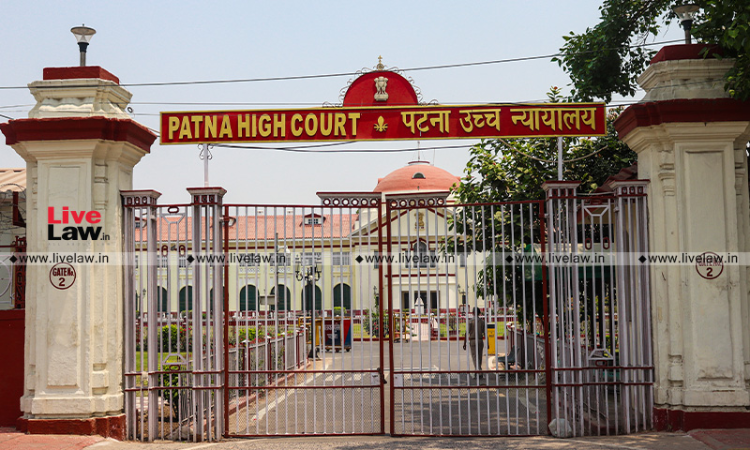
Image by: Siddharth Anand
The Patna HC has held that the mere location of the National Consumer Disputes Redressal Commission (NCDRC) in New Delhi does not mean that only the Delhi High Court has territorial jurisdiction to entertain writ petitions challenging its orders. The Court observed that the jurisdictional High Court is determined by where the cause of action arose, and orders passed by the NCDRC are amenable to writ and supervisory jurisdiction under Articles 226 and 227 of the Constitution.
A Single Judge Bench of Justice Alok Kumar rejected an objection to its territorial jurisdiction over an NCDRC order passed in New Delhi, observing that the entire cause of action in the dispute, including the institution of the original consumer complaint, arose in Bihar. The Court consequently set aside the NCDRC's order dismissing a flat buyers' complaint and directed the builder to refund the sale consideration with 9% annual interest.


The dispute arose after the petitioners purchased a flat in Vrindavan Apartment, Kankarbagh, Patna, through a registered sale deed dated October 3, 2012, after obtaining a bank loan of ₹28.40 lakh. According to the petitioners, despite execution of the sale deed, possession was not handed over because the flat was already occupied by another person, Anjani Kumar Sinha, under an earlier agreement for sale dated March 5, 2011, which had allegedly been concealed from them. The petitioners approached the Bihar State Consumer Disputes Redressal Commission in 2013, seeking possession of the flat or, alternatively, a refund of ₹42,71,454 with 18% interest, along with compensation and litigation costs.
The respondents contended that the flat sold to Anjani Kumar Sinha was different from the flat purchased by the petitioners. On May 24, 2016, the State Consumer Commission observed that the relationship between the consumer and service provider had ended upon execution of the sale deed. However, it directed the respondents to deliver physical possession of the flat within three months. Aggrieved by the failure to consider their alternative claim for refund and compensation, the petitioners approached the NCDRC.
By an order dated January 31, 2024, the NCDRC dismissed their appeal and consumer complaint as not maintainable. The petitioners subsequently approached the Patna High Court, challenging the NCDRC's order and seeking a refund with interest and compensation.
Before the High Court, the respondents raised a preliminary objection that the petition was not maintainable before the Patna High Court because the challenged order had been passed by the NCDRC in New Delhi. They contended that the Delhi High Court had jurisdiction to entertain the challenge. Examining the objection, the High Court relied on the Supreme Court's decisions in Universal Sompo General Insurance Co. Ltd. v. Suresh Chandra Jain, (2024) 9 SCC 148, and Siddharth S. Mookerjee v. Madhab Chand Mitter, 2024 SCC OnLine SC 4285.
The Court noted that the Supreme Court had recognised the availability of writ and supervisory remedies before the jurisdictional High Court against NCDRC orders. It further observed that the location of the NCDRC in New Delhi did not automatically confer jurisdiction exclusively upon the Delhi High Court. Rejecting the objection to its territorial jurisdiction, the Court held:
“In light of the settled legal position enunciated in Universal Sompo General Insurance Co. Ltd. (supra), L. Chandra Kumar (supra), and Siddharth S Mookerjee (supra), it is clear that an order passed by the National Consumer Disputes Redressal Commission is amenable to the writ and supervisory jurisdiction of the jurisdictional High Court under Articles 226 and 227 of the Constitution of India. Furthermore, the mere situs of the NCDRC in New Delhi does not divest this Court of its territorial jurisdiction, as the cause of action in the present matter including the institution of the original consumer complaint arose wholly within the territorial limits of the State of Bihar.”
Having affirmed its jurisdiction, the High Court proceeded to examine whether execution of a sale deed extinguished the relationship between a consumer and a service provider. The Court referred to the Supreme Court's decision in Wing Commander Arifur Rahman Khan and Aleya Sultana and Ors. v. DLF Southern Homes Pvt. Ltd. and Ors., (2020) 16 SCC 512, concerning the maintainability of consumer claims following execution of conveyance deeds and delivery of possession.
It noted that the Supreme Court had rejected the proposition that execution of a conveyance deed necessarily terminated the developer's obligations or prevented flat buyers from pursuing claims before consumer forums. The High Court also referred to Narne Construction (P) Ltd. v. Union of India, (2012) 5 SCC 359, distinguishing a simple transfer of immovable property from housing construction and building activities falling within the definition of service under consumer protection law.
Applying these principles, the Court held that the State Consumer Commission and the NCDRC had proceeded on an erroneous understanding that execution of the sale deed brought the consumer-service provider relationship to an end. The Bench observed that if even receipt of possession or execution of a conveyance deed did not extinguish a flat buyer's consumer claim, mere execution of a sale deed could not have that effect.
The Court further found that selling the flat to the petitioners despite an earlier agreement for sale in favour of another person, without disclosing that agreement, constituted deficiency in service and an unfair trade practice. It observed:
“By selling the flat to the petitioners while it was already the subject of an earlier agreement of sale in favour of another, and by concealing that agreement, the respondents failed to give the petitioners what they had paid for.”
Accordingly, the High Court quashed the NCDRC's order dated January 31, 2024, and directed the respondent-builder to refund the entire sale consideration with interest at 9% per annum from the date of execution of the sale deed until actual realisation, within three months.
The Court recorded the petitioners' undertaking to clear outstanding loans and dues owed to financial institutions in relation to the flat from the refunded amount. It further directed that upon receipt of the sale consideration and accrued interest, the petitioners would cease to have any right, title or interest in the flat. The builder was granted liberty to approach the competent court for cancellation of the sale deed in accordance with law.
The writ petition was accordingly allowed.
Appearance:
For the Petitioners: Mr. Dhananjay Kashyap, Advocate; Mr. Nagdeo Choubey, Advocate.
For the Respondents: Mr. Pritam Kumar, Advocate.


