- Home
- /
- High Courts
- /
- Uttarakhand High Court
- /
- Signed Blank Cheque Presumes...
Signed Blank Cheque Presumes Legally Enforceable Debt Even If Particulars Were Filled By Another: Uttarakhand High Court
Saksham Vaishya
18 Sept 2026 4:10 PM IST
The Uttarakhand High Court has held that once the execution of a cheque or the signature thereon is admitted, the statutory presumptions under Sections 118(a) and 139 of the Negotiable Instruments Act, 1881, come into play, even if the other particulars of the cheque were filled in by someone else. The Court observed that the difference in handwriting between the signature and other...
This is a premium content
Available exclusively to
Our subscribers
Subscribe Premium 
INR 1099+GST
Your support helps us to bring you more content at
an affordable subscription scheme !!!
All payment options available
The Uttarakhand High Court has held that once the execution of a cheque or the signature thereon is admitted, the statutory presumptions under Sections 118(a) and 139 of the Negotiable Instruments Act, 1881, come into play, even if the other particulars of the cheque were filled in by someone else. The Court observed that the difference in handwriting between the signature and other particulars of the cheque, by itself, is not sufficient to rebut the statutory presumption.
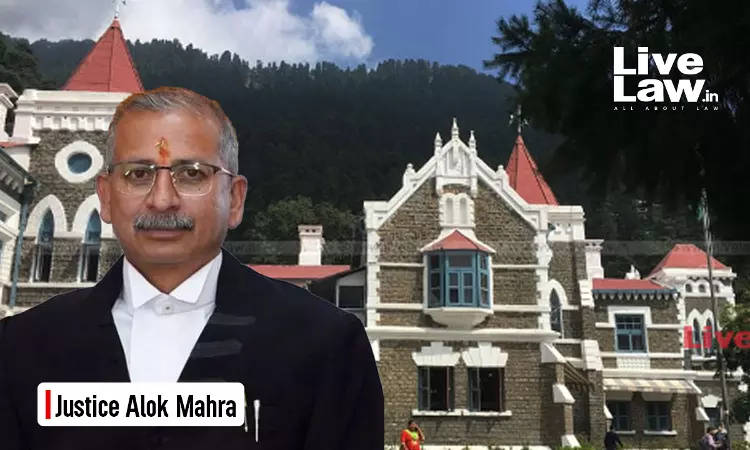
Justice Alok Mahra was hearing a criminal revision filed challenging his conviction under Section 138 of the N.I. Act and the dismissal of his appeal by the Sessions Court. The trial Court had sentenced him to one year of simple imprisonment and imposed a fine of ₹2,20,000.
The case arose after the revisionist issued a cheque for ₹2,00,000 in favour of Respondent No.2, which was dishonoured with the endorsement “Insufficient Funds,” and despite statutory notice, the cheque amount was not paid.
The revisionist contended that the cheque was a blank signed cheque handed over to one Kuldeep Bisht and was subsequently misused. It was submitted that Respondent No.2 had filled in the particulars of the cheque himself and that the handwriting on its body was different from the revisionist's signature.
The Court noted that it was undisputed that the cheque bore the admitted signature of the revisionist. It held that the contention that the other particulars were filled in by someone else, by itself, did not come to the revisionist's aid.
“Once the execution of the cheque is admitted or the signature thereon is admitted, the statutory presumptions under Sections 118(a) and 139 of the N.I. Act come into play. The presumption under Section 139 is that the cheque was received by the holder, wholly or in part, in discharge of any debt or other legally enforceable liability,” the Court observed.
Referring to the Supreme Court's judgment in Bir Singh v. Mukesh Kumar, the Court observed that a person who signs a cheque and voluntarily hands it over to the payee remains liable even if the cheque has been filled in by another person.
“The mere fact that the particulars of the cheque were subsequently filled in by the payee or any other person does not, by itself, invalidate the cheque or absolve the drawer of liability. The statutory presumption under Section 139 of the N.I. Act continues to operate unless the accused successfully rebuts the same by raising a probable defence,” the Court remarked.
The Court held that a mere denial or bald assertion of misuse of a blank cheque would not, by itself, constitute sufficient rebuttal. It further noted the revisionist had failed to place any cogent and convincing material showing that the cheque had been handed over to Kuldeep Bisht for a purpose wholly unconnected with any liability towards Respondent No.2 or that it had thereafter been unlawfully procured and misused.
The Court observed that when the signature is admitted, mere difference in handwriting between the signature and the other particulars of the cheque is not sufficient to rebut the statutory presumption.
The criminal revision was accordingly dismissed.
Case Title: Ramesh Singh Nagarkoti v. State of Uttarakhand [Criminal Revision No. 646 of 2026]
Citation: 2026 LiveLaw (UK) 104
Tags