



“Intrinsic To Fair Trial”: Uttarakhand High Court Directs Witness Testimony In Braille For Blind POCSO Accused
Preet Luthra
8 Oct 2026 8:25 PM IST
The Uttarakhand High Court has set aside an order of the Fast Track Special Court (POCSO), Dehradun, which had closed the opportunity of a completely blind accused to cross-examine a witness, holding that “furnishing material in an accessible form is intrinsically connected with the accused's right to a fair trial”.
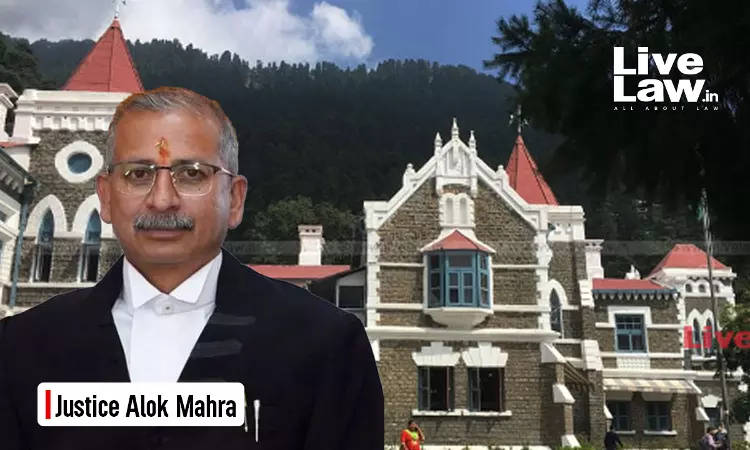
Justice Alok Mahra was dealing with a criminal revision challenging the September 9, 2026 order passed by the Trial Court whereby the accused's opportunity to cross-examine a witness had been closed.
The Court noted that the matter had earlier travelled before a Division Bench in an appeal against the accused's conviction. The said appeal was allowed on June 18, 2025, and the conviction was set aside. The Division Bench had further directed the Trial Court to conduct a re-trial after furnishing the requisite material to the accused in compliance with Section 12 of the Rights of Persons with Disabilities Act, 2016, as it had noted that the requisite material had not been supplied to the accused in an accessible format, thus depriving him of a meaningful opportunity to defend himself.


The Court referred to Section 12(4)(a), (b) and (c) of the Act which requires the appropriate Government to ensure that public documents are available in accessible formats, that necessary equipment is provided for filing, storing and referring to documents and evidence in accessible formats, and that facilities and equipment are made available to facilitate the recording of testimonies, arguments or opinions given by persons with disabilities in their preferred language and means of communication.
The Court was informed that, after the remand, the witness statement was recorded before the Trial Court. Subsequently, the accused, through counsel, sought a copy of PW-1's examination-in-chief in Braille so that he could understand the evidence and effectively instruct his counsel for cross-examination. However, the Trial Court declined the request on the ground that the statement of PW-1 recorded under Section 161 Cr.P.C. had already been supplied to the accused in Braille. The opportunity to cross-examine PW-1 was consequently closed.
The High Court held that the controversy had to be considered in light of the Division Bench's earlier judgment. It observed that the accused's complete blindness was undisputed and that the earlier direction to furnish material in compliance with Section 12 was intended to place him in a position where he could understand the material and evidence relied upon against him, effectively participate in the proceedings and put forth his defence.
“The object of the aforesaid direction was to ensure that the revisionist, on account of his visual disability, is placed in a position where he is able to understand the material and evidence being relied upon against him and is consequently able to effectively participate in the proceedings and put forth his defence. Furnishing the material in an accessible form is, therefore, not a mere procedural formality, but is intrinsically connected with the right of the accused to a fair trial”, the Court held.
The Court further held that the Trial Court ought to have ensured compliance with the directions contained in the June 18, 2025 judgment before proceeding to close the accused's opportunity to cross-examine PW-1.
Accordingly, the High Court set aside the impugned order dated September 9, 2026 and directed the Trial Court to provide the accused with a copy of PW-1's examination-in-chief in Braille. It also directed that statements and evidence of other prosecution witnesses recorded during the re-trial be made available to the accused in an accessible form, in compliance with the earlier Division Bench judgment and Section 12 of the Rights of Persons with Disabilities Act, 2016.
The Court clarified that it had not expressed any opinion on the merits of the prosecution case and accordingly allowed the criminal revision.


