



Uttarakhand High Court Stays Blacklisting Of 'Shrimat Express' Newspaper, Removal Of Editor From Print Media Steering Committee
Preet Luthra
6 Nov 2026 3:00 PM IST
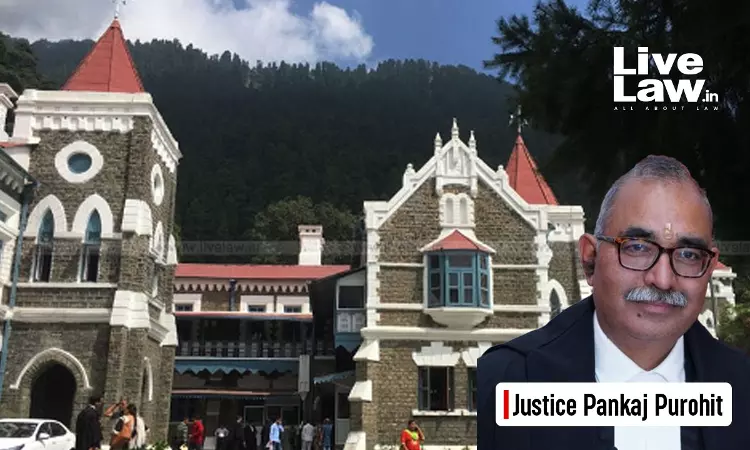
The Uttarakhand High Court has stayed orders blacklisting the daily newspaper Shrimat Express from receiving government advertisements for three years and removing its owner-editor from the Steering Committee constituted under the Uttarakhand Print Media Advertisement Rules, 2015.
Justice Pankaj Purohit passed the interim order after noting that the newspaper had been blacklisted without providing its owner-editor an opportunity of hearing. The Court also took note of the petitioner's contention that his removal from the Steering Committee had been ordered by an authority not empowered to do so under the applicable Rules.
The petition was filed by Deendayal Mittal, owner and editor of Shrimat Express, challenging two orders passed by the Director General, Information and Public Relations, Uttarakhand. The first, dated May 30, 2026, blacklisted the newspaper from receiving government advertisements for three years. The second, dated July 8, 2026, removed him from the Steering Committee constituted under Rule 5 of the Uttarakhand Print Media Advertisement Rules, 2015, before completion of his two-year term.


Counsel for the petitioner argued that the blacklisting order had been passed without issuing any show-cause notice or providing him an opportunity of hearing. It was submitted that blacklisting was a serious action carrying civil consequences and could not be imposed without affording the affected person a proper opportunity to present his case.
Challenging his removal from the Steering Committee, the petitioner contended that under Rule 5 of the 2015 Rules, only the Information Minister or the Chief Minister was empowered to remove a nominated member, and that too in the circumstances specified under the Rule. The said Rule prescribed the nomination and tenure of non-government members, provided for a maximum two-year term, and identified circumstances in which membership could automatically cease or the tenure could be curtailed.
It was therefore argued that the Director General, Information and Public Relations, who had passed the July 8 order, had no authority to cancel the petitioner's nomination or remove him from the Committee.
The State counsel, in response, acknowledged that the order reflected that no opportunity of hearing had been given to the petitioner before the newspaper was blacklisted. The State also admitted the position under Rule 5 relied upon by the petitioner.
Taking note of these submissions, the Court observed that the petitioner deserved protection and issued notice to respondent No. 3, returnable within six weeks. The respondents were granted six weeks to file their counter-affidavits, while steps for service were directed to be taken within three days.
Meanwhile, the Court stayed the operation and effect of both the May 30 blacklisting order and the July 8 removal order until the next date of listing. The matter has been listed for December 22, 2026.


