




Labour & Service

Telangana High Court Upholds Removal Of CRPF Personnel For 'Grave Misconduct' Of Contracting Second Marriage Despite Subsistence Of First
The Telangana High Court has upheld the removal of a CRPF cook from service on charges of contracting a second marriage during the subsistence of his first marriage, holding that the departmental authorities had acted on sufficient material and that the petitioner had been given adequate opportunity in the enquiry.Justice Namavarapu Rajeshwar Rao observed:“The authorities finally came to...
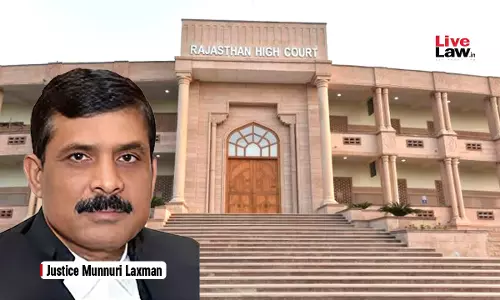
Termination Without Enquiry, Followed By Post-Facto Revocation 'Unknown To Law': Rajasthan High Court Slaps Costs On State
The Rajasthan High Court has criticized the State's action in terminating a contractual employee without enquiry, followed by a post-facto enquiry lading to revocation of termination.The bench of Justice Munnuri Laxman observed that the entire procedure adopted by the concerned authority was unknown to law and had caused undue hardship and mental agony to the Petitioner. It thus imposed a cost...
Registrar Has Jurisdiction Over Removal Of Secretary Of Co op Society Being Statutory Officer : Gauhati HC
A Division Bench of the Gauhati High Court comprising Chief Justice Ashutosh Kumar and Justice Arun Dev Choudhury held that the Registrar of Co-operative Societies has jurisdiction under the Assam Co-operative Societies Act, 2007 to adjudicate a dispute concerning the removal of a Secretary/Chief Executive, as this office has a distinct statutory character and is not merely...
Rajasthan High Court Upholds Reinstatement Despite Alleged Illegal Appointment, Cites Violation Of Industrial Disputes Act Procedure
The Rajasthan High Court rejected petition challenging reinstatement of a daily wage worker who was alleged to have been appointed illegally, opining that non-compliance with mandatory procedure under the Industrial Disputes Act had to be followed for termination of the concerned employee. The bench of Justice Munnuri Laxman was hearing a petition filed by the Sarpanch, Gram Panchayat...

Air Force Act | Disciplinary Proceedings Can't Be Initiated Against Officer Discharged In Criminal Trial On Same Charge : Supreme Court
Setting aside the dismissal of the officer, the Court ordered that a formal farewell be organised for him, to restore his honour.
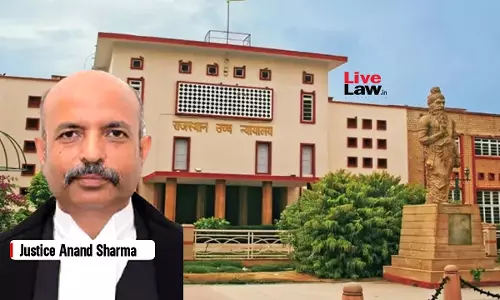
Rajasthan High Court Directs State To Consider Regularising Employee After 28 Years Of Service, Says Ad-Hoc Appointment Can't Defeat Claim
Rajasthan High Court granted benefit to an employee who despite having rendered services for more than 28 years, was not being considered for regularization by the government on the ground that his initial appointment was not towards any sanctioned post, but on an ad-hoc basis. The bench of Justice Anand Sharma observed that the State's plea of petitioner not being engaged on a sanctioned...
Once Reference Is Accepted, Should Be Decided On Merits: Rajasthan High Court Quashes Labour Court Order Rejecting Reference As Defective
The Rajasthan High Court set aside an order of the Labour Court which had dismissed a reference as defective after spending 20 years on its adjudication, opining that once a reference was accepted the Labour Court was duty bound to answer it on its merits.Justice Munnuri Laxman was hearing a plea wherein the petitioners had alleged that they were orally terminated from employment by...
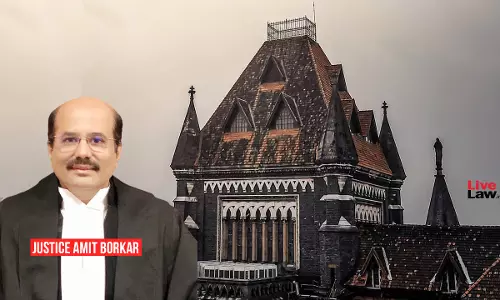
Trade Union Cannot Invoke Recovery U/S 50 MRTU & PULP Act Without Written Authorisation From Employees: Bombay High Court
The Bombay High Court has held that a trade union cannot independently invoke Section 50 of the MRTU & PULP (Maharashtra Recognition of Trade Unions and Prevention of Unfair Labour Practices, 1971) Act for the recovery of money without written authorisation from employees. The Court observed that the statutory scheme restricts the right of recovery to the employee or a person...

Brother Not Covered For Purpose Of Family Pension, When Eligible Claimant Mother Never Availed It: Calcutta HC
A Division Bench of the Calcutta High Court comprising Justice Partha Sarathi Chatterjee and Justice Tapabrata Chakraborty held that the brother of a deceased government teacher does not qualify as “family” under Clause 5(s)(2) of the Pension Scheme, 1981, and he cannot claim family pension arrears, especially when the original beneficiary (mother) never claimed the benefit during...
'Competition Must Be Among Equals': Rajasthan High Court Says Home Guard Selection Can't Pit Experienced Volunteers Against Fresh Candidates
The Rajasthan High Court has granted relief to a bunch of Home Guards who were allegedly terminated orally, by opining that in relation to new recruitment, if the petitioners were already having some experience as volunteers in Home Guards Department, they were required to be screen initially and if found eligible, to be taken into services. The bench of Justice Munnuri Laxman held that...
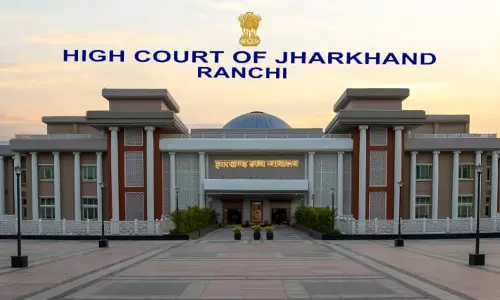
Unauthorised Absence Must Be Wilful To Justify Dismissal; Disproportionate If Due To Illness: Jharkhand HC
A Division Bench of the Jharkhand High Court comprising Chief Justice M.S. Sonak and Justice Deepak Roshan held that unauthorised absence from duty must be proven to be willful to warrant dismissal, and punishment is disproportionate if the absence is due to compelling circumstances like medical illness. Background Facts The respondent (employee) was appointed as an...
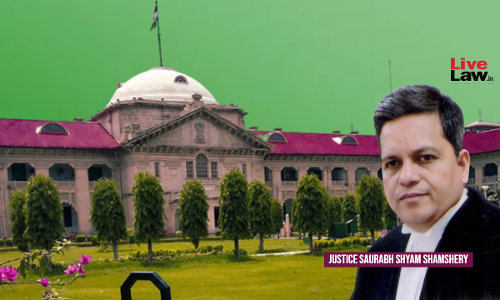
'Shockingly Disproportionate': Allahabad HC Quashes ₹2.14 Cr Recovery From Employee; Says No Finding Of Financial Loss Or Personal Gain
Recently, the Allahabad High Court observed that punishment of recovery of Rs. 214.87 lacs from a delinquent employee was “shockingly disproportionate” when there were no findings regarding any financial loss suffered by the department or any monetary gain by the employee due to his misconduct. Justice Saurabh Shyam Shamshery held “There was no charge that department has suffered...