




Law School Articles

Intermediary Liability And Data Responsibility: Balancing Innovation With Accountability In Digital India
The role of social media platforms has changed from being passive conduits of information to being active arbiters of public discourse, content moderation, and the processing of personal data. Platforms like Facebook, Instagram, YouTube, X (formerly Twitter), and TikTok facilitate Global communication, commerce, and political organising. The changes in these platforms will require a re-evaluation of the laws originally designed for traditional internet service providers.A fundamental question is...
Amazon's Pyrrhic Approval: Rewriting Merger Disclosure Rules
On May 27,2026, the Supreme Court delivered a judgment that will reshape how practitioners approach combination filings in India. In Amazon.com NV Investment Holdings LLC v. Competition Commission of India, the court set aside the CCI's 2021 order that had penalized Amazon, kept its 2019 approval in abeyance, and directed a fresh Form II notice for investment in Future Coupons Private Limited. Across six issues, the Court ruled entirely for Amazon. The judgment deserves a careful reading not as...
Future Of Tort Law In India: Opportunities And Challenges
In 2022, a schoolteacher in Lucknow had a routine appendix operation at a private hospital. A drain was left unchecked, due to doctor's clear act of negligence and because of this she got a second infection and had to stay in the hospital for three more weeks. Her extra expenses came to around ₹38,000. She went to a lawyer. The lawyer asked for ₹15,000 just as a retainer fee and said the case would take five to seven years. She went home, paid her bills, and stayed silent. Her ...
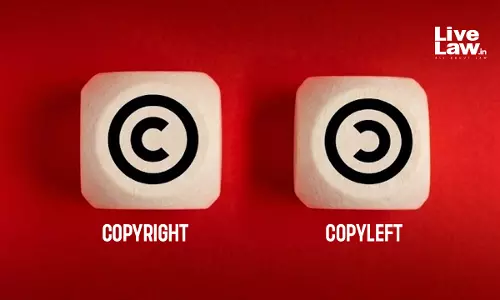
Copyright V. Copyleft: Future Of Creativity, Freedom, And Ownership
In today's digital world, creativity no longer exists in isolation. Innovation doesn't remain an individual thing anymore, it is now sharing across networks, platforms and nations. Innovation is like lightning, and collaboration is a core part of innovation. An American designer can build on the work of a Japanese coder, and a student in the other half of the world can access, interpret and edit the same idea in a matter of minutes. In this world, regulation of creativity is more complex.This is...
False Promise To Marry
Section 69 of the Bharatiya Nyaya Sanhita, 2023 ('BNS') criminalises sexual intercourse by employing deceitful means. The language of the provision refers to two separate actions: first, using deceptive means to engage in sexual intercourse, and second, making a false promise to marry a woman without the intention of fulfilling it. Earlier, in the absence of an explicit provision in the Indian Penal Code, 1860, Section 90 (consent given under fear or misconception) read with Section 375 (rape)...

More Judges, More Justice: Addressing The Needs Of Apex Court
On 24th April, 2016 in the inauguration of the Joint Conference of Chief Ministers and Chief Justices of High Courts, the Hon'ble Chief Justice of India, Justice T.S. Thakur get emotional and said. “Therefore not only in the name of the litigant… the poor litigant (he pauses as his voice trembles with emotion) languishing in jail but also in the name of the country and progress, I beseech you to realise that it is not enough to criticise the judiciary… you cannot shift the entire burden to the...
Geo-Blocking Beyond Copyright: Can Territorial Licensing Become Anti-Competitive?
In today's rapidly growing digital ecosystem, OTT platforms like Netflix, Amazon Prime, Disney Hotstar, etc., have experienced a boom in the consumer market, especially after the Covid 19 shutdown of cinema halls and the decline in the theatre culture. Initially, this growing trend began as a convenience model for the customers; however, the current situation says otherwise. Has it ever happened to you that one day you are watching your favourite show on one of these platforms and the...
When Consent Becomes Control: Spousal Veto And Reproductive Autonomy Under ART Act, 2021
For a woman navigating the uncertainty of age, health, or marital instability, the decision to preserve her reproductive capacity may be both urgent and deeply personal. Yet, under the Assisted Reproductive Technology (Regulation) Act, 2021, this decision is not hers alone. The statutory requirement of gamete cryopreservation for women stuck in unfortunate marital separation proceedings raises a fundamental question: Can the law permit a partner to exercise control over such an intimate and...

Trading Trees For Credits
What Two Years of India's Green Credit Programme RevealedWhat happens when a country decides that environmental obligation is best met through the market? India's Green Credit Programme (GCP), launched in October 2023, is two years into answering that question, and the answer is worth paying attention to. The Green Credit Programme was launched under India's flagship Lifestyle for Environment (LiFE) initiative with a huge promise. It was set to go beyond carbon to also reward tree plantation,...
Rajya Sabha–Chief Minister Paradox
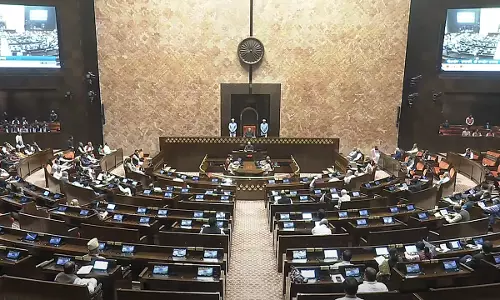
Somewhere between the letter and the spirit of India's Constitution lies a curious paradox: a man can, under existing law, simultaneously hold membership of the Rajya Sabha, the upper chamber of the Union Parliament, and serve as the Chief Minister of a state. The courts have not struck this down. The Constitution does not forbid it in explicit terms. And yet, if you pause to think about what it actually means, the arrangement is architecturally incoherent.Bihar Chief Minister Nitish Kumar took...
Copyright And Trademark Enforcement In Digital Audio Industry: A Case Study Of Pocket FM V. Kuku FM
The case of Pocket FM and Kuku FM has become one of the major public disputes in the Indian audio entertainment space.[1] The dispute began in 2022, when Kuku FM (Mebigo Labs Pvt. Ltd.) sued Pocket FM over accusations that Pocket FM had used Kuku FM's licensed Hindi translation of “Mossad.” Although Pocket FM subsequently deleted the audiobook from its catalogue, this first episode revealed uncertainties related to rights management. The rivalry deepened recently, when Pocket FM itself sued Kuku...

From Whiskey To Weight-Loss Drugs: Rethinking Surrogate Advertising In Pharma
Battling concerns that a third of the Indian population will become obese by 2050, the Central Drugs Standard Organisation issued warnings to pharmaceutical companies in early 2026.[1The regulator has forewarned entities about their indirect promotion disseminated in the guise of disease awareness campaigns and social media collaborations featuring influencers and Bollywood actors regarding their weight-loss drugs. These campaigns focus on highlighting the efficacy of medicine or pharmaceutical...