




OTHERS
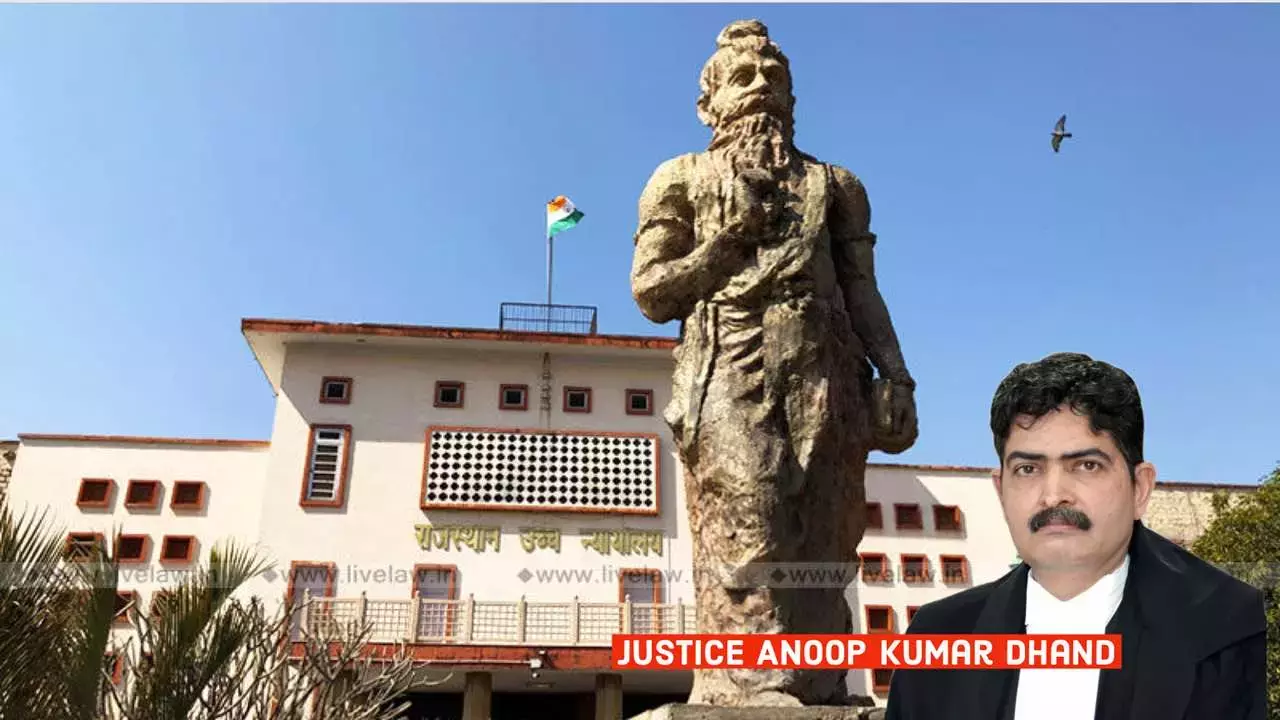
Rejection Of Municipal Election Nomination Can Be Challenged Only Through Election Petition: Rajasthan High Court
The Rajasthan High Court has dismissed a petition challenging rejection of Petitioner's nomination papers for the election of Ward Member, Municipal Board Brij Nagar, District Deeg, opining that as per the bar under Article 243-ZG, no election to any municipality could be called into question except by filing an Election Petition, The bench of Justice Anoop Kumar Dhand held that as per...
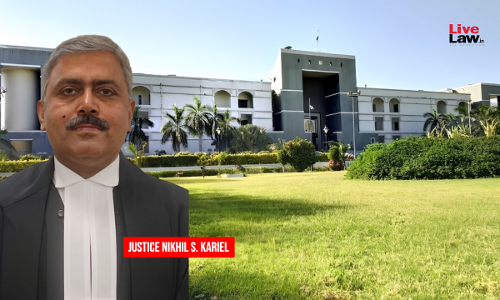
Gujarat High Court Protects Govt School Teacher Declared Surplus Over Lack Of Students
The Gujarat High Court granted protection to a government school teacher who was declared "surplus" and transferred from the school on account of lack of students. In doing so the court "prima facie" observed that from the facts it appeared that even though the teacher tried to ensure that eligible students are admitted however the school principal did not cooerpate resulting in lack...
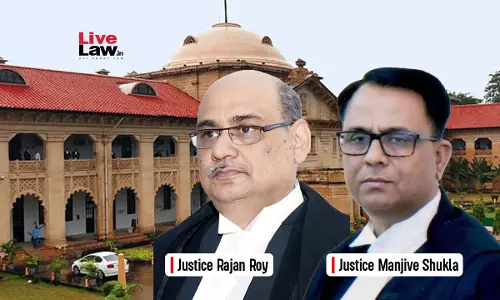
Landowners Under UP Awas Vikas Act Entitled To Same Benefits As Under 2013 Land Acquisition Act: Allahabad High Court
The Allahabad High Court has held that landowners whose land is compulsorily acquired under the U.P. Awas Evam Vikas Parishad Adhiniyam, 1965 must be given monetary as well as non-monetary compensation on the same parameters as those prescribed under the Right to Fair Compensation and Transparency in Land Acquisition, Rehabilitation and Resettlement Act, 2013. It held that any other view...

Rajasthan High Court Declines CLAT Candidate's Plea To Change Reservation Category After Result Declaration
The Rajasthan High Court has dismissed the petition filed by a CLAT 2026 candidate seeking modification of her reservation category from Unreserved General-Women to General-Rajasthan Domicile, after the first provisional list was already declared by the CLAT-Consortium. The bench of Justice Maneesh Sharma observed that a belated correction or modification of an application form, especially...

Kerala High Court Permits Widow To Use Preserved Embryos For Assisted Reproduction After Husband's Death
The Kerala High Court recently permitted a woman to use embryos preserved for assisted reproduction after her husband died. [2026 LiveLaw (Ker) 508]Justice Harisankar V. Menon referred to Section 22 of the Assisted Reproductive Technology (Regulation) Act, 2021, which provides that an ART clinic can perform any treatment or procedure only with the written informed consent of parties....
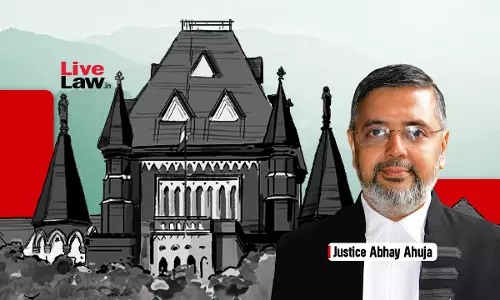
Loss Of Milk Business Qualifies For Compensation As Benefit Arising From Acquired Land: Bombay High Court
The Bombay High Court has held that loss of milk business carried on from a stable situated on acquired land qualifies for compensation, as “land” under Section 3(a) of the Land Acquisition Act, 1894, includes the benefits arising out of land. The Court observed that the Appellant had produced evidence regarding his milk business and that the loss of such business resulted from acquisition...
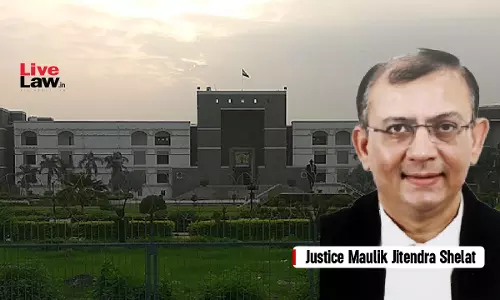
Gujarat High Court Calls For Central Govt Notification Under Hindu Succession Act To Protect Tribal Women's Property Rights
The Gujarat High Court has suggested that a notification be issued under the Hindu Succession Act so as to ensure protection of rights of Scheduled Tribe women as well as clear framework for the devolution of property of ST members who die intestate within the State, especially those who profess Hindu traditions. [2026 LiveLaw (Guj) 244]The court passed the order while hearing an appeal against...

PIL In AP High Court Challenges Google-Adani Data Centre Project At Visakhapatnam, State Claims Steps Taken To Protect Environment
A PIL has been filed before the Andhra Pradesh High Court challenging the proposed Google-Adani data centre in Visakhapatnam, questioning the project's Environmental Clearance and the allotment of 160 acres of land for the project.The proposed project includes 160 acres of temple land belonging to Sri Varaha Lakshmi Narasimha Swamy Devasthanam, Simhachalam. The land is situated across...

Waqf Board Can't Appoint Ad-Hoc Panel To Manage Waqf Institution By Bypassing Statutory Rules: Karnataka High Court
The Dharwad Bench of the Karnataka High Court quashed an Office Memorandum issued by the State Board of Auqaf constituting an ad-hoc committee for eleven months to manage and supervise a waqf institution, holding that the Board bypassed the statutory mechanism under the Karnataka Wakf Rules, 2017.Justice Sachin Shankar Magadum was hearing a plea moved by the President and Secretary of the...
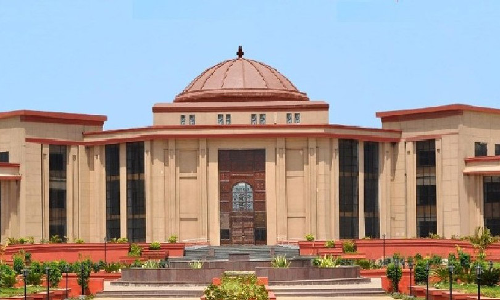
Married Daughter Cannot Continue Pending Compensation Claim Filed By Mother Under Employees Compensation Act: Chhattisgarh High Court
The Chhattisgarh High Court has held that a married daughter, who is not a “dependant” under Section 2(1)(d) of the Employees' Compensation Act, 1923, cannot continue a pending compensation claim filed by her mother, who died before the award was passed. The Court observed that had the award been passed in favour of the mother during her lifetime, the daughter could have claimed it as part...

'Basis Washed Away': Orissa High Court Directs Reconsideration Of Judge's Adverse Service Record
The Orissa High Court has allowed the writ petition filed by its former Registrar (Judicial) seeking to expunge adverse remarks recorded by the then Chief Justice in his annual Confidential Character Roll (CCR) basing upon serious charges levelled against him in a disciplinary proceeding. [2026 LiveLaw (Ori) 108]The Division Bench of Justice Manash Ranjan Pathak and Justice Sibo Sankar...

Daughter-In-Law Not Liable When Senior Citizen's Own Children Alive: Kerala High Court
The Kerala High Court recently held that a daughter-in-law is not liable under the Maintenance and Welfare of Parents and Senior Citizens Act, 2007 when the senior citizen's children are alive. [2026 LiveLaw (Ker) 499]Justice Harisankar V. Menon observed that a daughter-in-law would not fall within the definition of 'child' nor 'relative' under the Act when the senior citizen has other...