




Supreme court
Even If S.376 IPC Charge Not Framed, Rape Conviction Possible When POCSO Case Fails For Not Proving Victim's Age : Supreme Court
The Supreme Court on Thursday (September 10) held that the prosecution's failure to prove the victim's age, essential for sustaining a conviction under the POCSO Act, does not automatically absolve the accused of liability for rape under Section 376 of the IPC. The Court added that even in the absence of a formal charge under Section 376, the accused can be convicted under that provision as it...
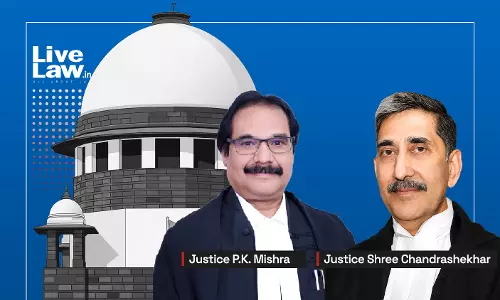
Long Possession Alone Does Not Prove Adverse Possession,Hostile Intent Essential : Supreme Court
The Supreme Court on Thursday (10.09.2026) has held that mere long and uninterrupted possession of a property was not sufficient to establish the claim of adverse possession without proving the point at which such possession turned hostile to the true owner. Ruling so, it also held that a revenue entry recording possession as gair marusi bila lagan bawaja Dharam Arth (which signifies...
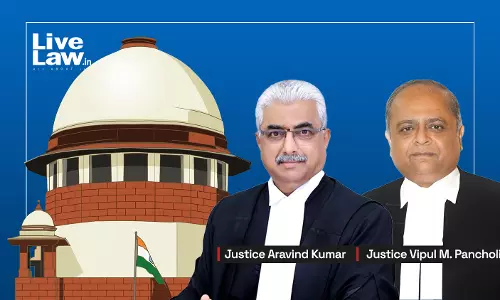
Supreme Court Directs J&K To Approve Govt Teacher's Assignment As National Kayaking Coach For Asian Games 2026
The Court however clarified that the judgment did not recognising any general or vested right in a Government employee to claim deputation, foreign travel or release for an outside assignment;
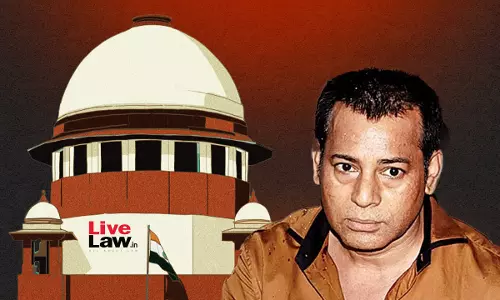
Supreme Court Dismisses Gangster Abu Salem's Plea For Premature Release In 1993 Bombay Blasts Case
The Supreme Court today dismissed a plea filed by gangster Abu Salem, sentenced to life imprisonment for the 1993 Mumbai serial blasts, seeking premature releaseSalem approached the court contending that his earned prison remission and undertrial custody should be counted towards the 25-year imprisonment cap flowing from India's extradition assurances to Portugal.A bench of Justice Vikram...
Supreme Court Orders Centre To Give Rs 15 Lakh To Officer Who Was Illegally Retired As 'Deadwood', Directs To Give Him Farewell
"To brand an officer like the appellant – who dedicated the best years of his life to the service of the nation – as dead wood smacks of a high degree of malice," the Court said.
Supreme Court Daily Round-Up : September 9, 2026
Links to the reports of September 9 :'How Dare Magistrate Issue Notice To Student Despite Our Order?' : Supreme Court Slams Greater Noida Officer's Action Over CJP ProtestJournalist Ravi Nair Withdraws Plea In Supreme Court Challenging Gujarat FIR Over Article On Adani-LIC Investments'Touch Your Mother's Feet & Apologise For Your Sins' : Justice SC Sharma To Son In Property...
Constructive Criticism Of Judiciary Necessary Feature Of Vibrant Democracy, But It Must Be Voiced In Appropriate Forum : Supreme Court
The critique of judicial functioning must be exercised in a fair and rational manner, the Court said.
Release Of Escrow Under SEBI Buyback Regulations Does Not Bar Separate Fraud Inquiry : Supreme Court In Vedanta Case
The Supreme Court on Wednesday (09.09.2026) has held that release of the cash escrow deposited by a company under Regulation 15B(8) of the Securities and Exchange Board of India (Buyback of Securities) Regulations, 1998 (Buyback Regulations), does not operate as a bar to a separate and independent inquiry into fraud under the SEBI (Prohibition of Fraudulent and Unfair Trade Practices relating...
Partnership Act | Outgoing Partner's Share Must Be Valued On Date Of Assessment, Not Date Of Dissolution : Supreme Court
The Supreme Court on Wednesday (September 9) held that, upon dissolution of a partnership at will, an outgoing partner's right to receive his share in the residue of the partnership assets is not frozen as of the date of dissolution. Instead, the partner is entitled to have his share determined based on the value of the partnership assets as on the date of their actual valuation. A bench...
Prosecution Story Of Taking Dead Body To Police Station Suspicious : Supreme Court Acquits Two Murder Convicts
The Supreme Court on Tuesday (08.09.2026) acquitted two persons convicted of murder, holding that the prosecution's own case of taking the body of the deceased to the police station instead of the hospital, raises suspicion, and that this conduct along with other infirmities in the investigation and eyewitness testimony raised a reasonable hypothesis of innocence.A bench of Justice JB...

Supreme Court Expresses Concern Over Voluminous Records In Corruption Cases Delaying Prosecution
The Supreme Court on Tuesday (08.09.2026) observed that prosecutions in corruption cases have a history of long pendency, often on account of voluminous but largely unnecessary and irrelevant evidence intimidating the courts."We cannot but notice that in corruption cases voluminous evidence is led, which is often intimidating to the Court, especially since many aspects attempted to be led...
Supreme Court Daily Round-Up: September 8, 2026
Links to reports of September 8'Victim Didn't Identify Accused In Court' : Supreme Court Acquits Man Convicted For Rape Of 5-Year-OldHow To Attribute Mens Rea To Company? Supreme Court Explains Three-Stage InquiryIndian Stamp Act | Is Fraudulent Intent Necessary To Invoke S.47A Over Undervalued Deed? Supreme Court Refers To Larger BenchSupreme Court Restrains Appointment Of Teachers...