Supreme court
Supreme Court Daily Round-Up: September 8, 2026
Links to reports of September 8'Victim Didn't Identify Accused In Court' : Supreme Court Acquits Man Convicted For Rape Of 5-Year-OldHow To Attribute Mens Rea To Company? Supreme Court Explains Three-Stage InquiryIndian Stamp Act | Is Fraudulent Intent Necessary To Invoke S.47A Over Undervalued Deed? Supreme Court Refers To Larger BenchSupreme Court Restrains Appointment Of Teachers...
Solatium & Interest For Land Acquisition Under National Highways Act To Be Computed As Per 1894 Act For Pre-2015 Awards : Supreme Court
The Supreme Court on Tuesday (08.09.2026)held that when the Competent Authority under the National Highways Act, 1956 (NH Act) determines compensation before 01.01.2015, the solatium, interest, and interest on solatium payable to the landowner must be computed under the Land Acquisition Act, 1894, and not under the Right to Fair Compensation and Transparency in Land Acquisition,...
Pre-Regularization Service Must Be Counted For Pension Benefits : Supreme Court
The Supreme Court has held that service rendered by employees on contract, ad hoc, daily-wage or work-charge basis prior to their regularization must be counted as qualifying service for retiral and pensionary benefits, particularly where the breaks in service are merely notional, artificial or caused by administrative circumstances or court orders.Holding thus, a bench of Justice Prashant...
Supreme Court Upholds Asst Professor's Appointment Despite Doubts Over PhD, Orders University Probe
The Court refused to interfere with the appointment on the ground that PhD was not a mandatory qualification for the post.
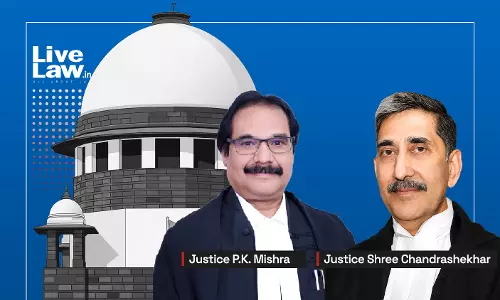
Widow's Family Pension Must Be Paid From Date Of Husband's Death : Supreme Court
The Court stated that its 2014 judgment in 'Tarsem Singh' was rendered ignoring an earlier precedent.
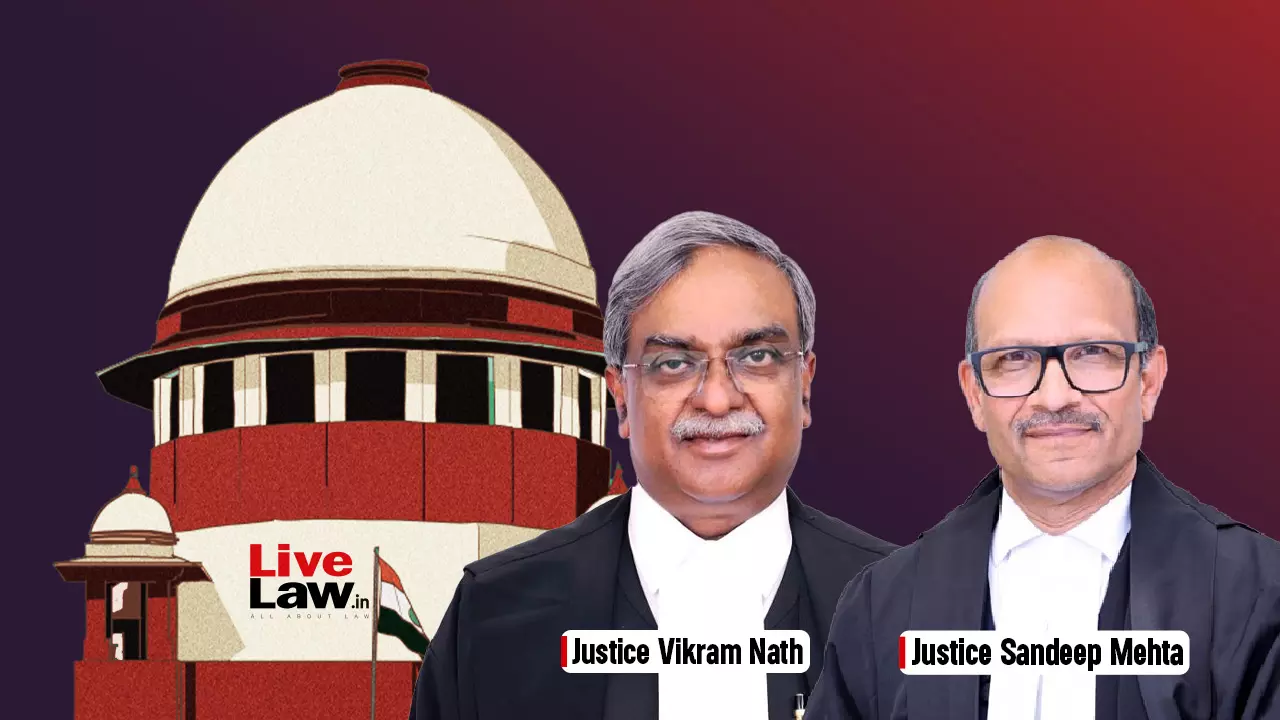
Human Rights Courts Can Be Approached Directly Without Prior Recourse To Commission: Supreme Court Upholds Karnataka Rule
The Supreme Court has recently upheld the validity of Rule 6 of the Karnataka State Human Rights Courts Rules, 2006, holding that the provision is neither inconsistent with the Protection of Human Rights Act, 1993 nor ultra vires the rule-making power of the State legislature under Section 41 of the Act. Setting aside the High Court's orders, the Court has restored the proceedings...
Supreme Court Clears Implementation Of Resolution Plan For Stalled 'Sushant Aquapolis' Project In Ghaziabad
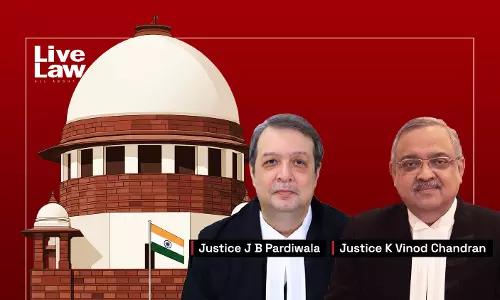
In a relief to home buyers of the Ghaziabad-based housing project 'Sushant Aquapolis,' the Supreme Court recently cleared the path for implementation of the resolution plan of the corporate debtor, M/s Ansal Urban Condominium Private Limited, which had promoted the group housing cluster. A bench of Justice JB Pardiwala and Justice K Vinod Chandran accepted the Successful Resolution...
LiveLaw Supreme Court Weekly Digest: August 13 - 18, 2026
Arbitration and Conciliation Act, 1996 – Sections 16, 18, 31(8), 37(2) – Pre-deposit condition in arbitration clause – Validity and constitutionality under Article 14 of the Constitution of India and Section 28 of the Indian Contract Act, 1872 – Correctness of 3-Judge Bench decision in S.K. Jain v. State of Haryana – Reference to Larger Bench - Doubting the correctness...
Plaintiff In Specific Performance Suit Must First Debunk Suspicious Circumstances : Supreme Court
The Supreme Court recently held that where a plaintiff seeks specific performance of an agreement to sell whose genuineness is clouded by suspicious circumstances, the plaintiff must first explain those circumstances satisfactorily before the evidentiary burden can shift to the defendant.A bench of Justice JB Pardiwala and Justice K Vinod Chandran set aside the concurrent findings of the...
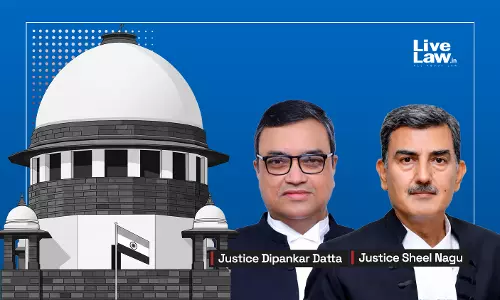
Indian Stamp Act | Is Fraudulent Intent Necessary To Invoke S.47A Over Undervalued Deed? Supreme Court Refers To Larger Bench
The Court doubted the precedents which held that fradulent intent was necessary to invoke Section 47A of the Indian Stamp Act.
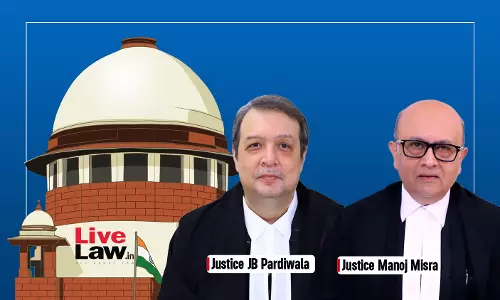
How To Attribute Mens Rea To Company? Supreme Court Explains Three-Stage Inquiry
The Supreme Court has held that criminal proceedings against a company accused of an offence cannot be quashed merely on the ground that no individual director, officer, or employee has been identified or arraigned as a co-accused, even where the offence charged requires proof of mens rea. A bench of Justice JB Pardiwala and Justice Manoj Misra held so while hearing an appeal filed by...