


Top Stories
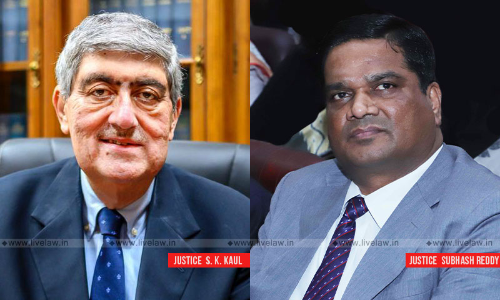
No Seriousness By Govts. To Implement Directions To Insulate Police Machinery From Political/executive Interference: Supreme Court in Param Bir Singh Order
Supreme Court has on Wednesday observed that its 2006 judgement with regards to police reforms in the Prakash Singh's case is only a 'mantra recited periodically', wherever the occasion so suits. The Court has stated that there has been no seriousness by all concerned to ever implement the directions enshrined in the judgment.A division Bench led by Justice SK Kaul observed that directions...
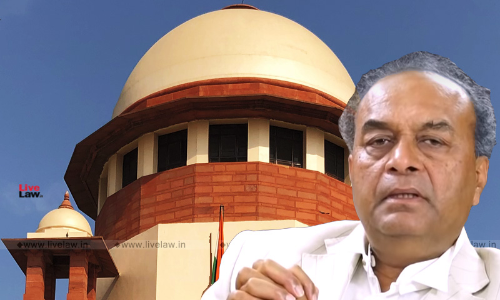
WB Coal Scam Probe-'CBI Cannot March Army Into State To Investigate Offence In Supersession Of State Police': Mukul Rohatgi Tells SC
The Supreme Court on Wednesday commenced the hearing on the challenge to the order of the Calcutta High Court whereby it allowed the CBI to investigate a case pertaining to illegal mining and transportation of coal through Railways in West Bengal, without the State's consent. The bench of Justices D. Y. Chandrachud, M. R. Shah and Sanjiv Khanna are considering the SLPs.The Single Judge Bench...
Supreme Court Issues Notice in Plea Seeking To Maintain NRI Status For 2020-21 FY For Purpose Of Taxation Under IT Act
Supreme Court has issued notice in a plea filed by Dubai based non-resident Indian Gaurav Baid, directions to consider him a Non-Resident Indian for Financial Year 2020-21 regardless of number of days of his stay in India, on account of the Covid19 pandemic. A three-judge Bench of Justice UU Lalit, Justice Indira Banerjee and Justice KM Joseph heard the plea that has challenged the...
Muslim Woman Opposes PIL For Uniform Law For Divorce, Maintenance and Alimony Before Supreme Court
A Muslim woman has moved the Supreme Court, seeking to oppose the PIL filed by BJP leader and Supreme Court Advocate Ashwini Kumar Upadhyay for uniformity in personal laws regulating divorce, maintenance and alimony for Indian citizens. A resident of Gurgaon, Amina Shervani claims that the provisions regulating Muslim marriages, divorce, alimony, etc. under the Muslim personal law...
Power Under Article 142 To Dissolve Marriage Between Consenting Parties: Supreme Court Constitution Bench Adjourns Hearing
A Constitution Bench of the Supreme Court has on Wednesday adjourned the case pertaining to question of the Apex Court's jurisdiction under Article 142 of the Constitution to dissolve a marriage between the consenting parties without referring the parties to the Family Court to wait for the mandatory period prescribed under Section 13-B of the Hindu Marriage Act.The Constitution Bench...
BREAKING : Supreme Court Dismisses Andhra CM's Complaint Against Justice Ramana After Confidential In-House Enquiry
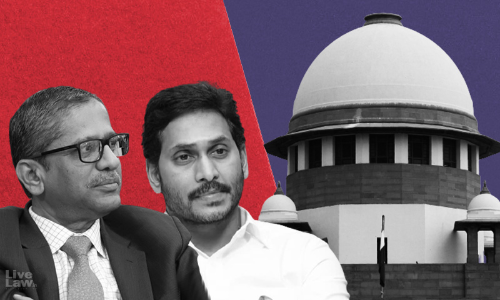
In a significant development, the Supreme Court has dismissed the complaint made by the Chief Minister of Andhra Pradesh Jagan Mohan Reddy to the Chief Justice of India that Justice NV Ramana was trying to influence the state judiciary to destabilize the state government.The information regarding the dismissal of the complaint was given in a statement published in the Supreme Court website.As...
Cauvery Calling Case : Sadhguru's 'Isha Outreach' Moves Supreme Court Against Karnataka High Court Order
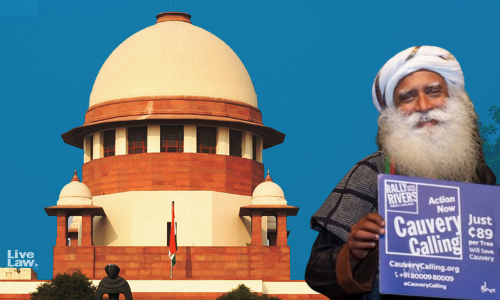
Sadhguru's 'Isha Outreach', which is managing the Cauvery Calling project, on Wednesday informed the Karnataka High Court that it has moved the Supreme Court challenging an order passed by the High court on October 15, 2020. As per the said order, the High Court had converted the PIL against 'Cauvery Calling' - a drive launched by Sadhguru to plant tree saplings along Cauvery river-into...
What Is Govt's Control On Use Of Money After Encashing Electoral Bonds? Supreme Court Asks
The Supreme Court on Wednesday expressed concerns about the possible misuse of electoral bonds by political parties, by diverting the funds to non-political activities including terrorism."What is the control of government on the money being used after encashing bonds?", the Chief Justice of India asked the Attorney General for India KK Venugopal.The bench comprising CJI SA Bobde, Justices...
Adjudicating Authority Cannot Substitute Any Commercial Term Of Resolution Plan Approved By Committee Of Creditors: Supreme Court
The Supreme Court observed that adjudicating authority cannot substitute any commercial term of the resolution plan approved by Committee of Creditors. If, within its limited jurisdiction, the Adjudicating Authority finds any shortcoming in the resolution plan vis-à-vis the specified parameters, it would only send the resolution plan back to the Committee of Creditors, for re-submission,...
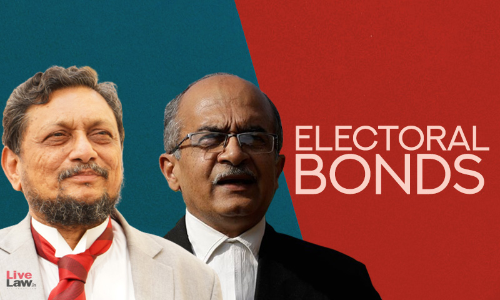
'If What You're Saying Is Correct, We'll Have To Strike Down The Law' : CJI To Bhushan In Electoral Bonds Case
"If what you are saying is correct, we will have to strike down the law", the Chief Justice of India SA Bobde told Advocate Prashant Bhushan, while hearing his arguments against the legality of electoral bonds.However, the CJI asked how thecan be done at the interim stage. "How can it be done through an interim order?", the CJI asked.Bhushan was arguing the application filed by Association...
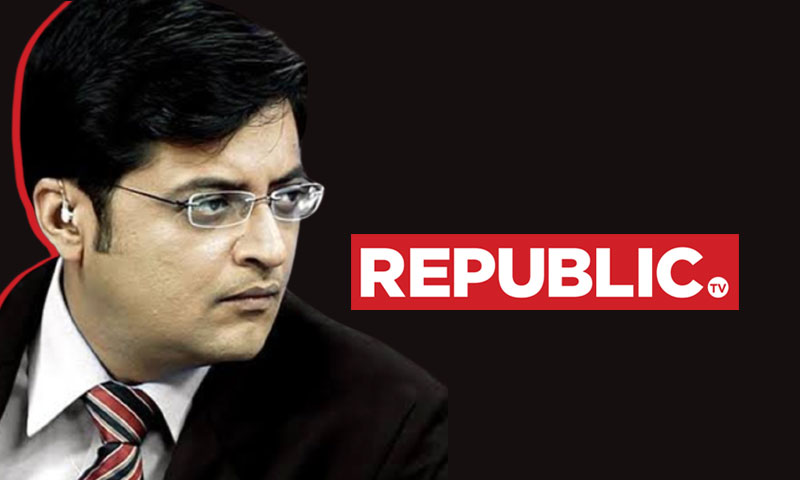
Breaking- Give Three Days Prior Notice To Arnab Goswami Before Taking Any Coercive Action Him In TRP Scam: Bombay High Court To Mumbai Police
The Bombay High Court on Wednesday admitted Republic TV and Arnab Goswami's petition challenging Mumbai police's investigation in the Television Rating Points scam, and granted Goswami protection from arrest.A division bench of Justices SS Shinde and Manish Pitale directed the police to give Goswami an advance notice of three days in case they decide to take any coercive action against him...
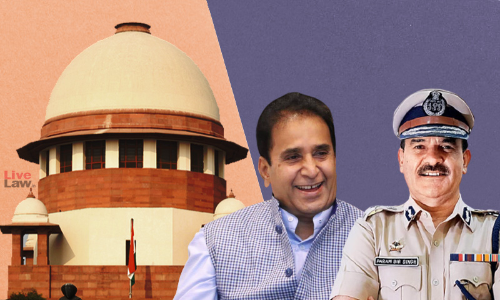
Breaking: Supreme Court Refuses To Entertain Param Bir Singh's Plea Seeking CBI Probe Against Anil Deshmukh, Asks Him To Approach Bombay High Court
Supreme Court bench comprising of justices Sanjay Kishan Kaul and Subhash Reddy on Wednesday asked Former Mumbai Police chief Param Bir Singh to approach Bombay High Court with his plea seeking CBI investigation in the alleged corrupt malpractices of Anil Deshmukh, Home Minister of Government of Maharashtra.During the hearing, the Bench posed two questions to the petitioner. The Bench asked why...