



- Home
- /
- Top Stories
- /
- Delhi Court Raps CBI For Repeatedly...
Delhi Court Raps CBI For Repeatedly Using 'South Group' Phrase In Liquor Policy Case, Says Region-Based Labelling Arbitrary
Nupur Thapliyal
27 Feb 2026 2:17 PM IST
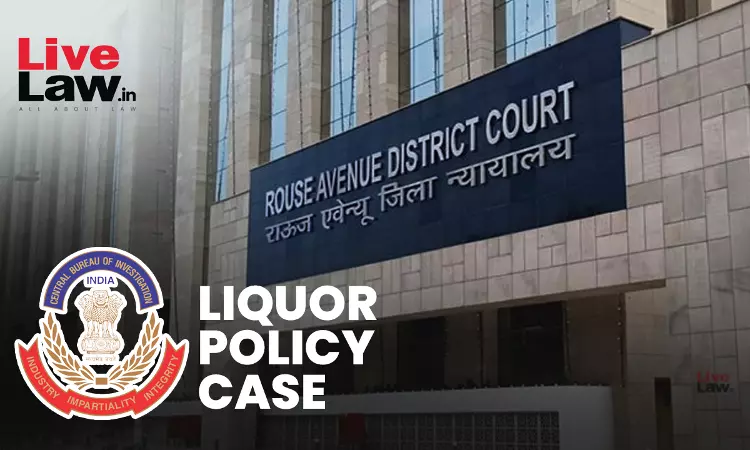
A Delhi Court today took strong exception to the repeated use of the phrase “South Group” by the Central Bureau of Investigation (CBI), while dismantling its chargesheet in the corruption case related to the alleged liquor policy scam. Special Judge Jitendra Singh of Rouse Avenue Courts said that selective adoption of a geographically defined label is plainly arbitrary and...
This is a premium content
Available exclusively to
Our subscribers
Subscribe Premium 
INR 1099+GST
Your support helps us to bring you more content at
an affordable subscription scheme !!!
All payment options available
A Delhi Court today took strong exception to the repeated use of the phrase “South Group” by the Central Bureau of Investigation (CBI), while dismantling its chargesheet in the corruption case related to the alleged liquor policy scam.
Special Judge Jitendra Singh of Rouse Avenue Courts said that selective adoption of a geographically defined label is plainly arbitrary and unwarranted.
While discharging all 23 accused persons, including political leaders Arvind Kejriwal, Manish Sisodia and K Kavitha in the case, the judge expressed concern with the repeated and deliberate use of the expression “South Group” by CBI to describe a set of accused persons, ostensibly on the basis of their regional origin or place of residence.
The Court said that such a nomenclature finds no foundation in law, does not correspond to any legally cognisable classification, and is wholly alien to the statutory framework governing criminal liability.
“It is equally significant that no comparable regional descriptor has been employed for the remaining accused persons; the prosecution narrative does not speak of any “North Group” or similar categorisation,” the Court said.
“The concern is not confined to semantics. Region-based labelling carries an avoidable undertone and is capable of creating a prejudicial impression. It detracts from the settled requirement that criminal proceedings must remain dispassionate, evidence-centric, and insulated from extraneous considerations. In a constitutional order founded upon equality before law and the unity and integrity of the nation, descriptors rooted in regional identity serve no legitimate investigative or prosecutorial purpose and are manifestly inappropriate,” it added.
Further, the Court said that continued use of the label, despite the absence of any legally sustainable basis, carries a real risk of colouring perception, causing unintended prejudice, and diverting focus from the evidentiary material, which alone must guide adjudication.
It said that identity-based labelling, whether by ethnicity, nationality, or regional origin, cannot be employed as a prosecutorial shorthand where such identity is irrelevant to the offence.
“Such labelling is not a mere irregularity of expression; it constitutes a constitutional infirmity capable of undermining the fairness of the proceedings themselves. The central message is categorical: criminal adjudication must rest on conduct proved by evidence, not on who the accused is or where he comes from,” the judge said.
Accordingly, the Court cautioned CBI to exercise greater care, circumspection, and restraint in the choice of language while drafting chargesheets and investigative narratives.
“Descriptions of accused persons must remain strictly neutral, evidence-based, and free from expressions that carry a stigmatic, divisive, or pejorative overtone. The continued use of such terminology bears directly upon the fairness of the criminal process and touches upon the guarantee of a just, fair, and reasonable procedure under Article 21 of the Constitution,” the Court said.
“Equally, the employment of descriptors founded on regional or identity-based distinctions, in the absence of any rational nexus with the alleged offence, is inconsistent with the constitutional command of equality and non-discrimination under Article 15,” it added.
The Court concluded that persistence with such nomenclature risks undermining the due process of law and is best avoided in the interest of an impartial and constitutionally compliant administration of criminal justice.
Also Read: Breaking | All Accused Including Arvind Kejriwal, Manish Sisodia Discharged In Liquor Policy Case, Delhi Court Raps CBI For Lapses
Also Read: No Evidence Of Bribe Or Quid Pro Quo By Arvind Kejriwal: Delhi Court In Excise Police Case

Nupur Thapliyal
Nupur Thapliyal is a Principal Correspondent with LiveLaw, based in New Delhi. She reports from the Delhi High Court and trial courts in the national capital

