


Articles
The IBC VS. SEBI: Critical Analysis Of Moratorium Under IBC
Section 28A of the Securities and Exchange Board of India Act, 1992 (“SEBI Act”) mentions about the recovery of proceeds from debtors in the form of attachment of immovable and movable property, attachment of bank accounts, etc. in order to make good the penalty imposed or to ensure the compliance with the regulations and the directions of the SEBI. However, this provision of SEBI cannot be read in isolation and without interpreting it along with section 14 and section 238 of Insolvency ...
In The Light Of Victoria Gowri’s Swearing-in As A Judge, Grounds For Judicial Review Of Her Appointment Still Persist
With the Supreme Court on Tuesday not entertaining the petitions challenging the appointment of advocate Victoria Gowri as an Additional Judge of the Madras High Court, and following her swearing-in as the Judge, it would be naive to assume that the petitioners have exhausted their legal remedies in this case. The two-Judge bench comprising Justice Sanjiv Khanna and B.R.Gavai, which heard the petitioners in Anna Mathew and Others vs Supreme Court of India, on Tuesday, expressed its...

Right To Personality And Its Emergence In India
Right to Personality has recently been in the news as the aspect of the case is concerned with constitutional law and publicity rights. The reason is that the Delhi High Court recently passed an interim order restraining the unlawful use of the renowned actor of Bollywood Amitabh Bachchan’s name, image, and voice. The court by this order restrained the respondent and other persons from infringing the personality right of the actor. One can ask; why personality rights are important and why...
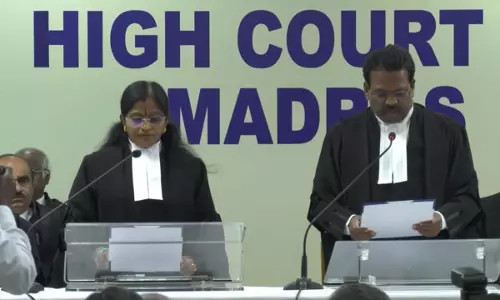
Victoria Gowri’s Elevation Exposes Centre’s Double Standards & Collegium’s Fiasco
A person who has a record of making deeply problematic communal statements is now a High Court judge. The appointment of Victoria Gowri as an additional judge of the Madras High Court will remain an ignoble chapter in the Indian judicial history. It raises troubling questions at the efficacy of the selection process- which boasts of consultations at multiple levels - in picking up the suitable persons. When the Supreme Court on its judicial side has been repeatedly cautioning against...

The Judge Is Not A Mere Post Office To Frame The Charge At The Behest Of The Prosecution – The Discharge Of Accused In The Jamia Violence Underscores
The Additional Sessions Judge, South East District, Saket Court, Arul Varma, in State vs Mohd. Ilyas@ Illen, delivered an order on Saturday, which is significant for establishing when an assembly of persons protesting against what is perceived as unjust, becomes illegal. The order is also noteworthy to ascertain whether the action taken by the police against individuals exercising their right to protest has blurred the distinction between legitimate protest and a violent uprising. All ...

Law On Reels; Rashomon In The Courtroom-Exploring The Paradox Of Subjectivity In Legal Proceeding
A notable quote by author Mark Twain reads the following: “Truth is stranger than fiction, but it is because fiction is obliged to stick to possibilities; the truth is not.” Generally, it shows situations where the truth appears implausible based on facts and circumstances. Legendary director Akira Kurosawa employs a criminal thriller story in his epochal film Rashomon in 1950 to introduce us to the notion of ‘multiple realities’ and the futility of reconciling them, even in an...

To Interfere Or Not To Interfere – The Section 11 Conundrum
The Courts under Section 11 of the Arbitration and Conciliation Act, 1996 (‘the Act’), are empowered to intervene if the parties fail to agree on the appointment procedure or are unable to act upon the agreed appointment procedure. Some argue that the Court should limit its examination to the existence of an arbitration agreement and refer the matter to arbitration by appointing a suitable arbitrator(s). However, after the Supreme Court initiated restrictive expansion in its landmark...
If Circumstances Warrant, A Judge, Wrongly Appointed, Does Not Become Immune From Action: Supreme Court In 2008
As the Supreme Court is set to hear petitions challenging the appointment of L.Victoria Gowri as a Judge of the Madras High Court today, it has to come to terms with its own judgment, delivered in 2008 with respect to the appointment of another Judge of the Madras High Court, which was under challenge then. In Shanti Bhushan and Another vs Union of India, Justices Arijit Pasayat and Dr.Mukundakam Sharma, petitioners had alleged that the late Justice Ashok Kumar of the Madras High Court...

Cape Town Convention – A Masterpiece For Aviation Transactions
In the age of technology, when air space is dominated by the presence of different kinds of aerial vehicles, it becomes important to address queries originating from Aviation asset financers/stakeholders. One of the major demand comes from creditors & lessors seeking development of a mechanism, to regulate asset based leasing and finance of aviation tools and thereby cap the risk involved in the lending process. Also, the need is felt to regulate an escalating price of aviation asset...

Odour And The Law
Odour - a strong, mostly unpleasant smell - has proven to be a nuisance on several occasions in India. Undesirable odour is often indicative of an environmental problem that impacts health and human well-being. Like how, notably, in 1858, it was the “Great Stink” of the polluted Thames River and not the contagious diseases being spread that prompted the UK Parliament to take action and allow the construction of the main sewers in London.[1] A significant contributor to odour...
Judicial Appointments: Unhealthy Debate On Misplaced Concern
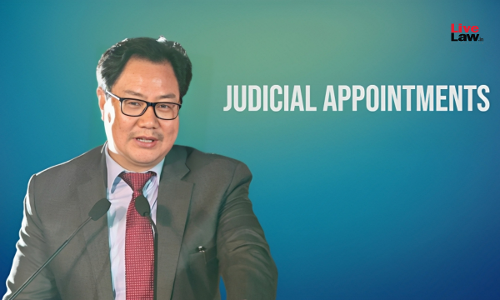
The Union Law Minister’s public comments about appointment of judges and the judicial pendency, though, raise genuine concerns about the system of administration of justice in India but probably though inappropriate forum and for sure a misplaced concern. The concern should be the qualitative and quantitative improvement of Judgeship in India. These issues undoubtedly warrant healthy discussions and concrete steps. Healthy discussion also includes in it the “informed discussion”. When ...
Remembering Shanti Bhushan : A Look At Notable Cases Fought By Him
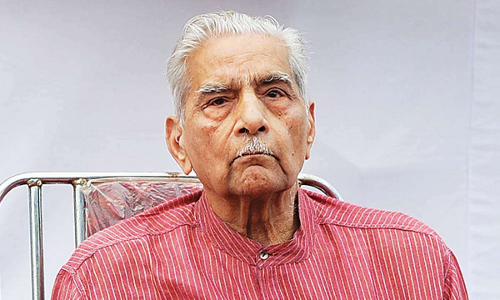
Acclaimed lawyer and Senior Advocate Shanti Bhushan passed away at his home in Delhi at 7PM on 31st January. He was aged 97 years. Shanti Bhushan also served as the Union Law Minister from 1977 to 1979 during the post-emergency era in the Morarji Desai government. During his illustrious career that ran for over six decades, Bhushan was not just a part of but also pivotal to several important cases before the Supreme Court of India. Few of those cases are as follows: State of Uttar...