




Articles

Swadeshi Jurisprudence And Recurring Legal Fallacy In Criminal Procedure
In 'Swadeshi Jurisprudence and the Colonial Afterlife of Order XXI', published in LiveLaw, it is observed that we have been handed a bamboo pole and told to dance upon it, and that we labour only at the dancing, falling and rising and adjusting our steps, each generation of practitioners trying to perform a little better than the last, but never asking whether the pole was ever a fit place to dance. Many prevalent laws and procedures exhibit the same discipline, out of which two loci classici...

MSME Amendment Act, 2026: Some Changes, Some Questions
The Micro, Small and Medium Enterprises Development (Amendment) Act, 2026 comes twenty years after the original MSMED Act, 2006. In these twenty years, the way small businesses function has changed considerably. Digital payments, GST, online procurement, formal lending and technology-based business systems are now common even among smaller enterprises. So, a change in the law was expected. The amendment tries to address some old concerns, particularly delayed payments, registration,...

Genetic Data Processing Under DPDPA
Every human being carries a unique biological identifier that reveals far more than identity - genetic data.A genetic sequence can disclose an individual's ancestry, inherited diseases, predisposition to illness, familial relationships, and even information about generations yet unborn. Unlike a password or financial credential, genetic information cannot be changed once compromised. Therefore, a breach involving genetic data can have serious and irreversible consequences.The rapid expansion of...

Can An “Unrelated” Party Hide Related-Party Transaction? Understanding SEBI's “Purpose And Effect” Test
A related-party transaction (“RPT”) ordinarily appears to be a question of identification: if a listed entity enters into a transaction with a person or entity falling within the definition of a related party, the transaction is subjected to the approval, disclosure and oversight requirements prescribed under the SEBI (Listing Obligations and Disclosure Requirements) Regulations, 2015 (“LODR Regulations”). The difficulty begins, however, when the related party does not appear anywhere in the...

Mineral Rights, Mineral Wrongs: Centre's Overreach On Mineral Taxation
On 25 July, 2024 by an 8:1 majority, a nine-judge Constitution Bench of the Supreme Court in the case of Mineral Area Development Authority and Anr. v. M/S Steel Authority of India & Anr. Ltd.; 2024 INSC 554 (The case or Judgment, hereinafter) held that States possess the power to levy tax on mines and minerals. The decision thereafter opened avenues for State legislatures to collect royalty, along with tax on major minerals, and on mineral-bearing land based on the value of the minerals...
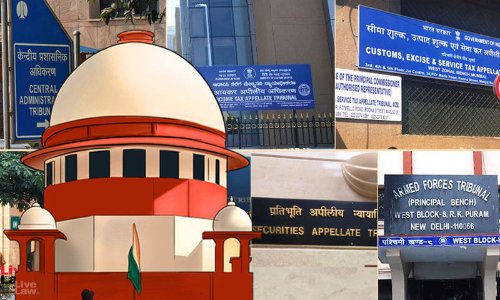
Who Appoints Appointers? India's New Tribunal Commission Has Old Independence Problem
Parliament has taken tribunal appointments away from the ministries that used to control them. It has not yet explained why the body it built to guard that independence should itself remain an appointee of the executive. The Tribunals Reforms Act, 2026 answers a serious constitutional problem with a solution that is real but incomplete, and the incompleteness sits exactly where the reform's architecture is least secure.The problem the Act answers is old and well documented. For a decade and a...

When Can Film Tell Story Of Criminal Case?
An actor accused of murder tries to stop a film he says is built out of his own trial, and the film releases anyway. A different actor, tied to a decades-old poaching case, tries to stop a teaser he says trades on his identity, and the teaser comes down within a day. Set those two outcomes side by side and the natural conclusion is that two High Courts, faced with the same kind of dispute, have landed in opposite places, one favouring the filmmaker, one favouring the actor. That reading is...

Retrospective Sales Tax Liability: Revenue To State versus Reasonableness.
In a welfare State, the government imposes tax to generate revenue to fund the welfare objectives that serve the people. One such tax prior to enactment of GST Act, 2017 was sales tax. In a commercial activity, sales tax was collected by the dealer from the purchaser and paid to the State. The Supreme Court on 13th July, 2026 in Asia Sugar & Chemical Co., Devangere Versus The State of Karnataka & Ors. with analogous case, 2026 INSC 693 has held retrospective sales tax liability valid but...

Constitutional Mandates And Patent Monopolies: Gender Analysis Of Ribociclib Case
Contemporary oncology resides in a "Gilded Age of Medicine" where rapid breakthroughs coexist with devastating economic barriers (O'Reilly et al., 2025). The escalating costs of life-saving therapies—specifically CDK4/6 inhibitors—create profound friction between the constitutional Right to Life under Article 21 and the statutory Right to Reward for corporate innovation. Indian jurisprudence, however, prioritizes survival. Precedents like Vincent Panikurlangara v. Union of India (1987) and...

China's Latest Trademark Reforms Hold Lessons For India?
A Comparative Analysis of Preventative Mechanisms and Implications for Indian Brand Owners and Business ProfessionalsGoodAI Global, a reputed company of South Korea, spent more than a decade building Beauty of Joseon (product) into one of Korea's best-known skincare exports before it began selling in India through e-commerce platforms in August 2022. By the time it applied to register its own mark in India someone else already had a device mark filed on a “proposed to be used” basis, meaning the...

AI Bot Calls, Impersonation, And Constitutional Rights To Privacy
There was a time when an unsolicited telephone call was merely an annoyance. Today, it can be something far more disturbing. A machine that sounds like a human, knows something about you, speaks in your language, responds to your questions and, in some cases, can imitate the voice of someone you know can turn an ordinary telephone call into a powerful instrument of surveillance, manipulation, impersonation and commercial intrusion. An automated system can dial thousands of numbers, engage...

Unlocking FDI For 'Made In India' Exports: Analyzing New Framework For Inventory-Based E-Commerce
On 23rd July, the Indian government issued Press Note 3. of 2026 (PN 3/2026) carving out a limited but significant permission for foreign direct investment (FDI) in e-commerce entities holding inventory in Indian origin goods for export purposes. In an inventory-based model, e-commerce entities own inventory in goods and services offered on their platform and directly sell these to the customers. This is opposed to the marketplace-based model wherein the e-commerce entities do not own any...