



Articles
Third Chair: Who Should Pick India's Election Commissioners
On 23 September, a two-judge Bench of the Supreme Court split on whether the challenge to the Chief Election Commissioner and Other Election Commissioners (Appointment, Conditions of Service and Term of Office) Act, 2023 needs a Constitution Bench. Justice Dipankar Datta held that Anoop Baranwal v. Union of India, had already settled the governing principles and that the Court needed only to test the 2023 law against them. Justice Satish Chandra Sharma held that the question of whether...
Supreme Court Quietly Rewrote Law On Alibi
A quiet but consequential shift just occurred in Indian criminal procedure, and it happened in a case that, on its surface, looks like a routine mercy for a soldier.In Rahul v. State of Uttar Pradesh (Criminal Appeal arising out of SLP (Crl.) No. 2939 of 2026, decided on 11 August 2026), Rahul, a Border Security Force jawan, was posted on the Indo-Bangladesh border when his wife died at her matrimonial home in Meerut. He, his parents, and other relatives were booked for dowry death. His parents...
Taming Final Bell: SEBI's Derivatives Settlement Decoupling
The Microstructure of Market Closing and Settlement FragilityFinancial market efficiency requires robust price formation at the closing boundary. Institutional portfolios, mutual funds, and passive tracker funds benchmark their performance against official closing figures. Concurrently, exchange-traded derivative contracts[a financial contract whose value is dependent on an underlying asset, a group of assets, or a benchmark that can be traded on an exchange or over the counter...
Can Tata Sons Restructure Its Way Past RBI's Listing Mandate?
The dispute at Bombay House now turns largely on one question: can Tata Sons cease to be a Core Investment Company (CIC), and thereby escape the Reserve Bank's listing mandate, by merging operating businesses into itself?Trustees aligned with Noel Tata have defended a proposal to amalgamate Tata Electronics Systems Solutions and Tata Consulting Engineers with Tata Sons. They describe it as a lawful alternative to listing. They say that the RBI's refusal to accept surrender of Tata Sons' CIC...

Consent Is Not Enough: What DPDP's Child-Data Rules Demand From Ed-Tech Platforms
The Ed-Tech Industry is structurally different from most of the sectors regulated by the Digital Personal Data Protection Act, 2023 (hereinafter “the act”) as its primary user base comprises children. Section 2(f) of the DPDP Act, 2023 defines “Child” as an individual who has not completed the age of 18 years of age and accords children a higher degree of protection under the statutory framework. Thus, the compliance obligations applicable to Ed-Tech platforms are primarily governed by Section 9...

Reading Between Lines: Interpretive Analysis Of Section 144 BNSS
It has been some time since the new criminal laws including the Bharatiya Nagrik Suraksha Sanhita, 2023 (hereinafter referred to as BNSS) has come into force. In this context, it is to be noted that Section 144 of BNSS, when juxtaposed with Section 125 of the Code of Criminal Procedure,1973, (hereinafter referred to as Cr.P.C.) reveals a critical and consequential shift in the scope of maintenance rights of children, while raising a critical interpretive concern, particularly with respect to the...
Data Protection Lawyering, Emerging Practice Area
Recently, the Dutch Data Protection Authority fined Uber €825 million for making fully automated decisions about its drivers without adequately informing them. The driver accounts that had low customer ratings or were suspected of fraud were suspended or deactivated without drivers having any insight that the decisions were autonomous. Uber's practice violated Europe's General Data Protection Regulation, which requires meaningful human oversight for decisions with serious consequences. This is...
Mathematics Of Liberty: First-Time Offenders And Section 479 BNSS
The Unfulfilled Promise of Section 479 BNSS: Why Jails Aren't Decongesting Despite the 'One-Third' Bail RuleSection 479 of the Bharatiya Nagarik Suraksha Sanhita, 2023 was welcomed as a rare piece of legislation that turns a constitutional aspiration into a number. A person who has been detained for up to one-half of the maximum sentence for an offence must be released on bail, and a first-time offender, someone never convicted of any offence, must be released on bond at one-third. For decades...

How Generative AI Is Pushing India's Designs Act To Its Breaking Point
The Delhi High Court is hearing the ANI v. OpenAI litigation. This copyright dispute over unauthorised data scraping dominates attention as the first case of its kind in India, but a parallel problem has gone unnoticed in the fashion industry. Generative AI is pushing the Designs Act 2000 to its breaking point. This article argues that AI-generated designs fall into a legal vacuum: they cannot secure registration without a human author or physical article yet they may infringe already protected...

Between Najeeb And Gulfisha: UAPA Bail Dilemma After Khalid And Imam
On 30 September, a Division Bench of the Delhi High Court, Justices Prathiba M. Singh and Dinesh Bhatt, dismissed the bail appeals of Umar Khalid and Sharjeel Imam in the 2020 Delhi riots conspiracy case. Both have been in custody for more than six years. The Bench's central reason was that “this Court is bound by judicial discipline” and could not modify the conditions imposed by the Supreme Court in January. The Supreme Court had refused them bail in January and allowed them to apply again...
Constitutional But Unfunded: Section 63 BSA And Legal Aid Litigant
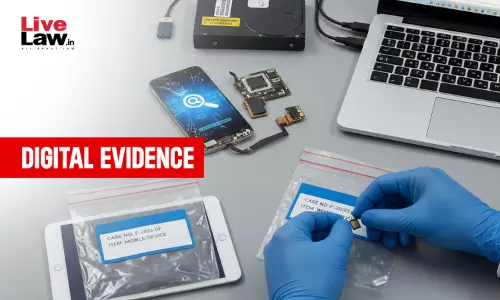
On August 19, 2026, the Delhi High Court, in Zeeshan Ekhlaque & Anr. v. National Legal Services Authority & Ors., issued notice to NALSA and the Union Ministries of Law & Justice and Home Affairs to respond to the petition on whether legal aid litigants can afford an expert needed to sign Part B of the forensic certificate for electronic evidence under Section 63 of the Bharatiya Sakshya Adhiniyam, 2023 (BSA). The PIL claimed that NALSA's response to an RTI application confirmed...
Regulating Algorithm: Free Speech And Social Media Censorship
Globally, there is continuous uploading of photos, videos, and audios through social media on a minute-to-minute basis. Despite the vastness of the human labor force, it is impossible for them to go through each piece that is uploaded. Thus, many social media sites have resorted to automatic systems to analyze such content and act against any misinformation, privacy breaches, and security concerns. India is now one of the countries where social media platforms such as Facebook and Instagram...