


Articles

Technological Glitches At Trial Courts Plaguing Virtual Hearings
A man disturbed by the prolonged delay in his divorce proceedings due to the suspended functioning of the family courts, approached the Delhi High Court seeking relief. 'Family Courts must be directed to record evidence through video-conferencing', he argued. Just a couple of hearings later, the Division Bench of the court realised that there is a larger issue concerning the virtual functioning of the trial courts during the pandemic - internet. In Anand Vaid v. Preeti Vaid, the...

Victim Compensation For Wrongful Prosecution/Conviction-Indian Judiciary Yet To Evolve
Humans of Bombay (a popular photoblog) recently raised ₹23 lakhs for Ali Mohammad Bhat, a carpet weaver from Kashmir who had been wrongfully imprisoned by the Indian state for 23 years on trumped-up charges of terrorism. This was related to the twin bomb blasts in Lajpat Nagar, New Delhi and Samleti, Rajasthan on two consecutive days in 1996. Ali is neither the first nor the last, person to be wrongfully convicted by the Indian judiciary. Our newspapers, magazines and social media...

Privacy And Puttaswamy For The People's Palate: Part 2 Of 3
The first part broke down opinions of Chelameswar J. and Sapre J. wherein the former examined the existence of the right to privacy within the contours of the Constitution, limiting the discussion to the existence of the same and the latter examined the foundation of the right on the basis of the Preamble and certain elements of Part III. In the second part of this series, I will attempt to simplify the opinions of Bobde J. (as he then was) and Kaul J. Bobde J.'s opinion In the very...
Five Months Without Regular Heads For NCLAT & NCLT
On August 14, 2020, National Company Law Appellate Tribunal ("NCLAT") is completing five months since its former Chairman Justice Sudhanshu Jyoti Mukhopadhaya retired at 70 years of age, in accordance with §413, Companies Act 2013. The Centre appointed Justice (Retd.) Bansi Lal Bhat, Member (Judicial) as officiating Chairperson with effect from March 15, 2020. This appointment was supposed to last for a period of three months or until further orders or until a regular Chairperson was...

A Critique Of The Draft Code On Wages (Central) Rules, 2020
The Code on Wages which was notified on 8th August 2019 consolidates the provisions of the Minimum Wages Act, 1948; the Payment of Wages Act, 1936; the Payment of Bonus Act, 1965 and the Equal Remuneration Act, 1976. Section 6 of the Code empowers the central as well as state governments to fix minimum wages for all employees covered by the Code unlike the Minimum Wages Act, 1948 that provided for the fixation of minimum wages only in respect of workers in the employments and occupations...

Establishing A Fair E-Commerce Marketplace: The Goal May Still Beyond Reach
The new Consumer Protection Act, 2019 ["CP Act"] is being praised for introducing Rules to regulate the e-commerce entities in India. Although such e-commerce entities were impliedly governed by the previous Consumer Protection Act, 1986, what is truly remarkable about the CP Act is the introduction of provisions concerning product liability, trade malpractices, consumer grievance redressal and jurisdiction in relation to e-commerce entities. Making discriminatory pricing by...

The Thiruvananthapuram Gold Smuggling Case & Diplomatic Protection
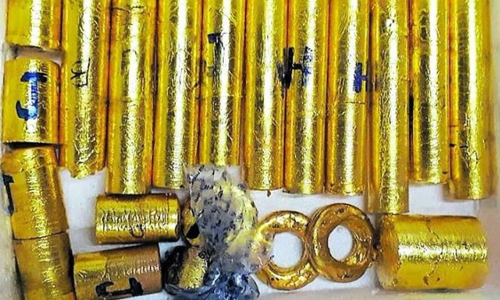
For centuries, governments and their envoys across the world have used the protection of diplomatic baggage, which forms an integral part of diplomatic immunity. This immunity has come into limelight recently with the gold smuggling incident at Thiruvananthapuram. On the 9th of July, 2020, 30 kilograms of gold was seized by The Customs Department in Kerala, India. While gold smuggling is not new to the State, what has stirred controversy is that this package of gold was sent via...

Amazon v. Amway: Managing Conflicts and a Case for Balancing Safeguards (Part 3)
In Part 1 of this essay, we offered a background to the January 2020 Delhi High Court ruling in the Amway cases and discussed the issue of consent of direct selling entities to subsequent third party sales of their products. In Part 2, we evaluated whether and under what conditions direct selling entities can oppose commercial dealing of their products by third party sellers under the Trade Marks Act. In Part 3, we consider the third principal finding from Amway: on whether and to what...

Guilty Until Proven Innocent: A Fable Of Indian News Media
Introductory The death of Bollywood actor Sushant Singh Rajput has given rise to a controversy which refuses to die; from the initial allegations of nepotism directed against Bollywood veterans to the declaration of the deceased actor's girlfriend Rhea Charaborty as the culprit, the case is now being used as a tool to consolidate votes for the upcoming Bihar Assembly Elections. Quite unethically though, a large section of mainstream news media outlets have virtually declared Chakraborty...