


Articles

Res Judicata
The doctrine of res judicata is understood as "a matter adjudged". Founded on the principle that a litigation between parties must attain finality[1], and on the principles of justice, equity and good conscience[2], res judicata dictates that a right or fact established by a competent court in an earlier proceeding ought to be conclusive and binding upon the parties and those in privity with law or in estate[3]. The earlier proceeding need not be a suit even though the later could be a ...

Effect Of 2015 Amendment To The Arbitration And Conciliation Act On Limitation Period To Challenge Arbitral Awards
The regime of alternative dispute resolution worldwide and more specifically in India has attracted small and big commercial enterprises to get their disputes resolved through arbitral proceedings. The Arbitration & Conciliation Act, 1996 ("the Act") governs the procedure relating to such arbitral proceedings from its invocation to rendering of Award and to its challenge in quite some detail. This Article examines the effect of Arbitration and Conciliation (Amendment) Act...
A To Z Of The Insolvency And Bankruptcy Code | A Beginner's Guide
Spoiler alert here: the title of this article is misleading. This is, by no means, a complete alpha to omega of the Insolvency and Bankruptcy Code (IBC) and we will merely be skimming at its surface. We call it the 'A to Z of IBC' because what we have done here is - arrange the most fundamental principles of IBC law alphabetically, like a dictionary of sorts. Given the raised threshold to initiate insolvency and the proposed suspension of provisions which empower creditors and the...
A Personal Guarantor's Pandemic: IBC Suspension And Its Repercussions
On 25 March 2020, in light of the COVID-19 pandemic currently plaguing the world, the Central Government, through the Ministry of Home Affairs, had to take the harsh step of imposing a nationwide lockdown, which has been supplemented by periodic extensions. As a result of the unprecedented impact of this measure on businesses, and to aid the plunging economic scenario in the country, a series of economic reforms have been sought to be implemented under the aegis of the finance minister...

Unravelling The Landlord-Tenant Disputes In Times Of Covid-19
The world seems to be beholding an aberrant situation, the effect whereof is not only glaringly visible in economic, political and organizational fronts but also had left a deep impact on our interpersonal and social relations. The economic impact of the COVID-19 pandemic in India has been quite disturbing. The World Bank and credit rating agencies have downgraded India's growth for fiscal year 2021 with the lowest figures India has seen in three decades since India's economic...

East Punjab Urban Rent Restriction Act 1949 – Evolution
As the word Rent suggests it can easily be construed that any Rent Law is a law that is used as a tool to control and regulate the relationship and also adjudicate the disputes arising between the landlord and tenant. The historical background of the rent legislation in the erstwhile State of Punjab relates back to the time of Second World War, which started in the year 1939, when various taxes were imposed by the British Government to set off the cost of the war under the provisions...
COVID-19 A Force Majeure Event- Threshold Of A New Jurisprudence
The outbreak of Covid-19 virus has confronted the world with an unprecedented situation where the economic and commercial activities across the globe have been significantly disrupted. As a consequence of the said disruption, the performance of countless contracts shall inevitably be delayed, disrupted or rendered impossible. The present situation is likely to lead to significant number of cases involving reliance on the Force Majuere stipulation and consequent development of a novel...

A Comic Tale Of The Gown
Intimidating for some, penguinesque for others. Stuffy for the ones wearing it when the weather application tells us we are being slow roasted. For High Courts and the Supreme Court in India, like in many other countries, the lawyers' and judges' dress code consists of white (more or less) clothing topped with a white band, a black coat and a black gown (the last two turn a bit swanky if you're admitted into the League of Extraordinary Legal Gentlemen, the senior advocates and the judges,...
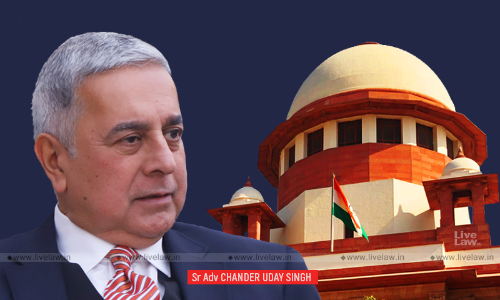
The Supreme Court Is In the Thrall Of The Government
A month ago, on April 27, a bench of the Supreme Court testily informed activist-lawyer Prashant Bhushan that "this institution is not a hostage to the government".And undoubtedly right they were. The Supreme Court of India has for almost four decades been recognised globally as extraordinarily influential and powerful, its verdicts keenly read and commented upon by legal scholars and even constitutional courts throughout the free world; the sheer expanse of its reach has amazed commentators;...

Confusion On Consortium: Constitution Bench Decision Of Pranay Sethi Requires A Revisit
Right from the time when Motor Vehicles Act, 1988 ("Act") was enacted, the Motor Accident Claims Tribunal (MACT) have been struggling to adopt a rather standardised method of calculating compensation which is both just and fair. Over the years Hon'ble Supreme Court has made various attempts to draw a yard stick for calculating the compensation, latest in the line being 5 Judges Bench decision of NationalInsurance Corporation Vs. Pranay Sethi, (2017) 16 SCC 680. This decision had put...

Supreme Court Clears The Air On The Section 13(2) Of The Consumer Protection Act As Being Mandatory Or Directory
A Constitution Bench of the Supreme Court recently in the case of New India Assurance Co. Ltd. v. Hilli Multipurpose Cold Storage Pvt. Ltd. MANU/SC/0272/2020 held that the time period to file the reply within forty five (30 days or such extended period, not exceeding 15 days) under Section 13 (2) of the Consumer Protection Act, 1986 (Act) is mandatory and there cannot be any extension beyond the said period. The issue whether the time period as prescribed under Section 13 (2) of...
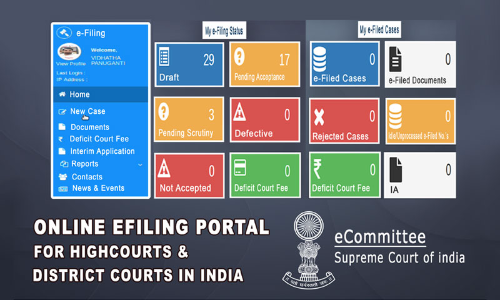
Supreme Court's Web Access For The Litigant, Lawyer And The Judge With Disability?
The Rights of Persons with Disabilities Act came into force on 19th April 2017. It was perceived as a landmark legislation keeping in mind the progressive shift it brought in the approach towards and the overall gamut of rights for persons with disabilities in India. The law essentially looked at and spoke of persons with disabilities as equal participants in public life, who must mandatorily enjoy access to all those rights, which are available to persons without disabilities. At the...