


Articles

The Constitutional Challenge To The Transgender Act
On 5th December, the Transgender Persons (Protection of Rights) Act came into force. As is well-known, the Act – that had been in the pipeline for four years – was passed over sustained protests and objections by the trans and intersex community. Among other things, critiques of the Trans Bill (as it then was) focused upon its inadequate definitions, its reification of the gender binary, its failure to recognise different forms of sexual identity, the denial of the right to self-determination,...

100 Years Of Ambedkar's Journalism
Today's date marks 100 years of journalism of Dr B.R. Ambedkar. Popular for his contributions in framing of India's Constitution, this aspect of Ambedkar's life has generally been ignored. In the compilation of his writings published by Government of Maharashtra (2008), Gangadhar Pantawane has aptly remarked, "even after the well-crafted journalistic creation by Babasaheb Ambedkar nobody has recognised him as 'Patrakar Ambedkar'" (p.2; roughly translated from Marathi). Coming back...

Mis-Governance, Corruption Remains Unchecked As RTI Has Gone With 370 Say J&K Govt Officials
After the abrogation article 370, I am getting frequent calls from RTI applicants that Government officials are not providing them information under RTI Act. It is alleged that Government officials are misleading citizens saying RTI law has gone along with article 370 from J&K. Some uninformed people have started accepting this narrative and it is mainly due to lack of legal knowledge among citizens. Even the educated people take this as gospel truth. As I have said there are many...


New Section 17-A Of Prevention Of Corruption Act Promotes, Rather Than, Prevents Corruption
This Section has become the source of confusion and multifaceted interpretations with regard to its applicability to pending actions in respect of offences committed prior to the incorporation of new offences under Amending Act 16 of 2018. My humble endeavour is to steer clear of any lingering doubt in this area. Some of the propositions of law are too well known that they continue to be immutable. The law as it existed at the time of commission of the offence would govern the...
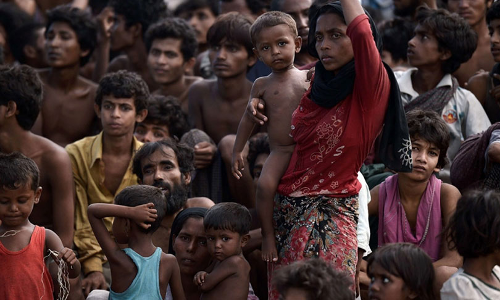
Lessons From Myanmar On Discriminatory Citizenship Laws And Genocide
The International Court of Justice has delivered a momentous verdict against Myanmar on the Rohingya genocide issue in a case filed by African nation The Gambia.This is a big blow to Myanmar's official stand which refused to acknowledge the very identity and existence of Rohingya Muslims. The United Nations top court held that Rohingyas were a "protected group" within the definition of the Genocide Convention, and issued provisional orders directing Myanmar to take steps for their protection.The...

Feigning Dispute Under Insolvency & Bankruptcy Code
Insolvency and Bankruptcy Code, 2016 (I & B Code in short) which is a consolidated Act dealing with reorganisation and insolvency of corporate persons, partnership firms and individuals in a time bound manner with object of maximisiation of value of assets and protecting interest of all stake holders. A Financial creditor/s or Operational creditor may make an application for initiating corporate insolvency resolution process, if the minimum amount of default committed by the...

Decoding The ICJ Order On Rohingya Genocide In Myanmar
Yesterday, the International Court of Justice issued its decision relating to the request for provisional measures in the case brought by The Gambia against Myanmar, relating to the Genocide Convention and the Rohingya. This order is the result of an application filed by The Gambia on 11 November 2019 at the ICJ. As I have previously written about the application, as well as days 1, 2 and 3 of the hearings held in December 2019, I will not recap the arguments raised but instead...

Challenge Against The Citizenship (Amendment) Act : Beyond The Basic Arguments
Thus far, the constitutional debate around the Citizenship (Amendment) Act has been framed around the following arguments: (a) does the grant of immunity and citizenship to a select group of migrants violate the principle of "reasonable classification" under Article 14, by virtue of the individuals and groups it excludes?; (b) does the selection of groups lack any "determining principle", and is therefore unconstitutionally arbitrary?; and (c) by privileging religious persecution over other...

Analyzing Section 44A Of CPC In The Light Of Recent Govt.Notification Declaring UAE As A Reciprocating Country
Section 44A of Code of Civil Procedure, 1908 encapsulates the principle of reciprocity, i.e. execution of foreign decree passed by a foreign country(reciprocating) in India and the manner in which it is to be done. The said provision is reproduced as under: 44A. Execution of Decress passed by Courts in reciprocating territory— (1)Where a certified copy of a decree of any of the superior Courts of any reciprocating territroy has been filed in a District Court, the decree may be...

UAPA Cases - Does The NIA Act Affect The Federal System?
NIA and Its Jurisdiction. National Investigation Agency was constituted by the NIA Act, 2008 (NIA/Agency) for the investigation and prosecution of offences affecting the national security, sovereignty and integrity of the nation. The Agency became well-known among the public as the investigation of offences under the Unlawful Activities (Prevention) Act, 1967 (the law of terrorism) is mainly done by it. UAPA is one of the Acts adhered to the schedule to the NIA Act. The Agency is...