




Articles
Reform Before Uniformity: Case For Repairing Personal Laws Rather Than Replacing Them
The recent proceedings before the Supreme Court of India, seeking the Union's response to a challenge against aspects of Muslim inheritance law as discriminatory to women, have predictably reignited the call for a Uniform Civil Code (UCC). The instinct is familiar: when confronted with inequity within a system, replace the system altogether. When the Court expressed a poignant concern: that merely striking down the 1937 Act might create a "legal vacuum," leaving Muslim women without the...
Jurisprudential Dilemma Of Algorithmic Cartels
The law on competition was constructed against human wrongs in a market. The essence of cartels is one that assumes the existence of people, executives in hotel rooms, exchanging messages, creating a meeting of minds. Yet what happens when those who do not meet, do not communicate and do not even have the intention of colluding yet the market prices go up, even, and markets silently compete away? This is no more a hypothetical issue. Even without human coordination, global regulators publicly...
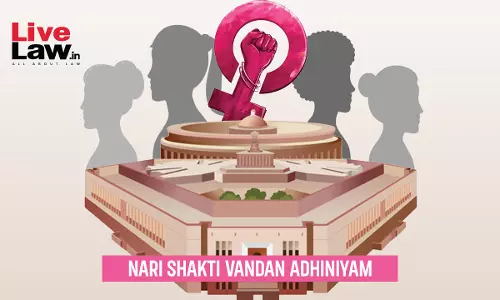
Why Cabinet's Proposed Delimitation Amendment Violates Constitutional Compact
The Constitution (One Hundred and Sixth Amendment) Act, 2023, known as the Nari Shakti Vandan Adhiniyam, was passed with rare cross-party consensus.[1] It promised one-third reservation for women in the Lok Sabha, state legislative assemblies, and the Delhi Assembly, with sub-reservation for Scheduled Castes and Scheduled Tribes. What Parliament also did, was insert a time-lock into the very same provision. Article 334A stipulated that the reservation would take effect only after the publication...
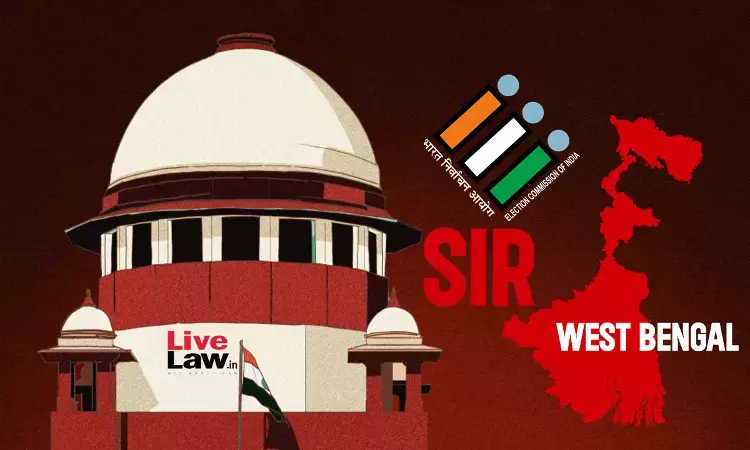
Critical Analysis Of Supreme Court's Approach To WB SIR Exercise
The Supreme Court's recent hearings on the West Bengal Special Intensive Revision (SIR) exercise raise fundamental concerns. At the centre of the controversy is the large-scale deletion of over 27 lakh voters, many of whom claim to have been previously included in the 2002 electoral rolls, coupled with the system's inability to rectify the genuine exclusions before the polling dates.The...
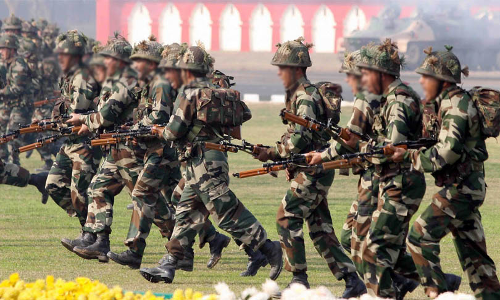
A Veto On Justice: 18,000 CAPF Officers And India's Looming Constitutional Crisis
“The legislature cannot set aside a judgment. It can only remove the defect in the law that formed the basis of that judgment. The moment it attempts more, it ceases to legislate — it usurps.”— Dr. B.R. Ambedkar, Constituent Assembly Debates, 1949On 25 March 2026, a four-page legislative measure was introduced in the Council of States. It was subsequently passed by both Houses following deliberation and opposition, before receiving Presidential assent on 9 April 2026 and being formally brought...

Life Lessons In Transfer Of Property Act, 1882
The Transfer of Property Act, 1882 is one of the most important legislations in the field of private law in India. Besides formulating the general principles of transfer governing both movable and immovable property, it provides five ways of transferring a property (in most cases, immovable) through sale, mortgage, lease, exchange and gift. The law is particularly relevant in a country like India where property disputes constitute nearly sixty-six per cent of civil litigation.[1]Among all those...
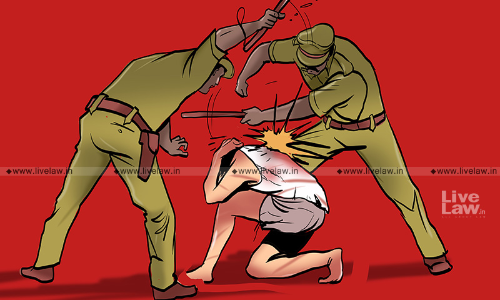
Rarest Of Rare : Nine Policemen Sentenced To Death In Sathankulam Custodial Killings
In a ruling that'll probably get dissected in law classrooms for a long time, a Madurai court delivered one of India's harshest punishments yet for custodial violence yesterday. Nine police personnel were sentenced to death for the brutal torture and killing of P. Jayaraj (58) and his son J. Bennix (31), a father and son whose only “crime” was keeping their mobile phone shop open a few minutes past closing time during the 2020 COVID-19 lockdown.What Happened in Sathankulam?Most people across the...

Situs Of Office; Cyber-Freezes And Jurisdictional Trap
In the digital age, money moves in milliseconds across state borders, but the legal remedies for innocent account holders remain shackled to physical geography. As India pushes for "Digital Inclusion," a parallel and dangerous "Financial Exclusion" is occurring. Investigating agencies, in their zeal to trace "proceeds of crime," are using a borderless digital trail to impose a medieval form...
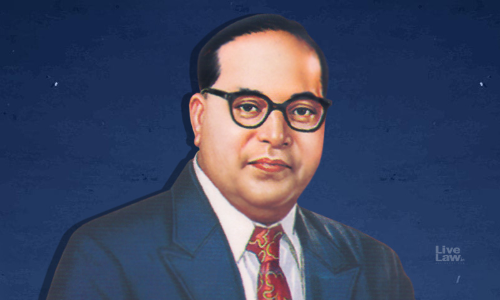
Ambedkar Jayanti: Reminiscing A Legacy Of Equality
As we celebrate the 135th Ambedkar Jayanti, we reflect on the egalitarian principle of 'one man, one value.' As the father of our Constitution, he fought against a social system that treated people unequally despite democratic promises. Today, Dr. Ambedkar is honored everywhere with statues and memorials, and we even dedicated a year to Social Justice in his name. However, much of this praise feels hollow. While we celebrate his legacy, the tragic death of a Dalit medical student in Kerala...
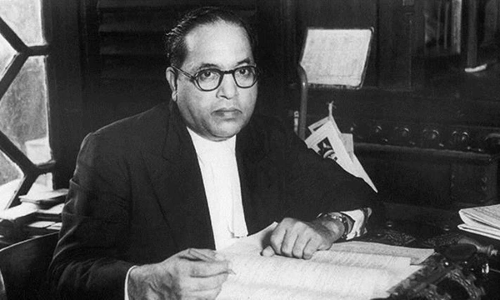
Ambedkarism - Celebrated In Theory, Disliked In Practice?
In the current modern Indian political process, Ambedkarism in theory is acceptable, but in practice, it is not encouraged. So far, Dr. B.R. Ambedkar has been appropriated by many, from Caste Hindus to OBCs and Dalits, each as per their own convenience. This phenomenon is not limited to Ambedkar alone. We see it in how the ultimate atheist and communist revolutionary, Bhagat Singh, is being used by forces diametrically opposed to his ideology. Today, one can find a range of past leaders, from...
Article 226(2) And Criminal Jurisprudence: Navigating Civil Law Concept Of Cause of Action
The Constitution of India vests the High Courts with a special writ jurisdiction under Article 226 to ensure the delivery of complete justice. Initially, the scope of Article 226 was confined to the “territories in relation to which it exercises jurisdiction.” However, this created a serious problem by restricting writ jurisdiction in Union matters solely to the Punjab High Court (before formation of Delhi High Court) as the seat of Government of India was located in New Delhi, thereby causing...

Reaffirmation Of Article 25: Chhattisgarh High Court's Stance On Prohibition Of Private Prayer Meeting
Every person has a right to practice their own religion as per Article 25 of the Indian Constitution, state can only interfere when it affects public order, morality or health. State should have no objection if a person is practicing his religion within his domestic household.The present case “Badri Prasad Sahu & Anr. v. State of Chhattisgarh” 2026:CGHC:13995 as decided by the Chhattisgarh High Court on 1st April 2026 held that individuals do not require prior state permission to conduct...