




BSA/Evidence Act
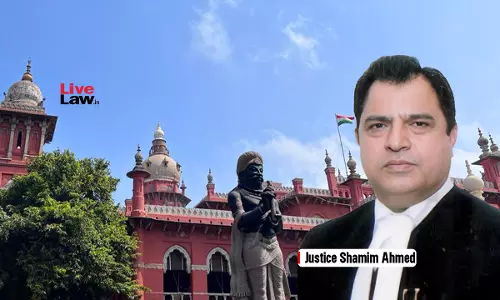
Madras High Court Imposes ₹50K Costs On Man Who Sought Child's DNA Test To Humiliate Wife, Protract Her Maintenance Case
The Madras High Court recently refused a man's plea for a DNA test, noting that he had filed the same 10 years after the wife filed a Domestic Violence case, without providing any reasonable or acceptable explanation for the delay. Justice Shamim Ahmed remarked that the husband had sought a DNA test only to humiliate and defame his wife in the society, and to protract the maintenance...
S.72 BSA | Courts Must Compare Signatures Themselves, Expert Evidence Cannot Be Called Routinely In Handwriting Disputes: Supreme Court
Courts have full discretion to seek expert opinion only when there is doubt or the writing is smudged, vague, or very light, the Supreme Court clarified.
Testimony For Sexual Offence Within Home Does Not Require Same Corroboration As Crimes Committed In Open: Supreme Court
The Court said that holding evidence for sexual offences committed within the home and crimes committed in open to the same standard would give immunity to predators.

S.65B Evidence Act Certificate Not Mandatory For Electronic Evidence Before Family Courts: Karnataka High Court
The Karnataka High Court has held that the requirement of producing a certificate under Section 65B of the Indian Evidence Act, 1872 for admitting electronic evidence such video recordings stored in CDs is not mandatory in proceedings before Family Courts. The Division Bench of Justice M.I. Arun and Justice Raghavendra Seetharam Srivatsa held that Section 14 of the Family Courts Act,...
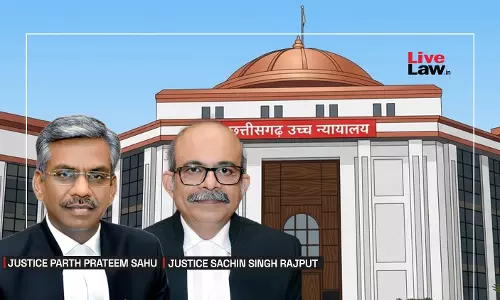
WhatsApp Chats Showing Mental Cruelty Cannot Be Ignored Merely For Non-Compliance With Evidence Act: Chhattisgarh High Court Grants Divorce
The Chhattisgarh High Court has held that unchallenged WhatsApp messages produced by a wife, which disclosed conduct falling within the ambit of mental cruelty, could not be brushed aside merely because the strict evidentiary requirements were not met. [2026 LiveLaw (Chh) 134]The Court observed that though the wife had not complied with the provisions of the Evidence Act in respect of...
Allahabad High Court Acquits Woman, Alleged Paramour In Husband's Murder Case; Says CDR Can't Alone Prove Accused Was With Deceased
The Allahabad High Court has acquitted a woman and her alleged paramour in a murder case involving her husband, holding that the prosecution failed to establish a complete chain of circumstantial evidence connecting them with the crime.A Bench of Justice Siddhartha Varma and Justice Jai Krishna Upadhyay set aside the judgment of the trial court, which had convicted Hasnera alias Shabana...

Allahabad High Court Acquits Mother Sentenced To Death For Killing 3 Children, Finds Child Witness's Testimony 'Tutored'
The Allahabad High Court has acquitted a mother who was sentenced to death for killing her three children while stating that the prosecution had failed to establish their guilt beyond a reasonable doubt. The Court found that the testimony of the 8-year-old surviving child witness suffered from "irreconcilable contradictions" and exhibited "clear hallmarks of tutoring". A Bench of...
S. 118 BSA | Allahabad High Court Seeks Inquiry Against Judge For Granting Bail To Husband Ignoring Dowry Death Presumption
The Allahabad High Court on Tuesday recommended an inquiry against a Judicial Officer who granted bail to a husband in a dowry death case, ignoring sufficient material against him as well as the presumption under Section 118 of the Bharatiya Sakshya Adhiniyam (BSA). For context, Section 118 BSA provides a statutory presumption in dowry death cases. It says that where a woman dies...
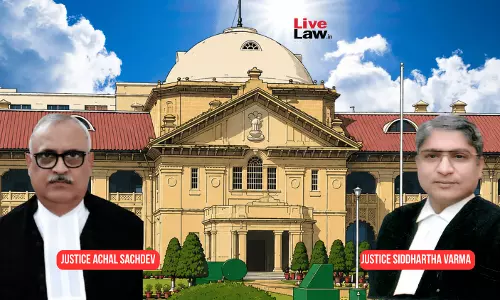
'Pugilistic, Boxer-Like' Position Of Dead Body Alone Does Not Establish Ante-Mortem Burns: Allahabad High Court
The Allahabad High Court has observed that the 'pugilistic' or 'boxer-like' position of a burnt dead body, by itself, does not establish that the burns were sustained ante-mortem.The Court said that such a posture of the dead body is a heat artifact which can occur no matter whether a person was alive or already dead when the burning began. A Bench of Justice Siddhartha Varma and Justice...
No Direct Evidence Of Murder Needed When Kidnapping, Last Seen & Swift Recovery Of Body Form Complete Chain: AP High Court
The Andhra Pradesh High Court has held that where the time between the kidnapping of a minor girl and recovery of her dead body was short, the prosecution could not be expected to produce direct evidence of the actual commission of murder. [2026 LiveLaw (AP) 200]The Court accordingly upheld the conviction and life sentences of two accused, finding that the 'last seen' theory and...
Allahabad High Court Acquits Husband Accused Of Setting Wife Ablaze, Rejects Dying Declaration Recorded In Presence Of Relatives
The Allahabad High Court on Wednesday acquitted a man convicted of culpable homicide in connection with the burning death of his wife, observing that the dying declaration was recorded in the presence of relatives/family members and therefore could not be safely relied upon. A Bench of Justice Siddhartha Varma and Justice Achal Sachdev allowed the criminal appeal filed by Jagan against...
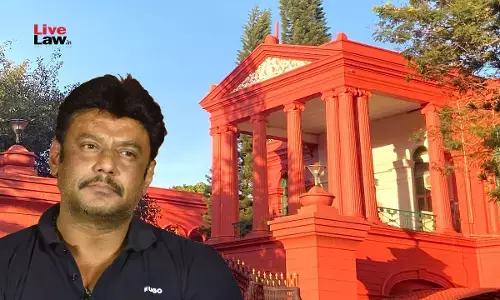
Renukaswamy Murder Case | Witness Speaking Against Prosecution In An Unguarded Moment Not 'Hostile': Darshan To Karnataka High Court
The Karnataka High Court on Wednesday (August 12) reserved its orders on a crucial legal question arising in the Renukaswamy murder case involving actors Darshan and Pavitra Gowda—whether the prosecution can cross-examine its own witness under Section 154 of the Indian Evidence Act, 1872, without first having the witness declared hostile.A single judge bench of Justice M. Nagaprasanna heard...