




Civil Law
Bihar and Orissa Public Demands Recovery Act Doesn't Permit Belated Recovery From Legal Heirs After Years Of Inaction: Patna High Court
The Patna High Court has held that Section 52 of the Bihar and Orissa Public Demands Recovery Act, 1914, does not confer an unrestricted or perpetual power upon the State to initiate recovery proceedings against the legal heirs of a deceased certificate debtor after years of unexplained inaction. The Court held that such proceedings must be pursued strictly in accordance with law and within...
S.152 CPC | Court Can Direct Correction Of Wrong Survey Number In Decree If Identity Of Property Is Undisputed: AP High Court
The Andhra Pradesh High Court has held that where an incorrect survey number has been mentioned due to an accidental slip, the Court can exercise its power under Section 152 CPC to correct the mistake even after the decree is passed, provided there is no dispute regarding the identity of the property. [2026 LiveLaw (AP) 165]Cautioning against misuse of the jurisdiction, the Court held...
Madras High Court Directs State To Ensure Scheduled Caste Devotees Can Participate In Temple Chariot Festival, Orders Police Protection
The Madras High Court has directed authorities to ensure that members of the Scheduled Caste community in Salem's Deviyakurichi village are allowed to participate in the annual 'Ther' festival of the Arulmigu Ayyanar Temple with adequate police protection. [2026 LiveLaw (Mad) 354]For context, Ther Festival is a Hindu temple chariot festival where large, decorated wooden cars carrying deity...
'Taxing Justice At Ad-Valorem Rates Is Harsh': Allahabad High Court Urges UP Govt To Ease Burden Of Civil Litigation
Observing that taxing justice at "ad valorem rates is, indeed, harsh", the Allahabad High Court on Tuesday urged the Uttar Pradesh Government to consider measures to reduce the hardship faced by litigants pursuing civil remedies.At the same time, the Court made it clear that disputes over title and possession cannot be decided by administrative authorities and must be taken before the...
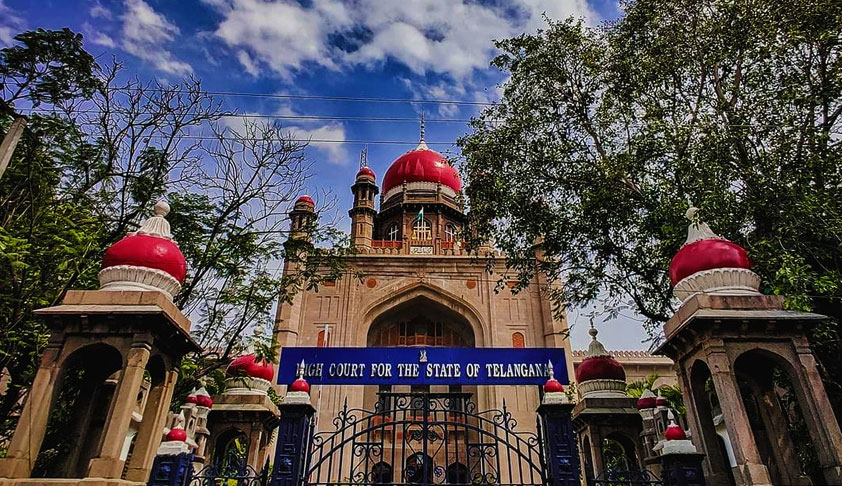
CBFC Cannot Withhold Film Certification Merely Because Civil Dispute Is Pending Without Stay Order: Telangana High Court
The Telangana High Court directed the Central Board of Film Certification (CBFC) to release the Certificate for "Raam Bhajarang" film, observing that the authority cannot withhold the certification solely because a third party has filed a writ petition claiming rights over the film in the absence of any interim order. [2026 LiveLaw (Tel) 121]The Court observed that the CBFC's statutory...
National Highways Act | Competent Authority Can't Decide Disputed Compensation Shares, Must Refer Matter To Civil Court: Allahabad High Court
The Allahabad High Court has held that where co-sharers are seriously at odds over their shares in land acquired under the National Highways Act, 1956, the competent authority has no jurisdiction to apportion the compensation between them and must refer the dispute to the principal civil court of original jurisdiction.Section 3H(3) of the National Highways Act, 1956 lets the competent...

Delhi High Court Upholds ₹11 Lakh Penalty On School Bus Operator For Parking Buses On 'Environmentally Sensitive' Yamuna Floodplains
The Delhi High Court has upheld ₹11 lakh penalty imposed on a school bus operator for parking 22 buses on the Yamuna floodplains, holding that commercial parking in the ecologically sensitive area is an illegality in itself and cannot be justified merely because the buses were not involved in dumping waste. [2026 LiveLaw (Del) 705]Justice Jasmeet Singh dismissed a petition filed by...
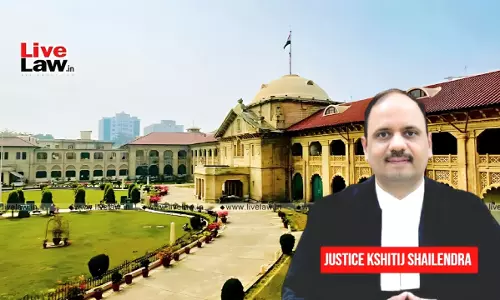
Allahabad High Court Questions Why Revenue Officer Prepared Two Contradictory Orders In Same Case, Suspects 'Something More Than Negligence'
The Allahabad High Court has held that where two mutually contradictory orders are passed on the same date in the same case, one in favour of the litigant and the other against him, the matter cannot be treated as one of negligence on the part of the officer who passed them. While dealing with two contradicting orders uploaded from the office of the Collector, Deoria, Justice Kshitij...
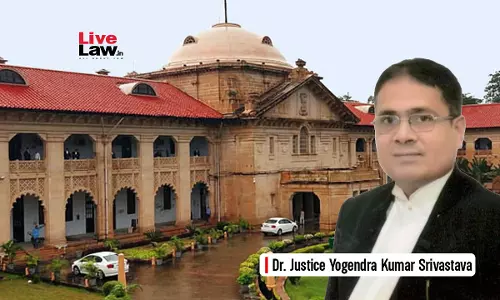
Return Of Plaint Not Sole Remedy Where Court Lacks Pecuniary Jurisdiction; Suit Can Be Transferred U/S 24(5) CPC: Allahabad High Court
The Allahabad High Court has held that a suit instituted before a court lacking pecuniary jurisdiction can be transferred by the District Court to a competent court under Section 24(5) of the Code of Civil Procedure, 1908. It held that return of the plaint under Order VII Rule 10 CPC is not the only course available once such a defect comes to light.It further held that the evidence...

O VII 7 CPC | Lesser Relief Can Be Decreed, But Not Totally Different Claim : Supreme Court Declines To Allow Partition In Title Suit
Declining to grant the relief of partition in a suit seeking a declaration of title, the Supreme Court clarified that while Order VII Rule 7 of the Code of Civil Procedure permits the grant of a lesser or alternative relief flowing from the facts already pleaded and proved, it cannot be invoked to award a relief such as partition, which is based on a distinct cause of action and requires...
UP Tenancy Act | Third Party Claiming Independent Title Not A Necessary Or Proper Party To Eviction Proceedings: Allahabad High Court
The Allahabad High Court has held that a third party asserting an independent title adverse to the landlord is neither a necessary nor a proper party to proceedings under Section 21 of the U.P. Regulation of Urban Premises Tenancy Act, 2021.It held that questions of title cannot be brought into eviction proceedings through an application for impleadment under Order I Rule 10 of the Code of...
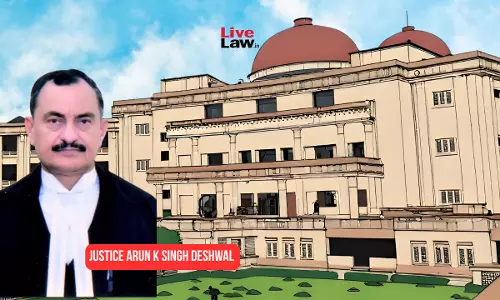
Fair Price Shop Dealership | Married Daughter Can't Be Denied Compassionate Appointment Solely Due To Marital Status: Allahabad High Court
The Allahabad High Court has held that a married daughter is included within the definition of “family” under the U.P. Essential Commodities (Regulation of Sale and Distribution Control) Order, 2016 and cannot be refused appointment as a fair price shop dealer on compassionate grounds only because she is married. It held that she is entitled to be considered subject to fulfilling...