




High Courts
LiveLaw Kerala High Court Weekly Round - Up: September 14 - September 20, 2026
Citations: 2026 LiveLaw (Ker) 500 - 2026 LiveLaw (Ker) 517Nominal IndexDirectorate of Enforcement v. Kolatt Dasan Prathapan, 2026 LiveLaw (Ker) 500Rakhul Krishnan v Union of India and Ors., 2026 LiveLaw (Ker) 501 Baby Kurian v The District Collector and Ors., 2026 LiveLaw (Ker) 502 M/s Cubes Entertainments v. Big Tree Entertainment Private Limited and Anr., 2026 LiveLaw (Ker) 503Pramasivam...
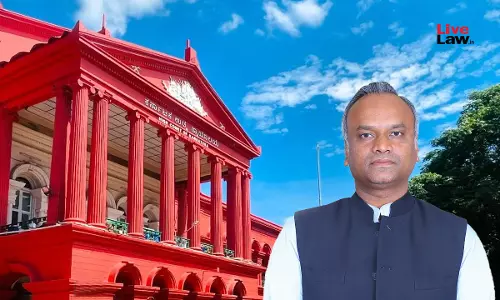
Karnataka Home Minister Priyank Kharge Moves High Court To Quash Defamation Case Over Alleged Remarks Against RSS
Karnataka Home Minister Priyank Kharge has approached the Karnataka High Court seeking quashing of criminal defamation proceedings initiated against him over alleged remarks concerning the Rashtriya Swayamsevak Sangh (RSS).The petition challenges the order dated June 27, 2026, passed by the Bengaluru Special Court for cases against sitting and former MPs and MLAs, whereby the court...
Right To Retirement Benefits Accrues From Length Of Service, Not Attached To Post: Allahabad High Court
The Allahabad High Court has held that the right to retirement benefits flows from the length of service rendered by an employee and is not linked to the post held. It directed the State to pay pension, gratuity and other retirement benefits to a Junior Clerk whose services were terminated in 2000 on the ground that there was no vacant post against which he could have been appointed, noting...
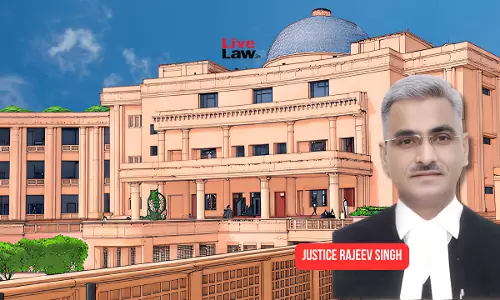
No Vigilance Probe Against UP IAS Officer On Complaint Without Affidavit Or State Vigilance Committee Approval: Allahabad High Court
The Allahabad High Court has held that a complaint against a Class-I officer of the State which is not backed by an affidavit, as required by the Government Orders governing complaints against Group-A officers, cannot be made the basis of a vigilance inquiry, particularly when the matter has not been placed before the State Vigilance Committee for approval. It quashed the vigilance...

Calcutta High Court Declines Urgent Hearing In Plea Alleging Mob Attack On TMC MP Mahua Moitra Despite Earlier Order For Police Protection
The Calcutta High Court on Monday declined to grant an urgent hearing to a plea alleging that Trinamool Congress MP Mahua Moitra was attacked while visiting her constituency despite an earlier Court order directing security for her.The plea was mentioned before Justice Saugata Bhattacharya, with counsel submitting that the Court had already ordered security for Moitra during her...

LiveLaw Gujarat High Court Weekly Round-Up: September 14 - September 20, 2026
Citation: 2026 LiveLaw (Guj) 244 - 2026 LiveLaw (Guj) 250Nominal IndexRanchhodbhai Jesingbhai Since Dead Through His Heirs and LRS & Ors v/s Anchhibhai Kavjibhai Chaudhari Since Dead Through His Heirs and LRS & Ors, 2026 LiveLaw (Guj) 244Kaushik Nanubhai Majithia v/s State of Gujarat & Ors., 2026 LiveLaw (Guj) 245Kutubuddin Fakruddin Faruqui & Ors. v/s Gujarat State Waqf...
Gujarat High Court Seeks Adani Enterprise's Response On Journalist Ravi Nair's Plea Challenging NBW, Custody In Defamation Case
The Gujarat High Court on Monday (September 21) granted time to Adani Enterprise to file its response to a plea filed by journalist Ravi Nair's plea who has challenged his arrest after a non-bailable warrant was issued against him by a sessions court for non-appearance in a defamation case filed by the company.The court had issued notice on the plea on Saturday. Adani Enterprises Ltd filed...

Nandigram Assembly By-Poll: Congress Candidate Milan Pradhan Moves Calcutta High Court Against Detention By WB Police
The Calcutta High Court is set to hear on Tuesday a plea moved by Indian National Congress candidate Milan Pradhan challenging his detention by the West Bengal Police ahead of the Nandigram Assembly by-election.Appearing for Pradhan, his counsel submitted that the petitioner was already in custody even though the election is scheduled to be held on October 6. The counsel further pointed out...
Civil Court Empowered To Direct Forwarding Of Forgery Complaint To Police U/S 151 CPC Inherent Jurisdiction: MP High Court
The Madhya Pradesh High Court at Indore has clarified that a Civil Court in appropriate cases involving allegations of serious forgery has the inherent power to direct a party, witness to forward their complaint to the police for registration of FIR invoking its inherent jurisdiction provided under Section 151 CPC. [2026 LiveLaw (MP) 378]The bench of Justice Gajendra Singh observed that the...
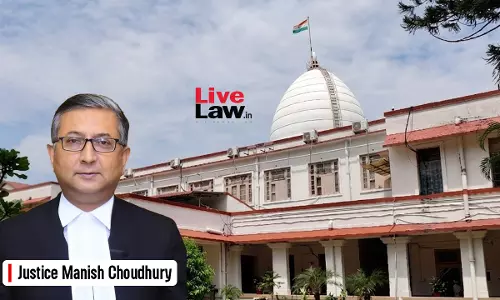
Assam Land Requisition Act | Landowner's Appeal Must Be Decided Before Possession Is Taken: Gauhati High Court
The Gauhati High Court has held that the right of appeal under Section 3(3) of the Assam Land (Requisition and Acquisition) Act, 1964 is a substantive right and cannot be rendered illusory by taking possession of the land before the appeal is decided.Justice Manish Choudhury observed, “If a statute provides such a right to appeal, such right to appeal is not to be illusory. A right to...
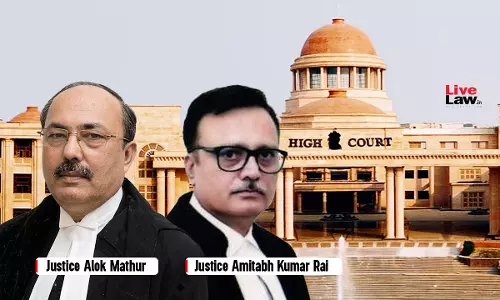
NEET-UG 2026 | UP Govt's Enhanced Reservation In Four Medical Colleges Prima Facie Amounts To Contempt: Allahabad High Court
The Allahabad High Court has stayed a Uttar Pradesh government order reserving 62 of the 85 MBBS seats in each of four government medical colleges for Scheduled Caste candidates, holding that it defied the Court's earlier directions and the State's own undertaking to follow the U.P. Admission to Educational Institutions (Reservation for Scheduled Castes, Scheduled Tribes and Other...
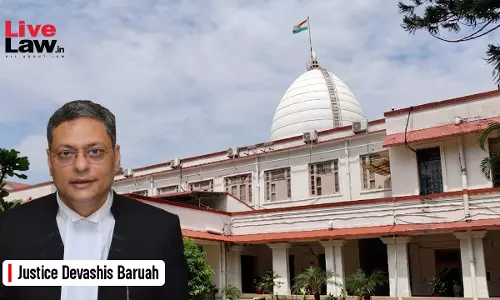
Forest Department Can't Evict Alleged Encroachers Without Following Supreme Court Directions In Abdul Khalek: Gauhati High Court
The Gauhati High Court has held that if the Forest Department proposes to take action against alleged occupants of a reserved forest, it must follow the procedure laid down by the Supreme Court in Abdul Khalek v. State of Assam.Justice Devashis Baruah, observed, “...taking into account the directions, which were passed by the Supreme Court in Abdul Khalek (supra), whereby there was a...