




Labour & Service
Salary Can't Be Denied On Objections To Compassionate Appointment So Long As Approval Order Subsists: Allahabad High Court
The Allahabad High Court has held that where an order approving a compassionate appointment has never been withdrawn, recalled or annulled by a competent authority, the salary flowing from that appointment cannot be denied. It held that an administrative order which continues to operate in law cannot be defeated indirectly by refusing the benefits which follow from it.Justice Manju Rani...
Excess Salary Paid Due To Wrong Pay Fixation Can't Be Recovered From Class-III & IV Employees Despite Undertaking: Chhattisgarh High Court
The Chhattisgarh High Court has held that recovery of excess payment from Class-III and Class-IV employees is impermissible in law even if such employees have submitted an undertaking or consent letter agreeing to the recovery. The Court observed that the petitioner's contention that he had submitted the consent letter and deposited the amount under pressure and threat that his retiral dues...

Right Of Consideration For Regularization Doesn't Perish With Employee's Death, Survives Through Legal Heirs: Allahabad High Court
The Allahabad High Court has held that the right of consideration for regularization does not come to an end with the death of the employee and survives through his legal representatives, where the regularization exercise had been set in motion in his lifetime. It held that such consideration must be undertaken, if necessary notionally, so that the consequential service benefits reach the...

Grant Reservation To Military Cadets Disabled 40% Or More During Training Under Ex-Military Personnel Quota : Supreme Court To States/UTs
To strengthen the welfare and rehabilitation of cadets discharged from military training due to disabilities, the Supreme Court has directed States and Union Territories to consider granting reservation to such “out-boarded” cadets with 40% or more disability under the Ex-Military Personnel (Ex-MP) quota, while affirming their entitlement to reservation benefits under Section 34 of the...
Employees Can't Suffer For Employer's Record-Keeping Lapses: AP High Court Directs EPFO To Reconsider Retirees' Plea For Higher Pension
Granting relief to retired employees seeking higher pension, the Andhra Pradesh High Court held that the Employees' Provident Fund Organisation (EPFO) cannot reject claims under the Employees' Pension Scheme, 1995 solely for non-production of Form 6A, challans or other employer records, particularly in respect of periods prior to 2010. [2026 LiveLaw (AP) 180]The Court observed that...

Using Teachers for Years Without Fair Pay Amounts to 'Begaar': Himachal Pradesh High Court
The Himachal Pradesh High Court has held that the State cannot exploit the services of teachers engaged in government schools for years without extending the benefits due to them, observing that such conduct amounts to "begaar" prohibited by the Constitution. While directing the release of Grant-in-Aid to a Drawing Master who had been serving since 2011, the Court remarked that the Government...
Regularisation Of Compassionate Appointee Must Be From Date Of Acquiring Qualification, Not Initial Appointment: AP High Court
The Andhra Pradesh High Court dismissed a writ petition challenging the revision of the date of regularisation of a Junior Assistant appointed on compassionate grounds, holding that an employee who did not possess the prescribed educational qualification on the date of appointment cannot claim regularisation from the date of initial appointment. [2026 LiveLaw (AP) 178]In doing so, the Court...
'Washed-Off Theory' Doesn't Apply While Deciding If Employee Is Fit To Be Retained : Supreme Court
The entire service records of the employee can be considered, preceding promotion.
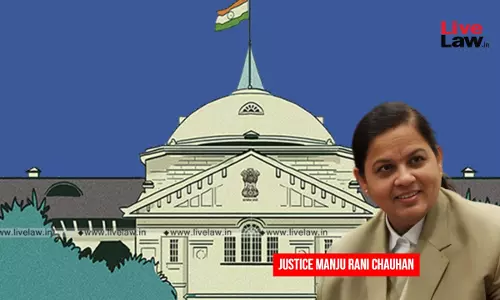
Teacher Posted On Research Duty Not Entitled To Continue Service Till End Of Academic Session After Retirement: Allahabad High Court
The Allahabad High Court has held that continuation in service till the end of the academic session after superannuation is a concession and not a vested statutory right, and can be claimed only by a teacher who is actually engaged in regular teaching. It held that an Associate Professor of an agricultural university who had been posted as In-charge of a research station could not claim...

State's Affidavit 'Misleading': Rajasthan High Court Gives Govt 7 Days To Explain JVVNL Employees' Absorption Into Govt Service
The Rajasthan High Court has directed the State government to file a fresh affidavit in response to a petition alleging corruption in the absorption of employees who were working in private JVVNL corporations, into government service, while opining that the earlier affidavit was 'misleading'.The division bench of Acting Chief Justice Sanjeev Prakash Sharma and Justice Bhuwan Goyal took...
State-Owned Corporations Can't Cite Financial Constraints To Deny Pensionary Benefits: Himachal Pradesh High Court
The Himachal Pradesh High Court has held that State-owned corporations cannot cite financial constraints to deny pensionary benefits to eligible employees and their families, observing that such entities "are nothing but white elephants" if they continue to withhold dues despite settled legal rights. Allowing a writ petition filed by the legal heirs of a voluntarily retired employee, the...
Performers Of Taekwondo 'Poomsae' Also Eligible For Sports Quota Govt Appointment : Kerala High Court
The Kerala High Court recently upheld an order of the Kerala Administrative Tribunal (KAT) that found that Taekwondo Poomsae is also a recognized event for government appointments under the sports quota. [2026 LiveLaw (Ker) 428]The Division Bench comprising Justice Anil K. Narendran and Justice Muralee Krishnan dismissed the challenge made by the State (petitioners) against the KAT order...