




Labour & Service

Absence Due To Prolonged Illness Not Wilful Misconduct: Rajasthan High Court Quashes Termination
While setting aside termination order of a deceased-employee, the division bench of Chief Justice Sanjay K. Agrawal and Justice Vinit Kumar Mathur at the Rajasthan High Court affirmed that the absence of an employee owing to a prolonged illness did not amount to wilful absence that could attract imposition of penalty. For context, the petitioner's husband was working as a constable in 1979...
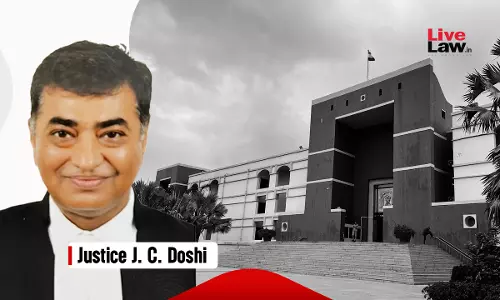
Motor Accident | Continuing In Existing Job Doesn't Mean No Future Earning Loss From Permanent Disability: Gujarat High Court
The Gujarat High Court enhanced the compensation awarded to an accident victim to over Rs. 8 Lakh, ruling that the mere continuation of employment of the accident victim after suffering 30% functional disability does not justify adopting a reduced multiplier or denying loss of future prospects. [2026 LiveLaw (Guj) 257]Justice J. C. Doshi observed that while an injured claimant may continue...
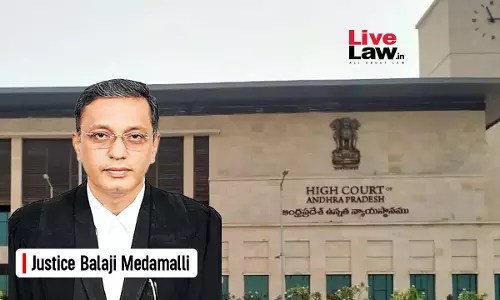
Minority School Need Not Follow Reservation Roster When Appointing Candidate From Same Minority Community: AP High Court
The Andhra Pradesh High Court has quashed the rejection of approval for an Attender appointed by a Christian minority school, holding that the reservation roster did not apply to his appointment as he belonged to the same minority community as the institution. [2026 LiveLaw (AP) 223]The Court based its ruling on Rule 12(6) of G.O.Ms. No.1 dated 01.01.1994, which exempts minority...
Employer Can't Convert Duly Selected Employee Against Sanctioned Post Into 'Perpetual Contractual Employee' By Nomenclature: Allahabad High Court
The Allahabad High Court has held that where a person is selected through an advertisement for a regular vacancy against a sanctioned post under the applicable service rules, the employer cannot later treat him as a contractual employee merely by describing his engagement as ad hoc or contractual in successive orders. It held that an employee who accepts consolidated remuneration out of...
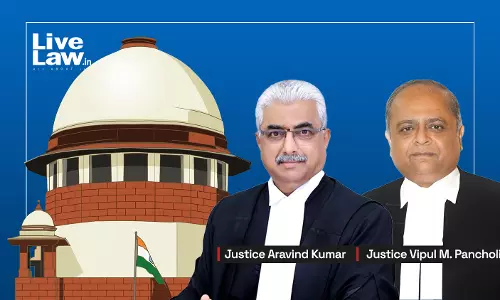
Article 311 Bar Not Attracted If Officer Removing Employee Is Equal In Status To Appointing Authority : Supreme Court
The Supreme Court today (24 September) has held that the constitutional protection under Article 311(1) of the Constitution is attracted only when the removing authority is subordinate in rank to the authority that made the appointment. It was also held that mere delegation of disciplinary powers to a subordinate officer under statutory rules does not trigger the constitutional bar. For...
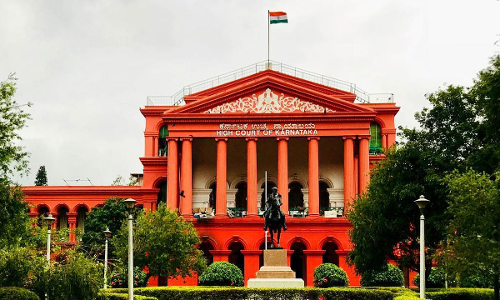
Considering To Recruit Urdu, Marathi Teachers: Karnataka Govt Tells High Court In Appeal Against Exclusion Of Linguistic Minorities
In an appeal challenging Karnataka government's recruitment notification for 15,000 school teachers while allegedly excludes Urdu-medium and other linguistic-minority teaching posts, the State has told the High Court that the last date for filing applications under the present notification would be extended and that it is considering issuing a fresh notification to include Urdu and Hindi...
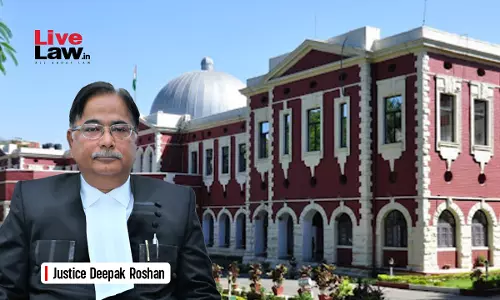
'Cannot Face Adverse Consequences For Approaching Court': Jharkhand High Court Directs Reinstatement Of Contractual Employees
The Jharkhand High Court has held that a citizen cannot be subjected to adverse consequences merely for approaching a court to seek protection of their legal or constitutional rights, observing that retaliatory action against a litigant strikes at the rule of law.A Single Judge Bench of Justice Deepak Roshan was hearing a petition filed by contractual employees of the Jharkhand Government...
Employee Can't Be Expected To Disprove Charges In Departmental Enquiry; Management Must First Prove Misconduct: Allahabad High Court
The Allahabad High Court has held that in a departmental enquiry, the burden is on the management to first establish the charges and the foundational facts on which they rest, and the delinquent employee cannot be required to disprove allegations that have not been proved against him. The Court set aside the dismissal of a Punjab National Bank officer whose charges were premised on his...
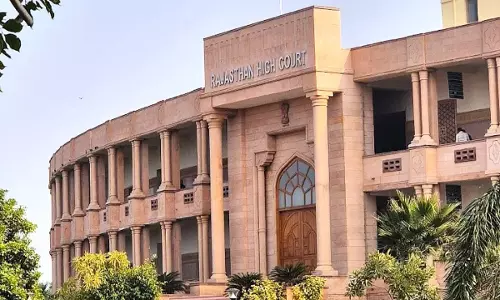
Pendency Of Criminal Case Can Keep Selected Candidate Out Of Govt Job, Rajasthan High Court Says; Allows Joining After Acquittal
The Rajasthan High Court has held that State can withhold the appointment of a person against whom a criminal case is pending, since it could not be presumed that in a pending criminal case, a person seeking employment would be acquitted. The bench of former Acting Chief Justice Sanjeev Prakash Sharma and Justice Chandra Shekha Sharma, opined that if a person, who was facing criminal charges,...
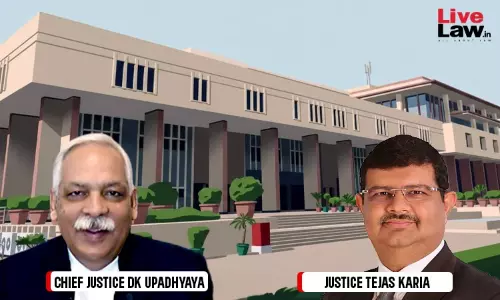
Family Pension & Terminal Benefits Can't Be Substitute Or Bar To Compassionate Employment: Delhi High Court
A Division Bench of the Delhi High Court comprising Chief Justice Devendra Kumar Upadhyaya and Justice Tejas Karia held that the compassionate appointment cannot be denied by treating family pension, terminal benefits, or notional interest on terminal benefits as family income. Such inclusion defeats the object of providing immediate financial assistance to the deceased...
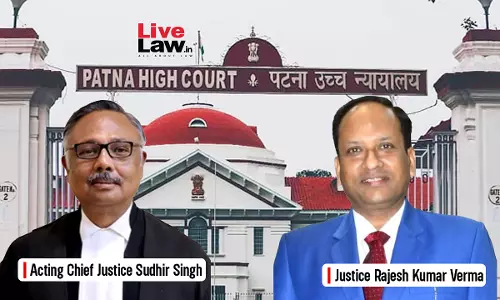
Subsequent Conferment Of Transfer Power On Vice-Chancellor Can't Validate Earlier Transfer Order: Patna High Court
A Division Bench of the Patna High Court comprising Acting Chief Justice Sudhir Singh and Justice Rajesh Kumar Verma held that a transfer order passed by the Vice-Chancellor before he had such power to transfer employees, cannot be validated by a subsequent amendment. Background Facts The respondent was initially appointed as Junior Scientist-cum Assistant Professor, Microbiology...
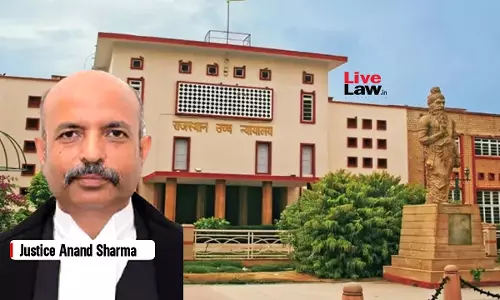
Widow Securing Compassionate Job After Husband's Death Can't Abandon His Parents: Rajasthan High Court Orders 25% Salary To Mother-In-Law
The Rajasthan High Court has ordered transfer of 25% monthly salary of a deceased employee's former wife, to his mother's account, after the wife remarried and allegedly abandoned the parents of the deceased, despite securing compassionate appointment after his death. The bench of Justice Anand Sharma held that after availing benefit of compassionate appointment based on an undertaking that...