




Labour & Service
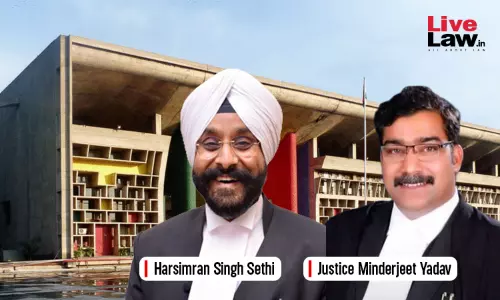
Outsourced Employees Can't Claim Regularisation Based Long Service Without Employer-Employee Relationship: P&H High Court
A Division Bench of the Punjab & Haryana High Court comprising Justice Harsimran Singh Sethi and Justice Minderjeet Yadav held that outsourced employees engaged through a private agency cannot claim regularisation of services without any master-servant relationship with the employer. Background Facts The employees (respondents) were working with the PEPSU Road...
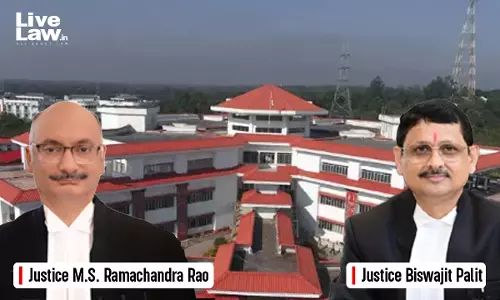
15-Year Contractual University Employee Entitled To Regularisation: Tripura High Court Rules After Finding Repeated Re-Designation Arbitrary
The Tripura High Court has held that a contractual university employee's nearly 15 years of continuous service cannot be disregarded merely on account of the contractual label attached to her initial appointment, and directed regularisation of her services. The Court observed that the appellant's role as Lecturer and subsequently as Assistant Placement Officer was essential and...
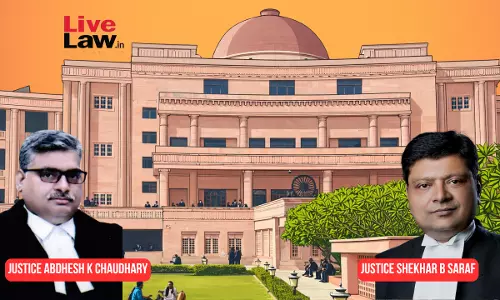
Doctors Can't Evade Mandatory Govt Service Bond After Subsidized PG Education, But Must Get Counselling Opportunity: Allahabad High Court
The Allahabad High Court has held that a doctor who pursues postgraduate medical education at a government institution at subsidized rates cannot escape a compulsory government service bond merely because of administrative delays in offering a posting after completing the education.At the same time, the Court held that a doctor cannot be denied the opportunity to participate in the...
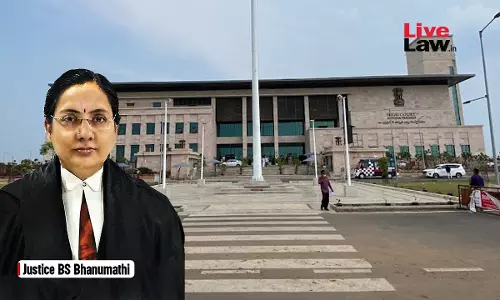
Mother Can't Be Denied Family Member Certificate Merely Because Deceased Son Was Married: AP High Court
The Andhra Pradesh High Court has quashed the Tahsildar's rejection of a mother's application for a Family Member Certificate following the death of her government-employee son, holding that she could independently apply for the certificate even though he was married. [2026 LiveLaw (AP) 219]For context, under G.O.Ms.No.145, Revenue (SER.II) Department, a Family Member Certificate may be...
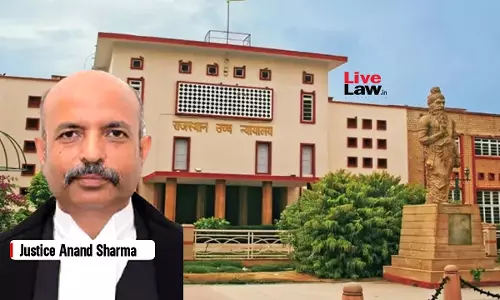
Rajasthan High Court Quashes Termination Of Cooperative Bank Employees, Says Registrar Can't Undermine Society's Autonomy
The Rajasthan High Court has held that while exercising powers under Section 125 Rajasthan Cooperative Societies Act, 2001 (the “Act”), the Registrar cannot make such interference that curtails or undermines the autonomy of the society. The bench of Justice Anand Sharma was hearing a petition challenging the orders by which the petitioner's regularisation as a Class IV employee of the...
Promotion Can't Be Withheld If Complaint Against Employee Does Not Result Into Departmental Inquiry, Other Action: Karnataka High Court
The Dharwad Bench of the Karnataka High Court has ruled that promotion of a government employee cannot be withheld merely on the grounds that a complaint has been filed against the employee, if it has not resulted in any departmental inquiry or other action as contemplated under the Service Law. Justic T.M. Nadaf observed, “In that view of the matter, withholding the promotion of the...

'Stipendiary Nurses' Performing Full-Time Duties Of Staff Nurse For Years Entitled To Regular Wages Under 2019 GO: Karnataka High Court
The Karnataka High Court has upheld an order directing an autonomous medical institute to pay the “stipendiary nurses” at par with regular employees as well as to not discontinue their service until recruitment for staff nurses on a regular basis takes place.For context, stipendiary nurses are employed on a contractual basis who receive a regular fixed stipend instead of a salary. A...

Karnataka High Court Clubs Minimum Wage Pleas With Pending Appeals, Later Decides To Hear Them Itself After Division Bench Reserves Verdict In Appeals On Same Day
In a significant development, the Karnataka High Court initially directed that a batch of petitions challenging the State Government's notification revising minimum wages for 81 scheduled employments be clubbed with connected appeals pending before a Division Bench. In a notable twist, after being informed that the connected appeals before the Division Bench had been disposed of on the same...

Right To Retirement Benefits Accrues From Length Of Service, Not Attached To Post: Allahabad High Court
The Allahabad High Court has held that the right to retirement benefits flows from the length of service rendered by an employee and is not linked to the post held. It directed the State to pay pension, gratuity and other retirement benefits to a Junior Clerk whose services were terminated in 2000 on the ground that there was no vacant post against which he could have been appointed, noting...
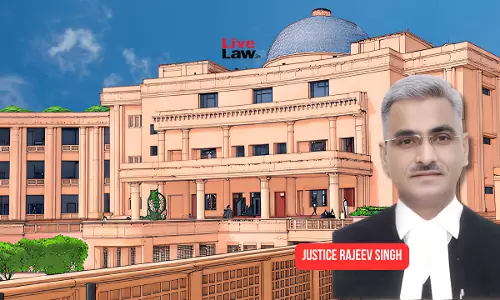
No Vigilance Probe Against UP IAS Officer On Complaint Without Affidavit Or State Vigilance Committee Approval: Allahabad High Court
The Allahabad High Court has held that a complaint against a Class-I officer of the State which is not backed by an affidavit, as required by the Government Orders governing complaints against Group-A officers, cannot be made the basis of a vigilance inquiry, particularly when the matter has not been placed before the State Vigilance Committee for approval. It quashed the vigilance...

Principal Employer Not Liable To Pay Gratuity To Contractual Workmen; Controlling Authority Can't Decide Who Must Pay : Supreme Court
The Supreme Court has held that a principal employer cannot be held liable to pay gratuity to workers engaged through a contractor when there is no employer-employee relationship between the principal employer and such contractual workmen.The Court set aside a Bombay High Court order holding Oil and Natural Gas Corporation Ltd. (ONGC) liable to pay gratuity to workers engaged through...

Non-Disclosure Of Previous Cancelled Appointment No Ground To Annul Later Appointment Secured On Genuine Qualifications: Allahabad High Court
The Allahabad High Court has held that an appointment obtained on the strength of genuine qualifications cannot be cancelled merely because the appointee did not disclose that an earlier appointment of his had been cancelled, where that fact had no bearing on his eligibility or selection. It held that such non-disclosure can justify cancellation only if a clear and direct link...