



Labour & Service
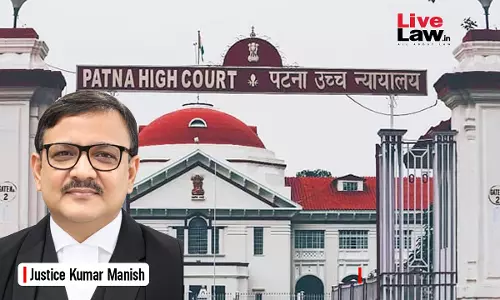
Uncorroborated Newspaper Report Not Substantive Evidence Of Misconduct In Departmental Inquiry: Patna High Court
The Patna High Court has held that an uncorroborated newspaper report cannot constitute substantive proof of misconduct in a departmental proceeding, particularly where the report is contradicted by contemporaneous official records.A Single Judge Bench of Justice Kumar Manish was hearing a petition filed by Pankaj Kumar challenging the departmental proceedings and punishment imposed upon...
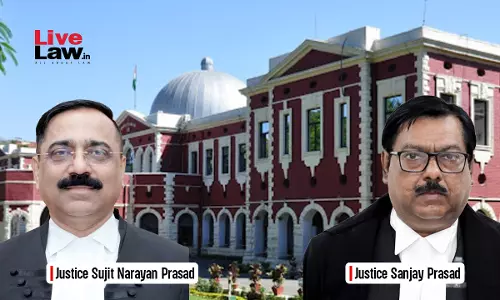
Govt Employee's Suspension Cannot Continue Beyond 3 Months Without Charge-Sheet: Jharkhand High Court
The Jharkhand High Court has reiterated that a government employee's suspension cannot ordinarily continue beyond three months where no charge-sheet has been served, holding that prolonged suspension without initiation of disciplinary proceedings cannot be permitted to operate as a form of punishment.A Division Bench of Justice Sujit Narayan Prasad and Justice Sanjay Prasad was hearing a...
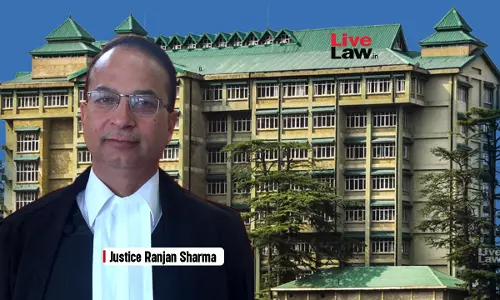
Fresh Direct Appointment Confers No Promotional Increment Or Past-Service Benefits Absent Statutory Entitlement: HP High Court
The Himachal Pradesh High Court has held that past service rendered on a lower post cannot be counted towards service on a higher post for claiming service benefits unless the applicable Recruitment and Promotion Rules expressly permit such counting. The Court made the observation while dismissing a plea by a former Dai seeking to club her service as Dai with her subsequent service as...
Objective Test For Compassionate Appointment Applicants Reasonable When Vacancies Are Limited: Allahabad High Court
The Allahabad High Court has held that where more dependants apply for compassionate appointment than there are posts earmarked for them, requiring the candidates to sit in an objective type test is not an unreasonable way of choosing between them. It rejected the challenge to the note appended to rule 5(1) of the Uttar Pradesh Sub-Inspector and Inspector (Civil Police) Service Rules, 2015,...
Forged TET Certificate Renders Appointment Void Ab Initio, No Regular Departmental Enquiry Needed Before Termination: Allahabad High Court
The Allahabad High Court has held that where the certificate on which a public appointment rests is found to be forged, the appointment is void ab initio and its cancellation is not a punitive termination attracting the Uttar Pradesh Government Servant (Discipline and Appeal) Rules, 1999. It held that a show-cause notice and compliance with the broad principles of natural justice...
No Vested Right To Claim Promotion Under Repealed Rules : Supreme Court
The Supreme Court on Thursday (September 17) reiterated that a promotional post arising under the applicable Rules need not necessarily be filled under those Rules, particularly where they have since been repealed. The Court held that such promotional posts can be filled up under the new Rules, which prescribe new methods of recruitment. “The employee does not acquire any vested right...
'Equal Pay For Equal Work' Doctrine Cannot Be Mechanically Applied, Experience Can Justify Pay Difference: Supreme Court
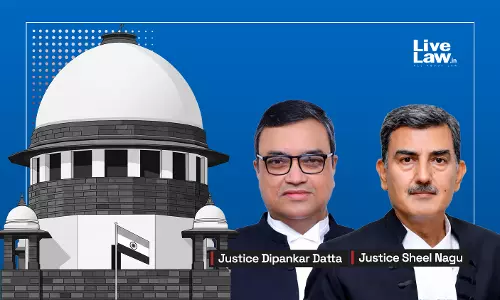
The Supreme Court has recently held that the doctrine of 'equal pay for equal work' cannot be mechanically applied merely on the ground that two categories of employees perform functionally similar duties, and that a difference in experience between directly recruited and promoted employees can constitute a valid basis for a difference in pay scales. A bench of Justice Dipankar Datta and...
Appointment To Public Post Contrary To Recruitment Advertisement Amounts To Fraud On Public: Supreme Court
The Supreme Court has held that an appointment to a public post made in disregard of the qualifications prescribed in the recruitment advertisement amounts to a fraud on the public, while upholding the cancellation of an Anganwadi Supervisor's appointment in Maharashtra.A bench comprising Justice Dipankar Datta and Justice Sheel Nagu dismissed an appeal filed by Sunita Lahu Panchpande, who...
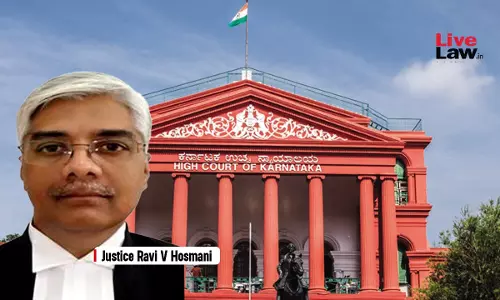
Mere Smell Of Alcohol Can't Prove Workman Was Under Its Influence At Time Of Accident: Karnataka High Court
The Karnataka High Court has held that a smell of alcohol emanating from the stomach as per a post-mortem report is insufficient to conclude that a deceased workman was 'under the influence' of alcohol. [2026 LiveLaw (Kar) 361]The single judge bench of Justice Ravi V. Hosmani has set aside a Tribunal order dismissing a compensation claim under the Employees Compensation Act, 1923 preferred by...
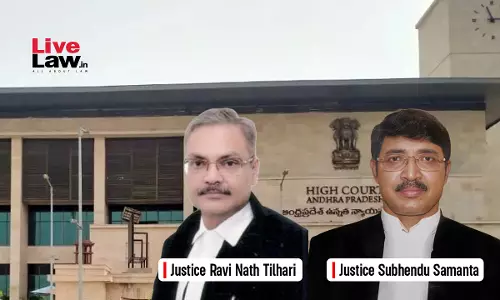
Govt Employee Can't Seek Regularization Of Prolonged Absence As Medical Leave Without Filing Leave Application: AP High Court
The Andhra Pradesh High Court has held that the period during which a government employee remained absent without submitting any leave application could not be treated as medical leave, and that he was not entitled to payment for that period. [2026 LiveLaw (AP) 215]In doing so, a Division Bench of Justice Ravi Nath Tilhari and Justice Subhendu Samanta partly allowed a 2006 petition filed by...
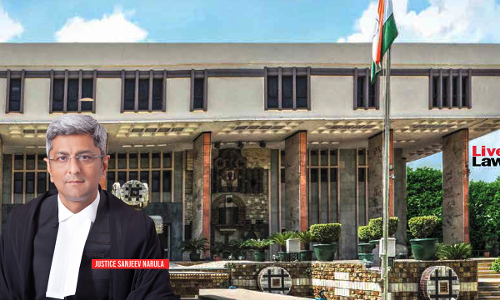
Being First In Reserve List Doesn't Create Right To Promotion Merely Because Vacancies Arise: Delhi High Court
The Delhi High Court has held that an employee's first placement in a Reserve List does not by itself create a right to promotion merely because vacancies arise during the validity of the list. [2026 LiveLaw (Del) 851]Justice Sanjeev Narula observed that while the employee's position in the Reserve List would give him precedence if the Bank decided to operate the list, it did not oblige the...
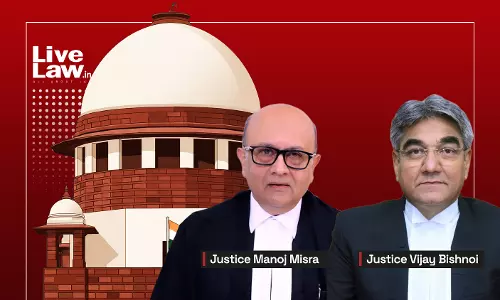
Courts Must Presume Correctness Of Answer Key, Interfere Only If Mistake Is 'Glaring And Apparent': Supreme Court
The Supreme Court has recently ruled that a challenge to the correctness of an answer key selected by an examining body can be entertained only where the error is so glaring and apparent that it can be detected without any resort to any interferential reasoning. It set aside an Allahabad High Court order that had awarded a disputed mark to a candidate in a Village Development Officer...