




Supreme court

Supreme Court Daily Round-Up : September 28, 2026
Links to the reports of September 28Rape Cases In Delhi-NCR Show Systematic Failure Of Police & Administration : Supreme Court Takes Suo Motu CognizanceKeralam Power Crisis : State Urges Supreme Court To Urgently Hear Appeal Against APTEL RulingSupreme Court Urges West Bengal Speaker To Decide Disqualification Pleas Against 10 Rebel Trinamool MLAs By October 8Notice To Student Over...
Suo Motu Case On Delhi Rapes | Supreme Court Issues Directions To Make Public Spaces Safer; Orders Safety Audit Within 4 Weeks
The Court sought the data on Fast Track Courts from the Delhi High Court Registrar General
LiveLaw Supreme Court Weekly Digest: August 19 - 31, 2026
Abuse of Process of Court — Imposition of Exemplary Costs- The machinery of justice cannot be deployed as a facility to settle personal scores or salvage reputations imperiled by the parties' own actions. Where both litigants engaged in suppression, embellishment, and afterthought, and consumed institutional time of disciplinary bodies and constitutional courts for eleven years, costs...
Supreme Court Directs ₹1 Lakh Compensation For Daily-Wage Workers In 25-Year-Old Bihar Workmen Dues Case
The Supreme Court on Monday (September 28) has directed the States of Bihar and Jharkhand to pay a one-time sum of ₹1 lakh to each concerned daily-wage employee/workman of five defunct State-owned corporations, while ordering 12% simple interest per annum on delayed EPF dues and 6% interest on delayed salary/wages and other monetary dues. “…we deem it appropriate to direct the States of Bihar and Jharkhand to pay, in addition to the amounts already determined and disbursed, a one-time sum of...
Rape Cases In Delhi-NCR Show Systematic Failure Of Police & Administration : Supreme Court Takes Suo Motu Cognizance
Expressing solidarity is not a solution to this social evil; accountability must be fixed upon authorities, the Court said.

Know The Law | When Can An Issue Be Tried First Under Order XIV Rule 2 CPC As Preliminary Issue?
The Supreme Court has recently held that an issue can be tried first only if it is a pure issue of law relating to jurisdiction or a statutory bar, and only before the court has begun trying all the issues together.A bench of Justice KV Viswanathan and Justice Arun Palli ruled so while setting aside the orders of the trial court, the first appellate court and the Kerala High Court. The...
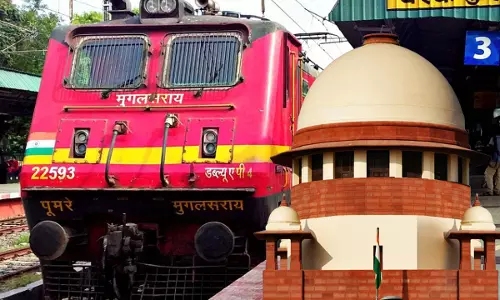
Mere Absence Of Train Ticket Cannot Defeat Railway Compensation Claim : Supreme Court Reiterates
The Supreme Court on Friday (25 September) has held that mere absence of a railway ticket with an accident victim cannot by itself defeat a claim for compensation, especially where the victim remained hospitalised for over a month before succumbing to his injuries, making it “quite unlikely” that the ticket would have survived. A bench of Justice Ujjal Bhuyan and Justice Atul S...
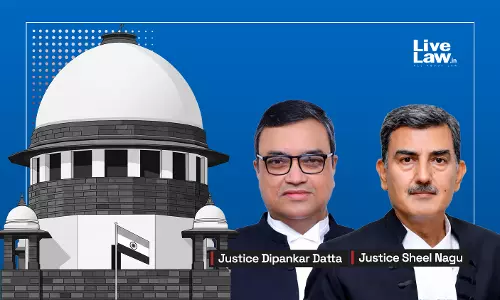
Senior Officer Cannot Be Paid Less Than Junior Holding Same Post : Supreme Court
The Supreme Court has held that a senior employee holding the same post cannot be paid less than a junior unless the disparity is supported by valid and demonstrable factors. “It is fundamental that a senior officer cannot be paid less than a junior officer holding the same post...A junior receiving a higher pay compared to the pay of the senior has to be justified with reference to...
Know The Law | Where Can A Motor Accident Claim Be Filed? Supreme Court Explains
The Supreme Court has recently explained the scope of the territorial jurisdiction clause in the motor accident compensation claims, holding that a claimant cannot invoke the jurisdiction of a Motor Accidents Claim Tribunal (MACT) merely because the insurance company has an office there.A bench of Justice Ujjal Bhuyan and Justice Atul S Chandurkar held so while dismissing an appeal filed by...
Know The Law | Consequences Of Not Furnishing Written Grounds Of Arrest : Supreme Court Explains
The Supreme Court recently reiterated that an accused has a fundamental and statutory right to be informed of the grounds of arrest in writing, and the written grounds must be furnished to the arrested person as a matter of course and without exception.A bench of Justice Ujjal Bhuyan and Justice Atul Chandurkar stressed that the requirement under Article 22(1) of the Constitution is not a...
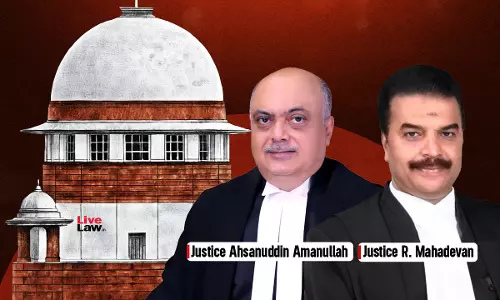
Residential Premises Used For Commercial Activity Must Be Sealed; Don't 'Pick & Choose' : Supreme Court
The Court directs authorities to seal commercial activity in residential areas, warns against discriminatory 'pick-and-choose' action.
Supreme Court Daily Round-Up : September 25, 2026
Links to the reports of September 25, 2026 :Supreme Court Pulls Up Centre For Not Informing Steps Taken To Remove Online Child Sexual Exploitation & Abuse MaterialsSupreme Court Reserves Judgment On Centre's Plea Seeking Prospective Application For Judgment On OBC-Creamy LayerSupreme Court Directs Centre, States To Implement 2026 ICU Guidelines, Sets Deadlines For Infrastructure...