



- Home
- /
- Top Stories
- /
- Ideally, Judges' Children Should...
Ideally, Judges' Children Should Avoid Appointments As Lawyers Of Govt Or State Agencies : Justice Oka
Manu Sebastian
4 Oct 2026 11:42 AM IST
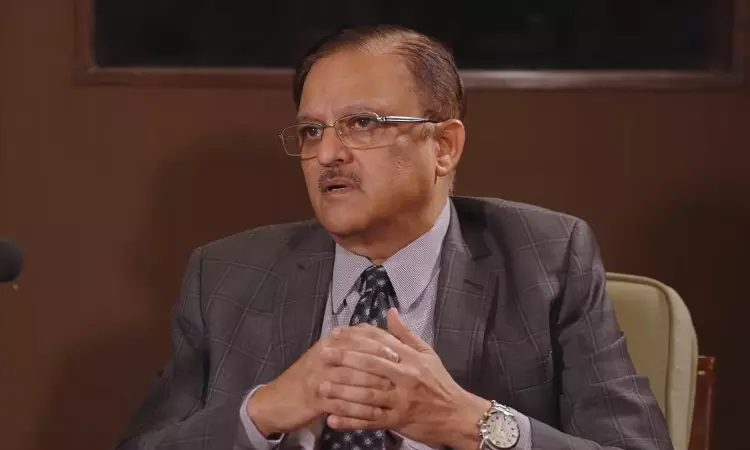
Justice SC Sharma should have disclosed, at the outset of hearing the CEC case, that his son was ECI's lawyer, Justice Oka said.
Recent controversies over the appointment of children of sitting judges as government lawyers have brought the issue of judicial propriety and conflict of interest into focus. The discovery that Justice Satish Chandra Sharma's son was empanelled as counsel for the Election Commission of India triggered questions, since this fact came to light only after the judge had heard matters involving...
This is a premium content
Available exclusively to
Our subscribers
Subscribe Premium 
INR 1099+GST
Your support helps us to bring you more content at
an affordable subscription scheme !!!
All payment options available
Recent controversies over the appointment of children of sitting judges as government lawyers have brought the issue of judicial propriety and conflict of interest into focus. The discovery that Justice Satish Chandra Sharma's son was empanelled as counsel for the Election Commission of India triggered questions, since this fact came to light only after the judge had heard matters involving the validity of the Chief Election Commissioner and Election Commissioners Act and a case concerning Medha Roopam, the Chief Election Commissioner's daughter. Earlier, Arvind Kejriwal had sought the recusal of Justice Swarna Kanta Sharma of the Delhi High Court from the excise policy case, citing, among other grounds, her children's empanelment as Central Government lawyers. Rejecting the argument, Justice Sharma observed that if the empanelment of judges' children with the Centre were accepted as a ground for recusal, many judges would have to recuse themselves from hearing cases. Justice Sharma added that a litigant cannot dictate how the children of Judges should live. The appointment of Supreme Court Judge Justice PK Mishra's son as Rajasthan Additional Advocate General had also attracted scrutiny and was challenged on the ground that he had less than 10 years of legal practice experience, though the High Court and Supreme Court declined to interfere.
In this backdrop, LiveLaw sought the views of Justice Abhay S Oka, former Supreme Court Judge, on the issue.
Ideally Judges' children should avoid Government appointments
Justice Oka opined that ideally, children of sitting judges should avoid being appointed as panel advocates for government institutions and agencies until their parents retire, observing that such restraint would help preserve public confidence in the independence of the judiciary.
In the interview, Justice Oka said that while there was no objection in principle to children of sitting judges practising as lawyers, concerns arise when they are appointed as panel advocates for institutions such as the Enforcement Directorate (ED), Election Commission of India (ECI), National Investigation Agency (NIA) and other government bodies.
He emphasised that such empanelments must be made through a fair and transparent process, with clearly laid down qualifications and an opportunity for all eligible advocates to compete.
Justice Oka said that the organisations should lay down eligibility criteria, invite applications and conduct a transparent selection process before appointing panel advocates.
"If somebody directly gets appointed as a panel member, and the person appointed is a son/daughter of a sitting judge, then naturally many questions are raised, whether the appointment was on merit or whether they secured it only by being in a privileged position," he said.
He added that the concern could be addressed if the institutions followed a fair and transparent selection process, allowing every eligible advocate an opportunity to compete.
Judges should disclose children's empanelment by agencies and not hear their cases
Justice Oka said that if a sitting judge's son or daughter is empanelled as a lawyer for institutions such as the ED, ECI or NIA, the judge should disclose the relationship and refrain from hearing cases involving that particular institution.
"For example, if somebody's son is an ED panel advocate, then the judge should not take up any ED case," he said.
At the same time, Justice Oka distinguished between empanelment by government institutions and agencies such as the ED, ECI and NIA, and appointments as panel advocates for the Central or State Government.
Merely because a judge's child is empanelled as a Government lawyer, the parent Judge need not recuse from hearing all cases involving the concerned Government.
"If there is a contested case, only because the son or daughter of a Judge is empanelled, the Judge need not recuse, but he can always point out, my child is empanelled. Disclosure is one thing, automatic recusal is another. I don't think automatic recusal is needed merely because son/daughter is a government panel advocate," he said.
He said that even in the case of Central or State Government panels, the empanelment must be conducted through a fair and transparent process to rule out allegations of preferential treatment.
However, where a judge's child has been empanelled through a regular selection process, the judge need not automatically recuse from all cases involving the Central or State Government. He said that judges should, however, not hear cases in which their children have appeared as counsel.
Judges' families must also exercise restraint
Justice Oka said that the ideal course would be for children of sitting judges to avoid accepting appointments from government bodies and agencies until their parents retire. He clarified that this would be a matter of self-imposed restraint and could not be imposed through a legal prohibition.
"Ideal thing would be, judge's children should avoid getting appointed to any government panel. But that will be a self-imposed restriction. By law, you cannot prevent somebody from empanelment," he said.
Justice Oka said that members of judges' families must also exercise discretion.
"I know children of Bombay High Court judges, who kept low profile, till their father or mother retired. It is a question of members of family showing discretion. Ideally, when a parent becomes a judge, naturally there are some constraints on the family also. If they exercise that constraint, the issue will be solved," he said.
He added that ultimately, the responsibility of maintaining public confidence in the judiciary rests not only with judges but also with their family members.
Justice Satish Chandra Sharma should have disclosed son's empanelment with ECI
Commenting on the controversy surrounding the empanelment of the son of Justice Satish Chandra Sharma as a lawyer for the Election Commission of India, Justice Oka said that Justice Sharma should have disclosed the fact at the outset.
"Justice Sharma should have disclosed at the outset," he said.
On whether the case involving the Election Commission could be reheard on account of the non-disclosure, Justice Oka said that since no decision on merits had been rendered in the matter, technically, there was no decision to be recalled.
However, he said that a different situation could arise if a case had already been decided on merits and it subsequently emerged that the judge's child was empanelled by one of the parties.
In such a situation, a party could seek recall of the judgment on the ground that had the relationship been disclosed, it would have had an opportunity to seek the judge's recusal.
"There can be an argument that had it been disclosed, then the party would have had an opportunity to seek recusal and they were deprived of that opportunity. That can be the only ground," he said.

Manu Sebastian
Managing Editor

