




Trending
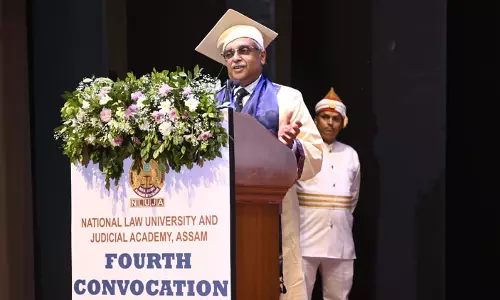
Justice Vikram Nath Urges Graduating Law Students To Uphold Honesty, Fairness And Professional Integrity At NLU Assam Convocation
Justice Vikram Nath, Judge, Supreme Court of India, addressing the graduating students at the fourth convocation of the National Law University and Judicial Academy, Assam (NLUJAA), urged young lawyers to uphold honesty, fairness, humility and professional integrity, emphasising that credibility and public trust are among the most valuable assets of a legal professional.Addressing the graduating students, Justice Nath said that a convocation was not merely the end of legal education but the...
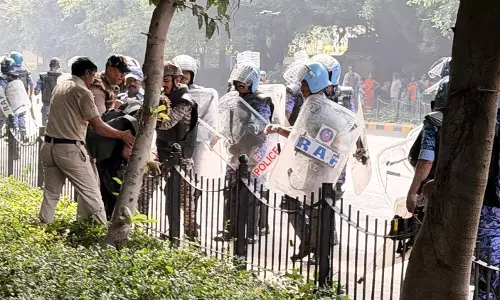
Lawyers Association For Constitution Moves Supreme Court Alleging Police Excesses Against Advocates During Delhi Protests
A writ petition has been filed before the Supreme Court under Article 32 of the Constitution on behalf of the Lawyers' Association for Constitution (LAFC) and four of its member/ advocates who were allegedly manhandled and illegally detained by the Delhi Police during protests in Delhi on 10 and 11 October 2026. The petition has been filed through Advocate-on-Record Ms. Pyoli.The petition...
![Supreme Court Hearing Of Delhi Protest Matter [Live Updates]](https://www.livelaw.in/h-upload/2026/10/11/500x300_705774-cec-protest-sc-live-updates.webp "Supreme Court Hearing Of Delhi Protest Matter [Live Updates]")
Supreme Court Hearing Of Delhi Protest Matter [Live Updates]
The Supreme Court will hear today petitions challenging police and paramilitary actions against Delhi protesters. The petitions allege mass illegal detentions, assault of protesters, and arbitrary shutdown of metro services.A bench of CJI Surya Kant, Justice Joymalya Bagchi and Justice V Mohana will hear the matters. Certain contempt petitions have also been filed alleging violation of...
Supreme Court Daily Round-Up : October 12, 2026
Links to the reports of October 12 :SCAORA Moves Supreme Court Seeking Probe Into Delhi Police Actions Against Lawyers During CEC Protest'Every Lawyer Has Right To Be Part Of Peaceful Protests': CJI Surya Kant Amid Protests Against CEC Gyanesh KumarThere Should Be No Impediment In Movement Of Lawyers, Court Staff : CJI Surya Kant Amid CEC ProtestsSCBA Moves Supreme Court Over Lawyers'...
2026 LiveLaw (SC) 1042 | ARCIS CLEAN ENERGY PVT. LTD VS. PARSHVA INNOVATION
Arbitration | Governing Law Clause Relevant For Seat Determination Where Agreement Mentions Two Venues : Supreme...
Arbitration | Governing Law Clause Relevant For Seat Determination Where Agreement Mentions Two Venues : Supreme Court
The Supreme Court on Monday (October 12) held that where an arbitration clause mentions two places for arbitration without clearly designating one as the juridical seat, the governing law clause conferring exclusive jurisdiction on courts at a particular place becomes relevant in determining the parties' intention to identify the seat of an arbitration. “that mere expression “place...
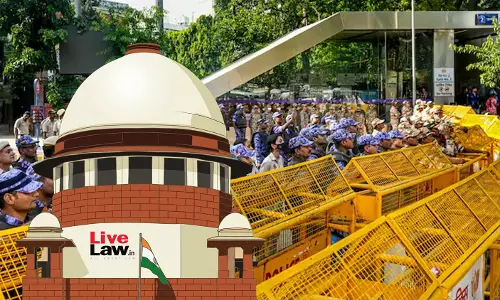
Plea Filed In Supreme Court Against Detention, Assault Of Journalists Covering Delhi Protests
The petitions have been filed by the Free Speech Collective and the Network of Women in Media India.
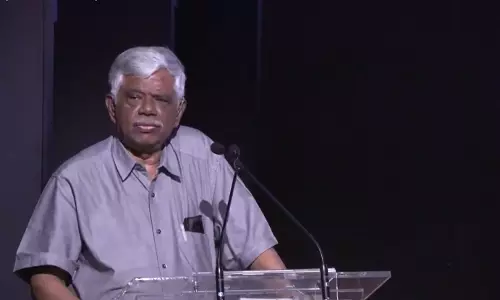
Saffronization Increasing In High Courts : Justice K Chandru
Speaking at an event recently, former Judge of the Madras High Court, Justice K Chandru, talked about how the executive and the judiciary have continued not to make efforts to bring in a permanent system for the appointment of judges and instead preferred the collegium system. Chandru talked about how, after coming into power in 2014, the present Union Government had attempted to bring...
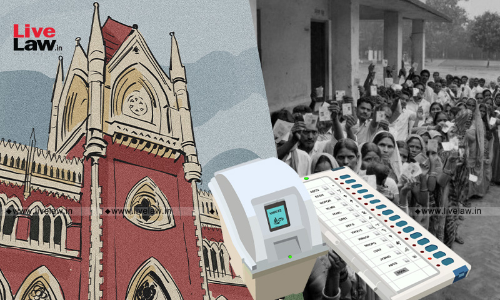
Calcutta High Court Seeks SEC Report On EVM, VVPAT Shortage Ahead Of Municipal Polls
The Calcutta High Court has sought a detailed report from the West Bengal State Election Commission (SEC) on the shortage of Electronic Voting Machines (EVMs) and Voter Verifiable Paper Audit Trail (VVPAT) machines ahead of the upcoming municipal elections in the state.A Division Bench of Chief Justice Ravindra V Ghuge and Justice Om Narayan Rai directed the Commission to file an...
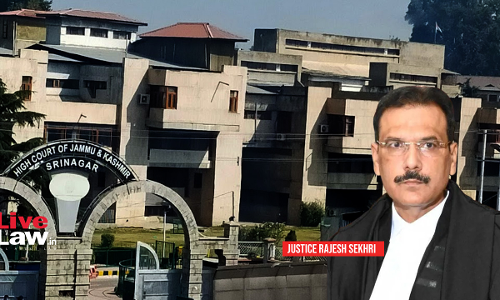
CPC | Order Rejecting Application Under Order 9 Rule 9 CPC Appealable Under Order 43: J&K High Court
The Jammu & Kashmir and Ladakh High Court has held that an order rejecting an application under Order IX Rule 9 of the Code of Civil Procedure (CPC) for restoration of a suit dismissed for non-prosecution is appealable under Order XLIII Rule 1(c) CPC.Justice Rajesh Sekhri observed that dismissal of a suit for non-prosecution does not conclusively determine the substantive rights of...

Jharkhand High Court Issues Contempt Notice Over Delay In Installing CCTV Cameras In Police Stations
The Jharkhand HC has held that repeated delays by the State in complying with directions to install CCTV cameras in police stations, despite judicial orders issued from time to time, prima facie indicate a “systematic effort to delay, if not outright disobedience”.A Division Bench of Chief Justice M.S. Sonak and Justice Manoj Prasad was considering the issue of installation of CCTV cameras...

LiveLaw Allahabad High Court Weekly Round-Up: October 5 - October 11, 2026
NOMINAL INDEX Rekha Saxena and another v. Roman Catholic Diocese Allahabad Pvt. Ltd. Thru. Director General the Bishop and another 2026 LiveLaw (AB) 793 Fanindra Das v. The General Manager and another 2026 LiveLaw (AB) 794 Rajeshwar vs. State of U.P. and 3 others 2026 LiveLaw (AB) 795 National Insurance Co. Ltd. Faizabad Thru. Manager Legal vs. Reeta and 4 others 2026 LiveLaw...