




Articles

When Can Film Tell Story Of Criminal Case?
An actor accused of murder tries to stop a film he says is built out of his own trial, and the film releases anyway. A different actor, tied to a decades-old poaching case, tries to stop a teaser he says trades on his identity, and the teaser comes down within a day. Set those two outcomes side by side and the natural conclusion is that two High Courts, faced with the same kind of dispute, have landed in opposite places, one favouring the filmmaker, one favouring the actor. That reading is...
Retrospective Sales Tax Liability: Revenue To State versus Reasonableness.
In a welfare State, the government imposes tax to generate revenue to fund the welfare objectives that serve the people. One such tax prior to enactment of GST Act, 2017 was sales tax. In a commercial activity, sales tax was collected by the dealer from the purchaser and paid to the State. The Supreme Court on 13th July, 2026 in Asia Sugar & Chemical Co., Devangere Versus The State of Karnataka & Ors. with analogous case, 2026 INSC 693 has held retrospective sales tax liability valid but...

Constitutional Mandates And Patent Monopolies: Gender Analysis Of Ribociclib Case
Contemporary oncology resides in a "Gilded Age of Medicine" where rapid breakthroughs coexist with devastating economic barriers (O'Reilly et al., 2025). The escalating costs of life-saving therapies—specifically CDK4/6 inhibitors—create profound friction between the constitutional Right to Life under Article 21 and the statutory Right to Reward for corporate innovation. Indian jurisprudence, however, prioritizes survival. Precedents like Vincent Panikurlangara v. Union of India (1987) and...

China's Latest Trademark Reforms Hold Lessons For India?
A Comparative Analysis of Preventative Mechanisms and Implications for Indian Brand Owners and Business ProfessionalsGoodAI Global, a reputed company of South Korea, spent more than a decade building Beauty of Joseon (product) into one of Korea's best-known skincare exports before it began selling in India through e-commerce platforms in August 2022. By the time it applied to register its own mark in India someone else already had a device mark filed on a “proposed to be used” basis, meaning the...

AI Bot Calls, Impersonation, And Constitutional Rights To Privacy
There was a time when an unsolicited telephone call was merely an annoyance. Today, it can be something far more disturbing. A machine that sounds like a human, knows something about you, speaks in your language, responds to your questions and, in some cases, can imitate the voice of someone you know can turn an ordinary telephone call into a powerful instrument of surveillance, manipulation, impersonation and commercial intrusion. An automated system can dial thousands of numbers, engage...
Unlocking FDI For 'Made In India' Exports: Analyzing New Framework For Inventory-Based E-Commerce
On 23rd July, the Indian government issued Press Note 3. of 2026 (PN 3/2026) carving out a limited but significant permission for foreign direct investment (FDI) in e-commerce entities holding inventory in Indian origin goods for export purposes. In an inventory-based model, e-commerce entities own inventory in goods and services offered on their platform and directly sell these to the customers. This is opposed to the marketplace-based model wherein the e-commerce entities do not own any...

Voice Samples And Article 20(3): Where Does Forensic Identification End And Self-Incrimination Begin?
When investigators ask a suspect to read a script into a recorder so a forensic laboratory can match the voice against an intercepted call or a ransom recording, the exercise looks, on its face, like routine identification no different from taking a fingerprint or a photograph. Yet unlike a fingerprint, a voice sample is produced by an act indistinguishable, in form, from speech itself. That formal similarity is what makes voice-sample compulsion one of the more unsettled corners of Article...
Healthy University Requires Both Authority And Dissent
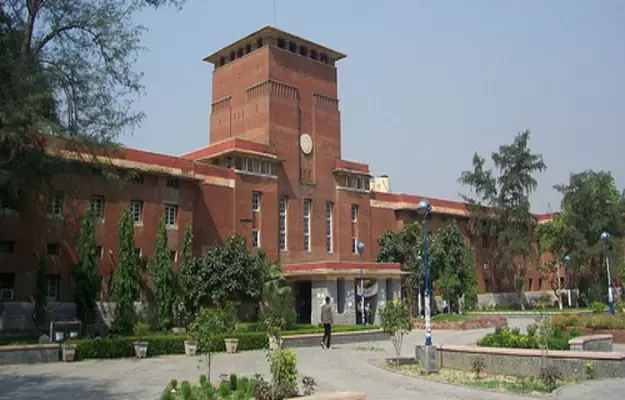
The recent incident at Delhi University's Faculty of Law has revived an old but increasingly urgent question: what has happened to the relationship between those who teach and those who learn?Earlier this month, CCTV footage from the Faculty of Law showed a PhD scholar allegedly assaulting a senior professor. The incident was reportedly connected to a grievance concerning an earlier PhD admission interview. The scholar was subsequently suspended, an inquiry was initiated, and the matter reached...

Securities Law Violations Under SEBI PFUTP Regulations: Practical Guide
I. Indian Securities Law addresses market manipulation and securities fraud through Section 12A of the Securities and Exchange Board of India Act, 1992(“the SEBI Act”) and the Securities and Exchange Board of India (Prohibition of Fraudulent and Unfair Trade Practices relating to Securities Market) Regulations, 2003 (“PFUTP Regulations”). The core prohibitions are in Regulations 3 and 4, which bar fraudulent devices, deceptive schemes and manipulative or unfair trade practices in relation to...

Neuro-Privacy And Indian Constitution: Should Brain Data Be Treated As Sensitive Personal Data?
A commercially available headband can now record electroencephalographic (EEG) signals well enough to infer attention levels, emotional valence, and early markers of neurological conditions. Meditation applications sell such headbands in India today; neurotechnology firms are testing implantable and wearable brain-computer interfaces (BCIs) for both therapeutic and consumer use. What none of these products currently face, in India, is a data protection regime that treats the signal coming out of...
Prosecuting Professionals Under PMLA: Advice, Association, Or Complicity?
Modern commercial transactions rarely involve only two people. Lawyers draft documents, accountants prepare financial statements, consultants advise on structures, lenders assess creditworthiness and intermediaries introduce parties or coordinate transactions. When one participant is later accused of generating or laundering proceeds of crime, however, the involvement of everyone around the transaction can begin to acquire a suspicious character. The difficult question is where legitimate...
Anti-Defection Law: Speakers Role Is Questionable
The anti-defection law is four decades old. It has seen so many breaches and frequent violations that it seems to have lost its biting teeth. The law is faced with a misconceived narrative that 2/3rd of the legislative party members can defect to avoid disqualification under the 2003 amendment laws. Secondly, the Election Commission is dragged into the fray, though it does not possess jurisdiction whatsoever in matters of disqualification. The 'Original political party' of a legislator...