


Articles

Protection Of Traditional Knowledge Calls For A Serious Action
What is so enchanting yet difficult about the concept of Traditional Knowledge (TK)? Many decades have passed after the infamous conundrum created by so called patenting of three household products of India i.e. haldi, neem and basmati. The subject matter of TK still continues to be a much sought-after domain of research, however no dedicated law on TK is made yet. Why is it so? The universally recognized meaning of TK is, it denotes all forms of knowledge systems that originate within a...
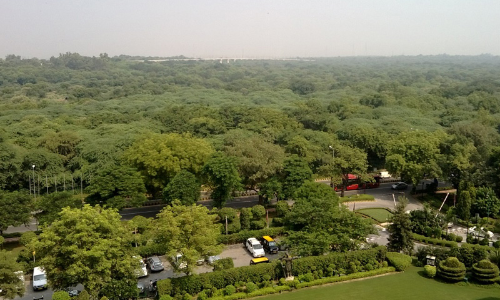
An Endeavour To Replenish The 'Green Necklace' Of The National Capital
"Never say there is nothing beautiful in the world anymore. There is always something to make you wonder in the shape of a tree, the trembling of a leaf."[1]It is often said that the legacy we leave behind in the form of selfless actions is the true meaning of life, as is to plant trees under whose shade we do not expect to sit. Anyone who has been fortunate enough to share proximity to nature would relate to the famous novelist Emily Bronte when she says "Every leaf speaks bliss to me,...
Arbitral Award:Power To Set Aside To Include Modify: Need To Relook NHAI Vs. M.Hakeem
Section 34 of the Arbitration and Conciliation Act, 1996 (Hereinafter "the Act") provides for recourse to a court against an arbitral award by way of an application for setting aside the Award. Does this mean that the Court is powerless to modify the arbitral award. In other words, is it that always the Court has to necessarily either set aside the arbitral award or uphold the same in totality. No doubt, the Arbitration Act, 1940, (which was repealed by the Act) gave express power to the...

Let's Glance Through The Revised National Data Governance Framework Policy
The Ministry of Electronics and Information Technology, on 25th May, 2022, released a revised Draft National Data Governance Framework Policy ("NDGFP") after strong criticism of its precursor Draft India Data Accessibility and Use Policy, 2022 which was released for consultation in February 2022 and proposed to permit the licensing and sale of public data by the Government to the private sector. The critical role of the Framework in boosting India's Data Economy The NDGFP aims to...

Why So Much Confusion Around The Jurisdictional Issue Under Personal Insolvency
This article analysis the issues and confusion revolving around the issue of 'Adjudicating Authority' for personal guarantor to corporate debtors and whether the Debt Recovery Tribunals have jurisdiction to entertain applications for insolvency of personal guarantors to Corporate Debtors. IBBI January-March 2022 issue of "Insolvency and Bankruptcy News" for the first time show the tentative figures relating to applications filed under section 94 and 95 of the Insolvency and Bankruptcy...
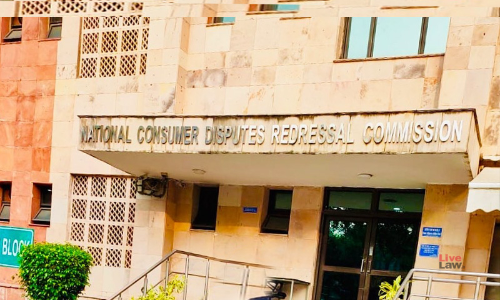
Jurisdiction Under Article 227 And Orders Of The National Consumer Disputes Redressal Commission ;A Snapshot
The Hon'ble Supreme Court of India has in its recent judgement in the case of Ibra tFaizan Versus Omaxe Buildhome Private Limited[1] held that the National Consumer Disputes Redressal Commission ("NCDRC") at New Delhi is a Tribunal within the meaning of Article 227 of the Constitution of India. It clarified therefore, that a Writ Petition under Article 227 can be preferred against an order of the NCDRC before the concerned High Court as an alternative remedy instead of approaching the...
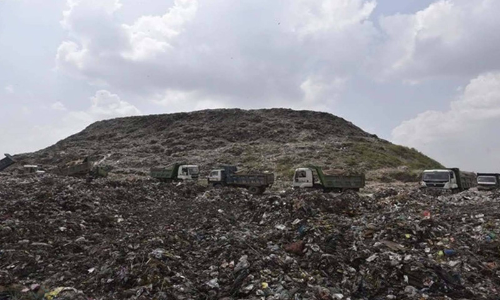
Who's Waste, Is It Anyway?
The first United Nations conference on the human environment will be 50 years old in 2022. The United Nations Conference on the Environment, held in Stockholm in 1972, was the first global gathering to prioritise environmental issues. The Stockholm Declaration and Action Plan for the Human Environment, as well as many resolutions, were accepted by the participants as guiding principles for sustainable environmental management. The Stockholm Declaration, which contained 26 principles,...
Leniency Regime In India
A leniency programme is a type of whistleblower protection, i.e., an official system of providing leniency to a cartel member who reports the cartel to the Commission. In exchange for immunity or lenient treatment, competition authorities have devised a variety of leniency programmes to encourage and incentivize various actors involved in the commission of such competition infringements to come forward and disclose such anticompetitive agreements and assist the competition authorities. The...
How Supreme Court's Recent Judgment Expands Rights Of Widows Under Domestic Violence Act?
In the recent judgment of Prabha Tyagi v. Kamlesh Devi, the Supreme Court of India has made certain important observations with respect to scope of relief obtainable under the Domestic Violence Act, 2005 [hereinafter, Act] as well as the persons entitled to obtain such relief. The court has progressively undertaken to expansively interpret the provisions of the Act so as to provide for a wider protection within the precincts of the social-welfare legislation. With its purposive interpretation of...
Rights Of Indian Prisoners To Equitable Wages And Application Of Labor Laws In Prisons
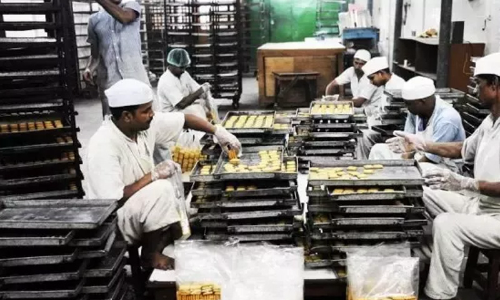
"Prisoner" as the term is specified under Section 1 of the Prison Security Act of 1992. As per the Section, "any person for the time being in a prison as a result of any requirement imposed by a court or otherwise that he be detained in a legal custody"[1] is called a prisoner. Even if a prisoner is found guilty of a crime in a court of law, he or she does not cease to be a person. Thus, a prisoner, like any other non-prisoner, is entitled to certain fundamental rights that no...

Is The Green Hydrogen Policy A Viable First Step Towards Power/Energy Security?
India signed the Paris agreement (COP21, 2016), according to which, by the year 2030, India is committed to reducing its greenhouse emissions by 33-35% from the 2005 levels. On Independence Day 2021, PM Modi announced the National Hydrogen Mission. In COP-26 summit (Glasgow, October-November 2021), India pledged to be carbon neutral by 2070. In furtherance of that, the Government of India (in February 2022) launched the first phase of the Green Hydrogen Policy ("the Policy"), as part of...
When the Supreme Court Sat Outside New Delhi
The Supreme Court of India recently upheld the constitutionality of the National Green Tribunal Act, 2010 (Madhya Pradesh High Court Advocates Bar Association v. Union of India, W.P. (C) 433 of 2012). The petition had challenged the constitutionality of Section 14 read with Section 22 of the Act, which provided that any person aggrieved by the decision of the tribunal must approach the Supreme Court directly. They argued that a direct appeal to the Supreme Court as against a challenge before the...