


Articles
Offences And Penalties Under IBC
Before enacting the Insolvency and Bankruptcy Code, 2016 ("Code"), the law governing insolvency and bankruptcy was multitudinous. The erstwhile framework created ambiguity leading to problems like multiple forums and lack of business or financial expertise. A company may adopt a successful business model although, it may fail to repay its creditors. The insolvency process incorporated under the Code preserves the economic value of the business by helping the creditors and debtors to agree...

Women Leaving Law: What Is The Way Ahead?
There was a time when women were not considered competent or fit to become a lawyer. Three courageous women - Regina Guha, Subhansu Bala Hazra, and Cornelia Sorabji approached courts for recognising the right of women to practice as a lawyer. In 1916, Regina Guha filed an application to practice as a pleader in the District of 24-Perganas. Her application was forwarded to the Calcutta High Court by the District Judge. She also moved the High Court, praying to allow her to practice as...
The Exigency Of Sentencing Guidelines In Indian Criminal Justice Administration
After giving a thought about contemporary challenges faced by Indian Criminal Law administration is the absence of sentencing guidelines. Several committees as well as Higher Courts have also recognized this issue of absences of sentencing guidelines in a diverse country like India. Sentencing guidelines are a collection of rules used to ensure logical and uniform sentencing policies within a jurisdiction. In Indian Criminal Justice system, the judges have the discretionary power to...
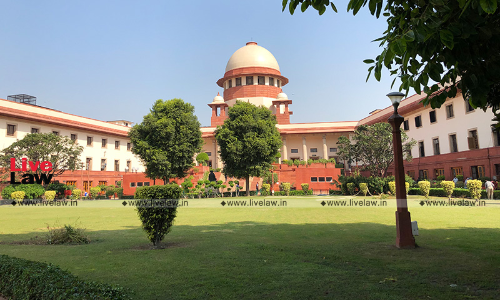
The Unfortunate Invocation Of Article 142 - Supreme Court Decision On The Reassessment Notices
The recent topic of debate has been qua the judgement recently delivered by a division bench of the Supreme Court, authored by Hon'ble Justice M.R. Shah. In the judgment titled Union of India v. Ashish Agarwal[1], in a batch of 24 Appeals, the Supreme Court modified/reversed the 6 High Courts' ruling wherein all the High Courts had quashed the reassessment notices issued by the government/revenue department under Section 148 holding them to be illegal/ultra vires/bad in law in view of the...

Gyanvapi Mosque Case : Should Not Allow The Spark To Spread
"Egregious violation of the rule of law"... "should not have been employed in a secular nation committed to the rule of law" - this is how the Supreme Court described the demolition of Babri Masjid in the Ayodhya verdict. The Court said that "during the pendency of the suits, the entire structure of the mosque was brought down in a calculated act of destroying a place of public worship".If one traces the genesis of Babri demolition, it can be seen that the spark for this provided by a court...
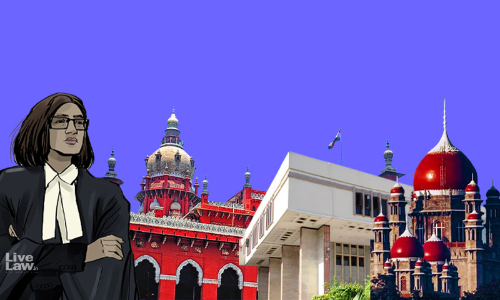
Women On The Bench : Madras HC Leads With 13 Women Judges, Followed By Delhi & Telangana; 5 HCs Have No Women Representation
With the Supreme Court Collegium making its recommendations for judicial appointments in several High Courts recently, the skewed gender ratio in the Indian judiciary has once again come under scrutiny. A couple of years ago, the India Justice Report had uncovered a rather dismal picture of the same, calling out the 'highly inadequate' representation of women, particularly in the higher judiciary than in subordinate ones.Since the Collegium notified certain proposals for judicial...
Judge-Wise Statistics Of Reportable Judgments Of Supreme Court In April 2022
In April 2022, the Supreme Court delivered 88 Reportable Judgements. This month brought various concurring decisions rendered by Judges on different issues, for instance, on the issue of availability of the benefit of reservation after re-organization of States, Justice Uday Umesh Lalit authored the majority view (for himself and for Justice Pamidighantam Sri Narasimha), whereas Justice S.Ravindra Bhat authored a separate concurring judgment. On the issue of the entitlement of Anganwadi...

Presumptions And Proof In Insider Trading Cases- Recent Judicial Pronouncements
Insider Trading is generally termed as trading by an insider or connected person(s) based on such information as obtained by them during the performance of the insider's duties. Insider Trading provides unfair advantage to persons privy to unpublished price sensitive information over the common public at large who may become aware of such price sensitive information much later when the information comes in public domain. Where a person conducts a trade manipulatively, or misuses inside...
Victim Compensation Scheme – A Glimmer Of Hope
The Victim Compensation Scheme (VCS) under Section 375A of the CrPC obligates the state to prepare a scheme to compensate victims of crime, by collaborating with the Central Government. However, recent shocking data revealed before the Supreme Court in Re Alarming Rise in Number of Reported Child Incident case (2020 7 SCC 87) highlights how the scheme has more or less remained ornamental to the CrPC and is rarely fulfilled with no interim or final compensation being awarded in 99 percent...
Sedition, Marital Rape & Section 377 : When Centre Refused To Take A Clear Stand On Constitutionality
In a major twist in the case relating to the constitutionality of sedition law, the Central Government has requested the Supreme Court to defer the hearing, saying that it has decided to "reconsider and re-examine" Section 124A of the Indian Penal Code.The affidavit filed on behalf of the Ministry of Home Affairs states that the "Court may not invest time in examining the validity of Section 124A and be pleased to await the exercise of reconsideration to be undertaken by the Government of India...
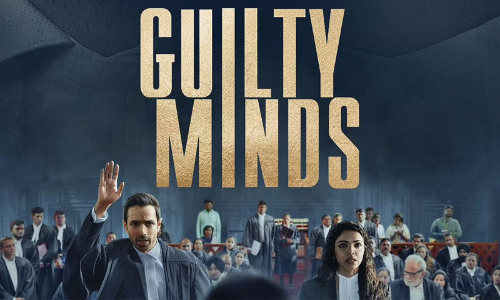
Law on Reels - Guilty Minds Intersection of Law and Justice: Dilemmas and Difficult choices
The latest offering of Amazon Prime India is Guilty Minds, an Indian courtroom drama that revolves around contemporary yet controversial legal cases that one ought to encounter in this age of technology. The series is directed by Shefali Bhushan, renowned for her pervious works like Jugni and The song of the scorpions. The show also has a split-second cameo by her father, Shri Shanti Bhushan, former law minister and senior advocate. Unlike its dramatic precursors, the star of this show...

Abortion Laws In The US And Other Countries
Early this week, an initial draft majority opinion by conservative justice Samuel Alito of the US Supreme Court was published by Politico. The leaked document stated, Roe v Wade "must be overruled". The leaked document, drafted by Justice Alito touches various topics concerning the constitutionally protected right of abortion granted by Roe v Wade and the subsequent 1992 Planned Parenthood v. Casey decision. While rejecting Roe's logic and legal protections, Justice Alito stated...