


Articles
Is Enforcement Directorate Empowered Under Prevention Of Money Laundering Act, 2002 To Seek Remand?
Before the pronouncement of the much-awaited judgment by the Supreme Court on whether Chapter XII of the Code of Criminal Procedure, 1973 ("CrPC") applies to the Prevention of Money Laundering Act 2002 ("PMLA"), a pertinent question arises which requires examination, one which was perhaps not comprehensively deliberated in the marathon hearing - whether the officers of Enforcement Directorate ("ED") have the power to seek custody of the accused under the PMLA?. Concept of Remand...

When Trial Judges Stood Up Against The State's Might
It is often said that trial courts are the first line of defence of fundamental rights. In order to protect personal liberty from arbitrary and illegal arrests, the Constitution mandates in Article 22(2) that an arrested person should be produced before the nearest Judicial Magistrate within 24 hours of the arrest. Thus, it is the Magistrate who is called upon to protect the most sacrosanct fundamental right by reviewing the police action at the first instance. The remand of an accused is...
The New Act To Collect Measurements Raises Concern For Juveniles In India
In the first week of April 2022, the Criminal Procedure (Identification) Bill, 2022 was passed by both Houses of Parliament amid much resistance and calls for sending the Bill to a Standing or Select Committee of Parliament for thorough review and study. The Bill provides for the collection, storage, processing and dissemination of measurements of any person convicted, arrested or detained under any law. The measurements could include fingerprints, footprints, photographs, retina, iris ...
A Personhood To The Rivers For Self-Protection
Rivers are the gift of nature. The protection of environment, starting with United Nations Conference on Human Environment at Stockholm in 1972, has intensely engaged the international community. Several legal artifacts, such as, the polluter pays, precautionary principle, public trust doctrine, sustainable development, etc., have been developed to meet the exigencies. The newest is – why can't the environment be conferred with the status of personhood to stand on its own legs? The...
The Man Behind Women's Entry Into Legal Profession In India - A Tribute
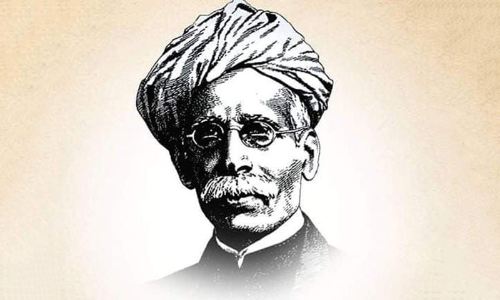
28th April every year, is celebrated as Lawyers Day in Odisha in the memory of its most revered and beloved freedom fighter and leader of the bar, Shri Madhushudhan Das. The great Shri Madhusudhan Das who was fondly called as Madhu babu was born on 28.04.1848. Madhu Babu was a great leader and had many first's to his name. He was the first person in Odisha to hold a graduate degree from L.M.S.College, Bhowanipore, the first person to have the B.L and M.A degrees in Odisha, the first...
Exclusionary Practices: Systemic Hindrances In Obtaining A Certificate Of Legal Practice In India( Part III)
This is the third part of a three-part article that seeks to critically examine the All India Bar Examination, one that law graduates need to necessarily pass to practice law in India. In the second part (which can be found here), the authors brought to light the issues of the centralised All India Bar Examination such as the fee and associated costs along with the unfamiliar methods and processes of the exam in itself. The first part can be found here. In the current third and last...
MSMEs, Insolvency Resolution Processes & The Avoidance Applications
Prior to the amendment inserting Chapter III-A to the Insolvency and Bankruptcy Code, 2016 ('Code'), the corporate insolvency resolution process ('CIRP') for Micro, Small and Medium Enterprises ('MSME') was covered by Chapters II and III of the Code with no regard for the peculiarities in operations and compliances of corporate entities classified as micro, small, medium or otherwise. Prompted perhaps by the global pandemic and the ensuing stresses on corporate balance sheets the nodal...
Protecting Privacy: A Case Against State Interference Through Restitution Of Conjugal Rights
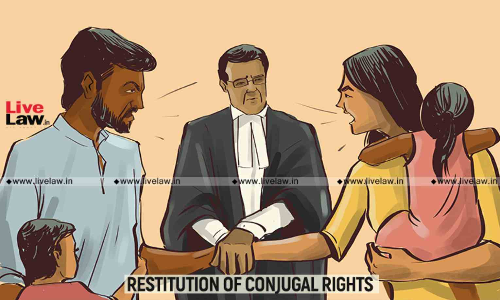
Recent judicial decisions have transformed our understanding of privacy, autonomy, and equality; significantly so post the Supreme Court's Puttaswamy I judgement. In Puttaswamy I, the Court reaffirmed privacy as a fundamental right grounded in the ideas of autonomy and dignity. An important consequence of this understanding of privacy is its impact on questions of individual privacy within the confines of a marriage. For example, in a recent case on the subject of marital rape, the ...
Exclusionary Practices: Systemic Hindrances In Obtaining A Certificate Of Legal Practice In India( Part II)
This is the second part of a three-part article that seeks to critically examine the All India Bar Examination, one that law graduates need to necessarily pass to practice law in India. In the first part (which can be found here), the authors brought to light the issues of exorbitant registration fee and other costs related to the AIBE.In this article, we have tried to map out the complex and inaccessible processes associated with the Bar enrollment such as lack of uniform and outdated...

No Badge Of Cheaters Please
The Supreme Court of India in Justice Sunanda Bhandare vs Union of India in 2014 observed: "In the matters of providing relief to those who are differently abled, the approach and attitude of the executive must be liberal and relief oriented and not obstructive or lethargic."It is quite dismaying to learn that a blind woman in Kerala, https://www.livelaw.in/news-updates/kerala-high-court-public-service-commission-visually-impaired-woman-scribe-to-appear-for-online-exam-196257 just...
Exclusionary Practices: Systemic Hindrances In Obtaining A Certificate Of Legal Practice In India( Part 1)
This is the first part of a three-part article that seeks to critically examine the All India Bar Examination, one that law graduates need to necessarily pass to practice law in India.Whether as a result of intentional gatekeeping or institutional apathy, there are multiple challenges that a law graduate faces in the process of getting certified as a practising advocate. These challenges contribute to creating an exclusionary environment for law graduates trying to enter the legal ecosystem....