


Articles

In The Name Of TRIPS Waiver
In October 2020, India and South Africa submitted a proposal to the TRIPS Council, WTO, to waive certain obligations under the TRIPS Agreement. The adoption of this waiver would lead to temporarily suspend certain obligations to protect intellectual property (IP) and its enforcement as mandated by the TRIPS Agreement. This waiver was seen as a need of the hour to overcome the IP barriers to scale up the production of vaccines and other medical products to effectively combat COVID19...

Reduction Of Capital: A Domestic Affair?
This blog intends to analyze the stand of the courts that reduction of capital by the companies is purely a domestic affair to the extent the shareholders get a fair price but whether in reality some intervention of the court is needed as getting a fair share is not the only concern, but the protection of the right of minorities too who are compelled to divest their lawful holdings. A reduction of capital occurs when a company reduces the amount of its share capital. A company may ...

The Conflict Between Ukraine And Russia & TRIPS
Every war has collateral damage. Creators of the many goods and services owned and distributed by the companies which have boycotted Russia are the collateral in this conflict. The conflict between Ukraine and Russia, among other things, provides an interesting insight into how workable copyright laws are. Some, especially those on the receiving end of the economic troubles, as a result, may go ahead and proclaim them to be 'soft'. In the wake of unprecedented economic sanctions, the...

Technical Conundrums In Stock Exchanges
Securities markets and securities laws in India have always been at the forefront of technological advancement as compared to other laws and markets present in India. From it's inception, securities markets have always embraced technology as part of it and securities laws have always been drafted keeping in my mind the incessantly changing technological landscape present in India. However, even after such technological advancements, the risk of break down or down time is almost...

Legitimization Of Cryptocurrency? Looking At Recent Indian Crypto Tax Saga
Bitcoin, Ethereum, Dogecoin, I am sure you might have heard about them, from a crypto fan or an ordinary fiat-currency lover, everyone is buzzing on the cryptos. Have you loved financial freedom, no institution on your top, no issue of counterfeiting, blazing fast global transfers with absolute anonymity, if you have answered any of the questions as a YES, then cryptocurrencies would come to your benefit. What exactly is a crypto? It is a digital asset-currency, working decentralized,...
Invoking International Law Language In Indian Diplomacy
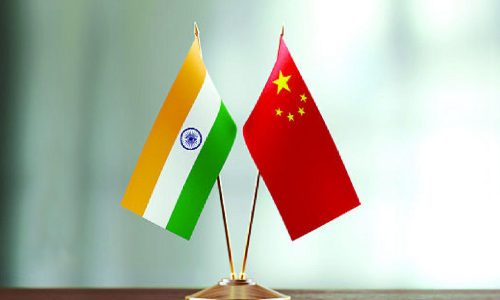
"Lawfare" has been emerging as an argument among international law scholars in India; whether it is to enhance the study and usage of international law or to call out China's blatant violations of international law at the Indian borders. Lawfare means "the strategy of using – or misusing – law as a substitute for traditional military means to achieve an operational objective." It is a compound of the words law and warfare, which posited that it substitutes war, and harm is made with...

Comparative Analysis Of Product Liability In India With Developed Countries
India is a custom-based law country; courts follow the principles of justice, equity, and good conscience and those of tort law, such as the duty of care, negligence, and strict liability. India is gradually realising the importance of strengthening and enforcing a strict product liability regime to protect the rights of its consumers against the supply of defective materials by manufacturers and suppliers, which will also aid in protecting the interests of consumers. The Indian Ministry...

Freedom Of Contract And Interest Barring Clauses: Does Section 31(7)(A) Of The Arbitration Act Need A New Approach?
The Hon'ble High Court at New Delhi recently in the case of Patel Engineering Limited vs. UOI & Ors. has issued a notice to the Union of India and NTPC limited in a plea challenging the constitutional validity of Section 31(7)(a) of the Arbitration and Conciliation Act, 1996 (hereinafter referred to as "Act") and section 3(3)(a)(ii) of the Interest Act, 1978. It is because of the fact that most government or Public Sector Unit (PSU's) contracts are wedged with an 'interest barring'...
![Hjab Ban In Educational Institutions :A Constitutional Assessment [Research Brief By Academicians]](https://www.livelaw.in/h-upload/2022/02/17/500x300_409925-hijab-ban-karnataka-hc.jpg "Hjab Ban In Educational Institutions :A Constitutional Assessment [Research Brief By Academicians]")
Hjab Ban In Educational Institutions :A Constitutional Assessment [Research Brief By Academicians]
The hijab ban in Karnataka's schools and colleges has been a matter of public debate for some time now. The judgment in Resham v. State of Karnataka - where the Karnataka High Court dismissed the writ petitions filed by students against the Government Order and the decisions of educational institutions banning the hijab and other religious clothing/symbols in schools and colleges - has raised further issues concerns that require serious and considered engagement. This research brief has been...
Exception To DRT's Jurisdiction- Is Mardia Chemicals Still Relevant?
Section 34 of the Securitization and Reconstruction of Financial Assets and Enforcement of Security Interest Act, 2002 (SARFAESI Act) bars a Civil Court from entertaining any suit or proceeding in respect of any matter which a Debts Recovery Tribunal (DRT) or the Appellate Tribunal is empowered by or under the SARFAESI Act. While testing the validity of the SARFAESI Act, the Hon'ble Supreme Court had, in the case of Mardia Chemicals[1], carved out a limited exception to the Section 34 of...
Why Justice Dalveer Bhandari's Vote At ICJ Should Not Be Linked To India's Position On Russia-Ukraine Conflict?
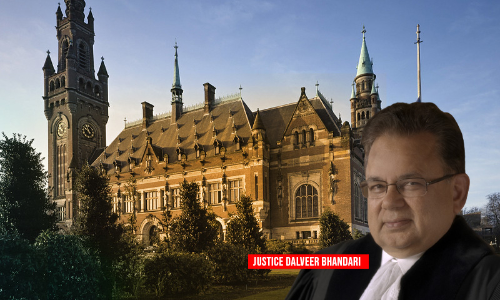
The International Court of Justice (ICJ) at the Hague, Netherlands, on Wednesday directed Russia to immediately halt its military operations in Ukraine in a 13-2 judgement with India's nominee at the ICJ Justice Dalveer Bhandari joining the majority. Justice Bhandari's vote in favour of indication of provisional measures against Russia has been perceived by few to be in conflict with India's official stance at the United Nations (UN) regarding the ongoing Ukraine-Russia conflict. India has...
Hijab Verdict : How Preconceived Notions May Have Trumped Judicial Reasoning
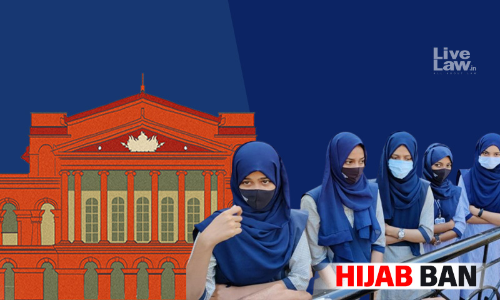
The judgment of the Karnataka High Court upholding the hijab ban in classrooms, after declaring the wearing of the headscarf by Muslim women as not an essential practice of Islam, is being hotly debated. The judgment in the case Resham v State of Karnataka delivered by a bench comprising Chief Justice Ritu Raj Awasthi, Justice Krishna S Dixit and Justice JM Khazi shows the absurdities of the deeply problematic "Essential Religious Practice" doctrine, which is now being revisited by a...