


Articles
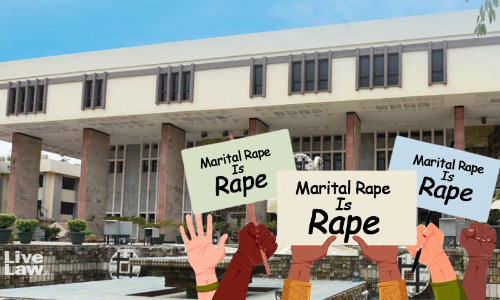
A Long Awaited Reform
Reading the recent observations by the Hon'ble Delhi High Court has brought a mixed feeling dominated by hope for possible reform. The bench[1] comprising of Justice Rajiv Shakdher and Justice C Hari Shankar observed that a woman has a right to sexual autonomy and to deny any sexual advances, even if by her husband. This case might just prove to be the final nail in the archaic marital rape exception. Legislations And Recommendations Section 375 of IPC, 1860 defines rape and also...
Tendering Pardon To An Accomplice In A Case Triable By A Special Court Under The NIA Act, 2008
Many a time, grave and heinous crimes are committed in such a manner that no clue or trace, much less, any eye-witness evidence may be available for the detection of such crimes. The result would be that the perpetrators of such gruesome and beastly crimes go unpunished and escape due to lack of evidence. In order to obviate such a result, the framers of the Code thought that, with a view to unravel the truth of such dastardly crimes, any person believed to have been directly or...
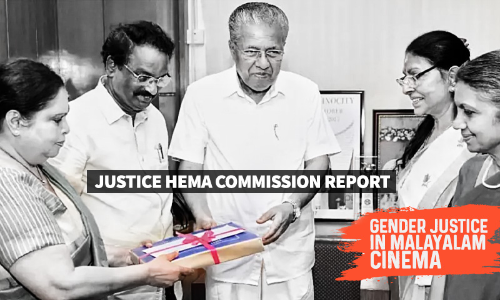
Justice Hema Committee Report On Sexual Violence, Non-disclosure Of: A Critique
In February 2017, a prominent female actor from the Malayalam Film Industry (Mollywood) was abducted and sexually assaulted by a gang of men in a moving car in Kochi. The Actor-survivor's colleague and lead Actor Dileep is named as a accused/conspirator for paying money to sexually assault her and record the crime on camera. A criminal case was registered, and the same is still pending trial. Around 20 witnesses have turned hostile to the prosecution given the mighty influence of the accused,...

The Progressive Decline Of An Equitable Jurisdiction
Shareholder Disputes Are Often 'Family' Disputes Family run companies continue to dominate the corporate landscape in India. Ownership and governance of such companies are often dictated by pre-existing family arrangements /settlements which reflect the wishes and vision of the founders of such companies. Shareholding in such companies is acquired by way of inheritance or by way of gratuitous share transfers. The articles of association of such companies ensure that shareholding and...
Interim Compensation In Section 138 (NI Act) Cases; Complainant's Right Or The Discretion Of A Court?- Delhi High Court Affirmed. (Part -2)
The first part of the article discussed the concept of an interim compensation in cheque bounce cases which are being governed by the Negotiable Instruments Act, 1881 (for brevity "the Act"). In the first part, the mandate of section 143A of the Act that deals with interim compensation during the pendency of section 138 cases (cheque Bounce cases) was discussed in detail with special reference to 2 (two) judgments i.e., L.G.R.Enterprises vs. P.Anbazhagan[1] (for brevity – "LGR case")...

People Versus Power
The moral superiority of democratic arrangement in the ordering of society is premised on the accountability of power towards the securing of common good. And democratic legitimacy presupposes the integrity of electoral process that facilitates the exercise of free will by the people. These fundamental pre-requisites of a vibrant democracy are on test in these times of pandemic. Irrefutable medical evidence and past experience have established beyond doubt that electoral processes which...

The Case For 'Burying' Differences And Upholding Dignity
'Man is born alone and dies alone' is the wise counsel of Chanakya but the hard reality is that a man's community status never leaves him alone, not even at death. So much so that some sections of society, and the lowest in the so-called hierarchy of the caste system have to struggle for enforcement of their fundamental right to a decent burial of their bodies on death, which is an integral part of the right to live and die with dignity under Article 21 of the Constitution of India. Some...
Inter-Caste Marriage ; Need For Strict Implementation of LaxmiBai Judgment
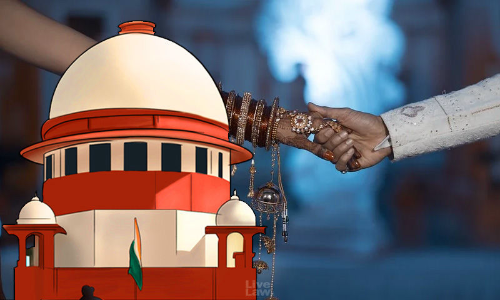
The curtain on the year 2021 - first half of which was engulfed with the second wave of COVID-19 and its second half saw resuscitation of social, political and economic activity in the country – has finally fallen down, and the year 2022 is here with new hopes and aspirations. The year 2021 saw the judiciary opening its activist hands again, to help the poor, downtrodden and other marginalized sections of society, that always need its help the most. Most importantly, the judiciary ensured...

Law And Literature; So Far, Yet So Close
There are many judgments, which used literature to further illustrate an issue, at the same time many literary works which deal with the law as a subject. Law and literature's fervid love affair isn't a new one. Many well-known writers such as Kafka, Tolstoy and looking closer to home, Bankim Chandra Chattopadhyay and Mani Shankar Mukherjee are trained in law- bringing the law into the fictional space in a manner that entrenches into the reader's mind. In popular culture, To Kill a...

Tempting To Contempt – Authentic Or Anathematic?
Scandalising the court Lord Atkin, the famous British Judge while dealing with a contempt case in 1936, observed: "Justice is not a cloistered virtue: she must be allowed to suffer the scrutiny and respectful, even though outspoken, comments of ordinary men." As per the law of contempt, if a person or media makes any allegation against judges or justice system which brings them in disrepute, he can be punished for scandalising the judiciary. "Scandalising the Court" is a form of...