


Articles

Marriage: A Privilege
Nietzsche held several standards to morality, an addition to them could be made as it seems like morals also have sexual standards. It has just been three years since Section 377, which criminalised homosexuality, was held unconstitutional by the glorious judgement of Navtej Singh Johar[1] (2018). That judgement in itself could have been sufficient to legally provide equal social rights to the LGBTQ+ community, including the right to marry. A start was done with the judgement of Arun...

Power Of Judicial Review: How Supreme Court Caused Changes In Government Decisions in 2021
"If the judiciary does not have the power of judicial review, then the functioning of democracy in this country would be unthinkable", said the Chief Justice of India NV Ramana while speaking at a public event recently.The CJI explained that the Constitution has created three co-equal organs, namely the legislature, the executive and the judiciary and the judiciary has been given the role of reviewing the legality of steps taken by the other two organs. To brand "judicial review" as "judicial...
Revisiting The Paradip Port Trust Judgement- Should There Be Restrictions On Appearance Of Advocates Before Labour Courts And Tribunals?
Having one of the largest advocate populations and perhaps the only country in the world to celebrate an 'Advocate's Day', India does place a lot of prestige on the legal profession. Section 30 of the Advocates Act, 1961 ("Advocates Act") provides advocates/ legal practitioners the right to practice before any court/tribunal within the territory of India. On the other side of the spectrum, the people also have a fundamental right to be represented by a legal counsel of their choice....
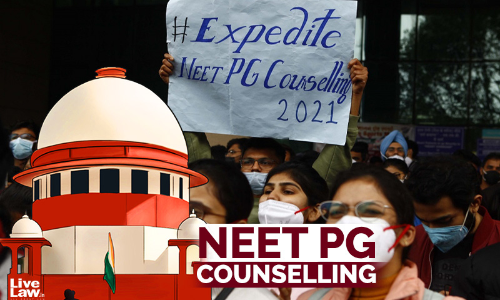
NEET-PG Counselling : Why Criticism Against Supreme Court Intervention Is Misdirected?
Doctors across the country are protesting against the delay in conducting counselling for NEET-PG admissions. Certainly, the agony of the resident doctors - who dedicated themselves to selfless service as 'COVID warriors' during the pandemic - over the uncertain wait for much delayed postgraduate admissions is understandable. Fair-minded people will definitely stand in solidarity with the protesting doctors, as their cause is just.At the same time, there is a narrative that the Supreme...
IPC Section 324: Bailable And Compoundable
There has been some confusion with respect to the nature of offence punishable under Section 324 of Indian Penal Code, 1860 ("the IPC"). The question is whether the offence under Section 324 of IPC is a bailable or a non-bailable one, a compoundable or a non-compoundable one. This paper shall analyse the relevant statutory provisions, statutory amendments, Gazette Notifications and jurisprudential developments in order to understand how we can deal with the issue. Section 324 Of Indian ...

127 Dead, 250 Injured – A Case For Securing Our Courts
After almost a year spent in lockdown due to the pandemic, which had derailed almost every industry and government body from their normal functioning, the courts of the country had just started pivoting with resumption of physical hearings. However, on the fateful day of 24th September, 2021, the Rohini District Court, Delhi shook and echoed with frightened screams and a series of loud gunshots. Within a fraction of seconds, the situation became so chaotic that it was nothing less than a...
Interim Compensation In Section 138 (NI Act) Cases; Complainant's Right Or The Discretion Of A Court?
Cheque bounce issues are being governed by the Negotiable Instruments Act, 1881 (for brevity "the Act"). The Act stipulates a comprehensive mechanism to deal with the cheque bounce cases. Briefly stating the mechanism, inter alia, states that where a cheque gets dishonoured due to certain reasons, then the aggrieved person has the liberty to send a legal notice to the drawer of a cheque asking him/her to pay the requisite amount within 15 (fifteen) days after receiving the notice. Failing ...
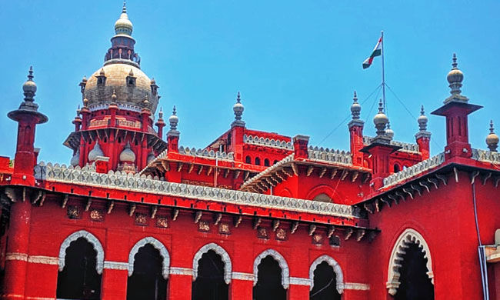
Correct Approach Of The Madras High Court Single Bench On GST On Maintenance Charges By Residents Welfare Association
Apropos to the article "A critical approach to Madras High Court single bench decision on GST on maintenancecharges by Residents Welfare Association", what the author seems to have missed is what the Hon'ble Supreme Court has said in Govind Saran Ganga Saran Vs Commissioner of Sales Tax[1], way back in 1985 which continue to hold field even today. The first is the character of the imposition known by its nature which prescribes the taxable event attracting the levy, the second is a clear...

Need For A legislative Overhaul Of Dowry Prohibition Statutes
The Department of Women Welfare in Uttar Pradesh has sought affidavits from public servants declaring that they have received no dowry when they got married. All government servants, who got married after April 31, 2004, had to comply with the direction or face action. The Kerala Women's Commission has also received many complaints about the inaction on the part of police authorities in cases of dowry. Rather seeking seeking affidavits or flaying the cops, the situation calls for an...
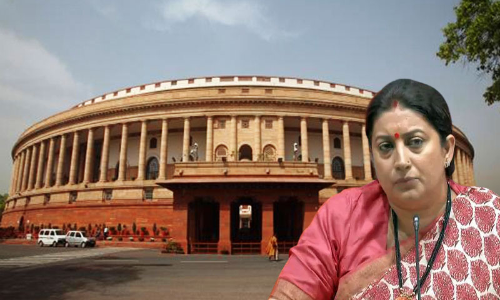
Flipside Of Increasing The Age Of Marriage
The Prohibition of Child Marriage (Amendment) Bill, 2021 was introduced in the Lok Sabha on 21.12.2021 to raise the marriageable age of women from 18 years to 21 years.The Bill does indeed paint a rosy picture for women empowerment with its claim to further the cause of gender equality, however, much like everything else in life, this Bill too needs to be looked at and interpreted in the context of the societal norms that prevail in our country. Statement Of Objects And Reasons Of...

How Supreme Court Protected Press Freedom In 2021
2021 was a year where India retained its low ranking of 142 out of 180 countries, as in the year before. Reporters Without Borders (RSF), a French NGO which prepared the Global Press Freedom Index said, "India is one of the world's most dangerous countries for journalists trying to do their job properly".2021 was also a year where one saw the Supreme Court making crucial and timely interventions to protect journalists who were facing threats and criminal law process for doing their...
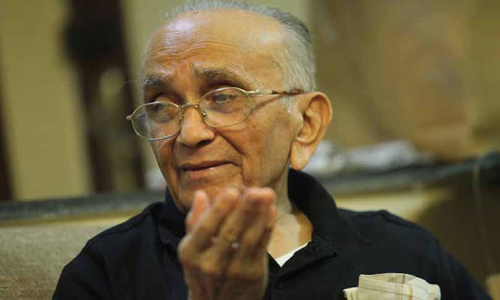
Justice Bhagwati- A Titan- A Centennial Tribute
Birth centenary is indeed an occasion for celebration and to remember and extol that person's life and work, to draw lessons from his career and pay tribute. This is all the more so when it concerns exceptional persons. One of such all time greats is Justice P.N.Bhagwati who was undoubtedly a fine human being and an extraordinary legal mind- vast and deep, many times ploughing a lonely furrow, treading the untraversed path to render justice the ultimate aim of law. Born on December 21,...