


Articles

Can't A Single Bench Of High Court Issue Directions To Registry To Circulate A Judgment?
A recent verdict of a Division bench of the Madras High Court[2] is being discussed in this case comment. It has held a single judge of the High Court, while disposing off a case, cannot give directions to the Registry or the executive - State or Union - as it amount to exercise of jurisdiction of Public Interest Litigation (PIL). It has held if a judge feels that the matter requires certain directions to be given, he has to state the same and send it to Hon'ble The Chief Justice for ...
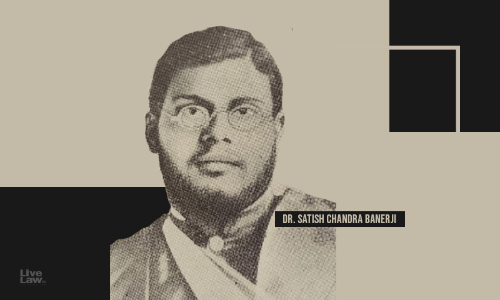
Satish Chandra Banerji: A Sesquicentennial Tribute
Great lives spread a fragrance and an aura that outlive their mortal sojourn. It is for us to remember and pay tribute to such persons. One such person is Dr. Satish Chandra Banerji whose 150th birth anniversary falls on June 20. His accomplishments were great and his character not only noble but also very amiable and pure unsullied by any stain. His personality was not distinguished by a few admirable prominences, but was uniformly elevated. He shines undimmed in the galaxy of our...

Scope of Section 11 (6) of the Arbitration and Conciliation Act, 1996
Arbitration xUnder the Arbitration and Conciliation Act, 1996, the two guiding principles in appointment of arbitrator(s) are party autonomy and minimal court interference. Nonetheless, there are instances like Oyo Hotels and Homes Pvt. Ltd. vs. Rajan Tewari & Anr. where courts have initiated arbitral proceedings by intervention. S. 11(6) of the Arbitration and Conciliation Act lays down a mechanism for judicial appointment of an arbitrator. It contemplates 3 scenarios wherein...
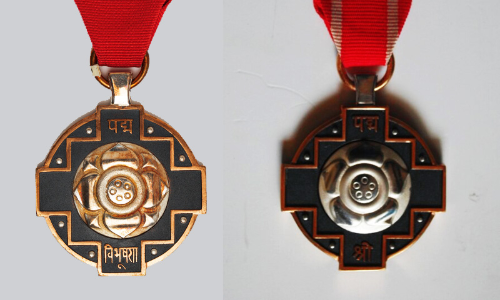
National Awards: Legally And Historically Speaking
The History of Award-CultureIn Ancient and Medieval times the Kings and Monarchs conferred titles and granted awards to recognise merit in the fields of Art, Science and Literature. Conferring titles and awards has always been part of "Royal Prerogatives" of the King on any citizen with a rank and title which carries with it the title a social status, monetary rewards and most importantly, special privileges like seating in the Court of the King or invitation to official functions of the King...

Copyright Law &Museum Industry
Copyright Law and the Museum industry may sound like an odd fit. But in truth, they are intricately linked in their purpose and the object, which is essentially to promote and encourage the progress of Science and art in order to constantly maintain the value and heritage attached to certain works. Museums have been defined by the Institute of Museum and Library Sciences as- "an organised and permanent non-profit institution, essentially educational for aesthetic in purpose, with...
Formation of the Committee Of Creditors under the Insolvency and Bankruptcy Code: A Visible Collusion
The Insolvency and Bankruptcy Code, with the primary motive of rehabilitation of financially distressed corporates, came into force with effect from 1st December 2016. The National Company Law Tribunal was constituted through a notification dated 1.06.2016 to pursue the afore goals. The Code empowered Insolvency Professionals and Committee of Creditors to exercise the most vital functions to resolve the debt-ridden corporate debtor. Though the powers and duties of resolution professionals...
Ignorance Of Law In India: An Urgent Need To Fight Legal Illiteracy
The notion of Legal literacy is based on the principle that every individual must be aware of their rights and obligations. The maxim 'ignorantia juris non-excusat,' or 'ignorance of the law is no excuse,' implies that the Court presumes that every party is aware of the law and hence cannot claim ignorance of the law as a defence to escape liability. This Latin maxim and its wide legal spillovers belong to the common law system. It was developed by imperialist western nations, and has...
An Overview Of The IBC's Precedence Over Actions Under Allied Laws
Insolvency & Bankruptcy Code, 2016 intends to provide a comprehensive approach to maximize assets and provide a remedy to the operational, financial creditors and corporate debtors within a specific timeline. Even in difficult times due to the Covid -19 pandemic, the Code envisages the market economy to mature through National Company Law Tribunals. However, the tribunals are encountering multiple litigations and delivering conflicting decisions due to IBC's precedence over actions...

Do Hand Sanitizers Require A Drug License To Be Sold In Stores?
"Written laws are like spider's webs; they will catch, it is true, the weak and poor, but would be torn in pieces by the rich and powerful"Although written laws may be like spider's webs, which may catch the weak and poor, it would actually be torn in pieces by the vicious and the guileful. Time and again, amidst the covid-19 mayhem, which engendered a global catastrophe; 'Sanitize your hands', has been a hackneyed government advisory. Hand sanitizers, typically in the form of...

Residual Doubt Theory: An Encouraging Addition To Indian Capital Sentencing Jurisprudence
While the theory of 'residual doubt' made its way into Indian criminal jurisprudence in 2014, its origins can be traced back to the United States of America. In 1984, Justice Thurgood Marshall, in his dissent, enunciated, "One of the most fearful aspects of death penalty is its finality.... The belief that such an ultimate and final penalty is inappropriate where there are doubts as to guilt, even if they do not rise to the level necessary for acquittal, is a feeling that stems from...

Mig 29, Ryanair & A Mid – Air 'Hijacking': How Belarus Violated International Aviation Laws
In May 2021, Ryanair flight 4978 was enroute Athens (Greece) to Vilnius (Lithuania). While transiting over the Belarusian airspace, air – traffic controller informed the crew that there was a bomb on board and asked them to land. Within moments, a Belarusian MiG 29 fighter jet intercepted the flight and directed it to land in the capital city of Minsk. There was no alleged bomb found in the aircraft; however, on board was a passenger namely Roman Protasevich – a Belarusian journalist and...

Service Of Summons Through WhatsApp
Considering the era we live in, the usage of WhatsApp in courts is neither surprising nor it is something new. But is the double blue tick on WhatsApp a prima facie proof of delivery of summons? Several courts in the country are experimenting with the usage of technology in judicial proceedings, especially while serving of official documents. There have been instances where the court allowed electronic means of communication to facilitate the court proceedings and expedite the delivery...