


Articles
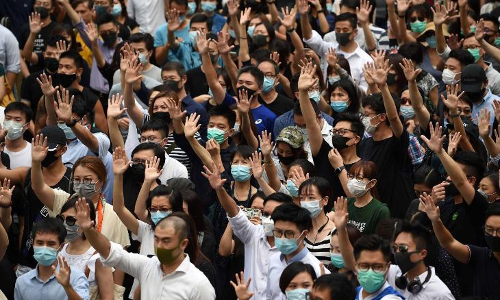
The Right To Protest (with Face Masks)
Earlier this morning, the High Court of Hong Kong handed down an important judgment on the "balance" between personal liberty and national security. Readers will be aware that for the last few months, there have been mass public protests in Hong Kong. In response, the Hong Kong government passed the Prohibition on Face Covering Regulation ["PFCR"] which, as the name suggests, prohibited protesters in public spaces from wearing face masks to hide their identities. The PFCR was passed under the...

Sabarimala Review : Majority Order Is Without Jurisdiction
The majority order in Sabarimala Review Petitions is beyond the scope of Article 137 of the Constitution which confers power of review on the Supreme Court. The reviewing power is subject to law made by the Parliament and Rules made by the Supreme Court under Article 145 of the Constitution. [Order 47 embodied in the Supreme Court Rules, 2013]. The ambit of the review power is limited and circumscribed. Review is not an appeal or a denovo consideration of the matter. Its not a rehearing....
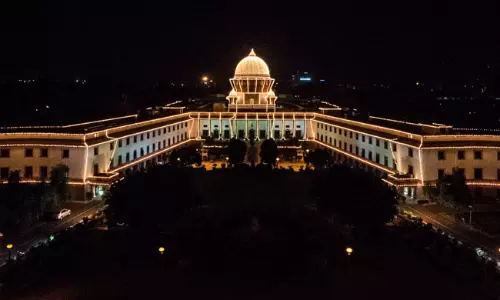
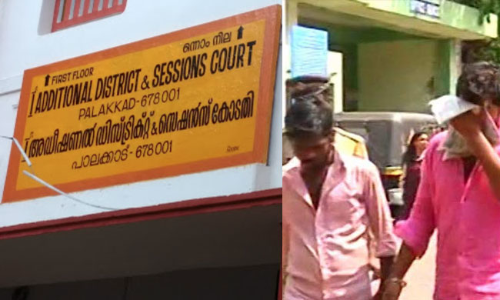

Cryptocurrency In India : Legality, Challenges And Sustainability
If during the 'barter era' of stone age, you proposed payments through e-wallets and other electronic/digital modes of payment and termed currencies as legal tenders, one would consider you lunatic, maniac and obnoxious. With passage of time, necessity gave birth to innovation and with innovation came the unimaginable. However, with every advent of an 'unimaginable' came the need to regulate the thing and assess the same on the touchstone of national security and commercial viability. One...
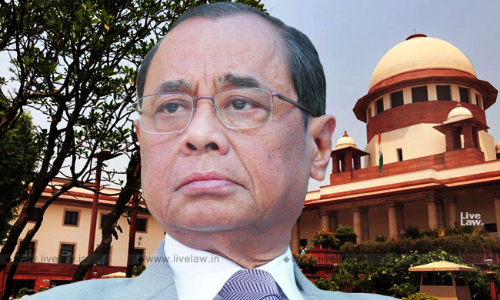
The Tribunals Judgment – II: On Independence
In yesterday's post, I discussed the significance of the Tribunals Judgment on the vexed issue of money bills. Today's post discusses the judgment's engagement with the principal legal provision under challenge – Section 184 of the Finance Act. While the majority upheld the constitutionality of the Finance Act – but struck down the Rules framed under it – Chandrachud and Gupta JJ, writing separate dissenting opinions, struck down the primary legislation as well.Recall that Section 184 of the Act...
The Tribunals Judgment – I: A Course Correction On The Money Bill
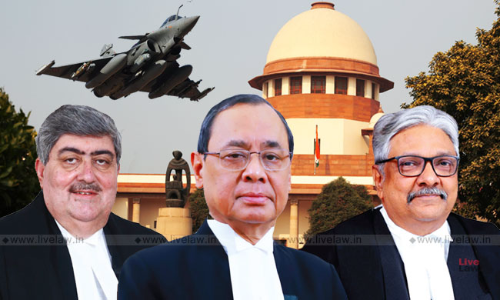
On November 13, a Constitution Bench of the Supreme Court delivered an important judgment concerning the constitutional validity of the Finance Act of 2017. Briefly, through the Finance Act, Parliament had merged a number of Tribunals, and delegated to the government the task of framing rules for their functioning. The Finance Act had been passed as a money bill, which barred the Rajya Sabha from amending it. There were, therefore, three issues before the Court: (i) whether the Speaker of the...
Court's Power To Decide What Is Essential Religious Practice: 'Apparent Conflict' Between Two Early Constitution Bench Judgments
In his order in Sabarimala Review Petitions referring some issues to larger bench, the Chief Justice of India has observed that there is an 'apparent conflict' between two constitution bench judgments viz. Seven judge bench judgment in Commissioner, Hindu Religious Endowments, Madras v. Sri Lakshmindra Thirtha Swamiar of Sri Shirur Mutt, and five judge bench judgment in Durgah Committee, Ajmer & Anr. v. Syed Hussain Ali. According to CJI Ranjan Gogoi, Shirur Mutt held that what are...
10 Reasons Why The Sabarimala Reference To 7 Judges Is Problematic
The Supreme Court by a majority of 3:2 found that there is apparent conflict between a 7 judge bench decision in Shirur Mutt (1954) and a 5 judge bench decision in Durgah Committee, Ajmer (1962). A 9 para long judgment authored by Chief Justice Ranjan Gogoi and Justices Khanwilkar and Indu Malhotra constitutes the majority judgment and Justices Nariman and Chandrachud dissented vide a detailed dissenting judgment authored by Justice Nariman. While I do not agree with the majority...

What Is A "Review"?
Article 137 of the Constitution of India allows the Supreme Court to "review" any judgment passed by it. According to the jurisprudence of the Court, a review is to be granted in exceedingly rare circumstances. In Union of India v Sandur Manganese and Iron Ores Ltd., for example, the Supreme Court restated the position of law as follows: a review could only be allowed in cases of "discovery of new and important … evidence", an "error on the face of the record", or another "sufficient reason"...